









DIY Items to Sell from Home: Turn Hobby into a Business
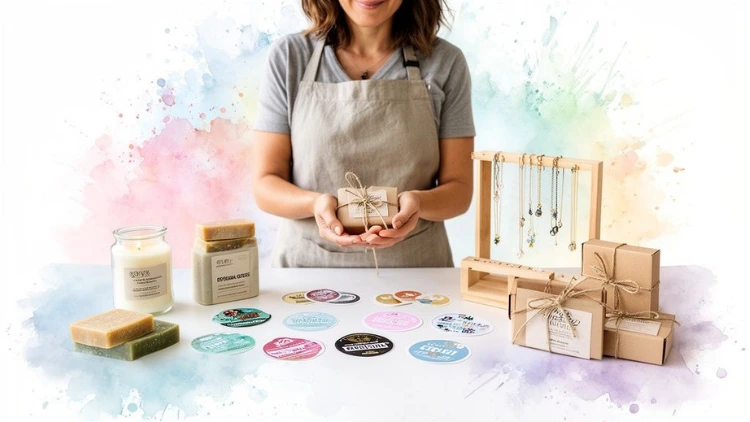
If you’ve ever found yourself lost in a creative project on a weekend, you might be sitting on more than just a hobby. That passion for making things by hand could be a real, profitable business.
Forget the old myth of the "starving artist". Today’s shoppers are actively searching for unique, handmade products. They want items with a story, made with care—something you just can't get from a factory. This is a golden opportunity for creators like you to turn your craft into a steady source of income.
Jump To Section

Earn As You Learn
Earn 25% commission when your network purchase Uplyrn courses or subscribe to our annual membership. It’s the best thing ever. Next to learning,
of course.
The Booming Handmade Market
Think this is just a small niche market? Think again. The global handicrafts market is a powerhouse, valued at an incredible $739.95 billion in 2024.
And it's not slowing down. Projections show it climbing to $983.12 billion by 2030, growing at a steady clip of 4.9% each year. This isn't some fleeting trend; it's a stable, expanding industry hungry for new creators.
What this tells you is that when you decide to sell your DIY items, you’re not just testing the waters. You’re stepping into a thriving market with proven demand and massive financial potential.
Profitable DIY Categories at a Glance
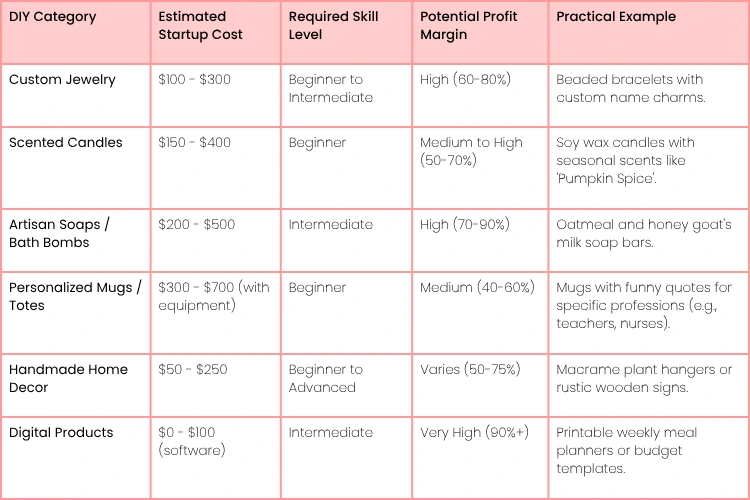
So, where do you start? To help you find the right fit, this table breaks down some of the most popular and profitable DIY categories. Consider your skills, your budget, and what you’d actually enjoy making day in and day out.
Choosing a category from this list is a great starting point, but the most important thing is to pick something you love.
- Actionable Insight: Don't just chase what you think is popular. Choose a craft you're genuinely passionate about. That excitement will come through in the quality of your products and make building your business feel a lot less like work. For example, if you love knitting, focus on unique baby booties instead of forcing yourself to learn candle making just because it's trendy.
Making the leap from hobbyist to business owner can feel like a big step, but it’s a path many have walked before. If you're weighing the pros and cons, this guide on whether self-employment is a risk worth taking can offer some valuable perspective to help you move forward with confidence.
How to Find Your Winning Craft Niche
Finding the right DIY items to sell is more than just making what you love—it’s about finding that sweet spot where your passion meets what people are actually searching for and buying. You need to get specific. Forget about just "jewelry" or "home decor". We're talking about drilling down to find a unique corner of the market you can own.
The good news? You're entering a booming industry. The global arts and crafts market was valued at about $63.33 billion in 2025. Even better, it's expected to grow by 9.3% every year through 2033. People want handmade goods. You can dig into the specifics in the full arts and crafts market report.
Explore Trends on Visual Platforms
Your first stop should be where your potential customers hang out. Platforms like Etsy, Pinterest, and Instagram are goldmines for seeing what's hot right now.
- Practical Example (Etsy Deep Dive): Search for a broad term like "wood sign". Now, look for the "Bestseller" badges. You'll likely see specific niches like "Personalized Family Name Signs" or "Rustic Farmhouse Kitchen Signs". Notice their photos, prices, and the keywords in their titles. This shows you that specificity sells better than generic products.
- Practical Example (Pinterest & Instagram Clues): Search for "#diyhomedecor". On Pinterest, look at the pins with thousands of saves. On Instagram, check posts with high engagement. You might spot a recurring trend, such as "boho wall hangings" or "minimalist line art prints". These visual cues tell you what aesthetics are currently resonating with buyers.
This is your reconnaissance mission. You're mapping out the territory to find an opening.
Validate Your Idea with Data
Once you have a few ideas bubbling up, you have to check if people are actually looking for them. This is where you move from "I think this is cool" to "I know people want this".
- Actionable Insight: Use Google Trends to compare niches. For instance, you might be debating between "macrame plant hangers" and "macrame wall hangings". By entering both into Google Trends, you can see which term has higher search volume and more stable, year-round interest, helping you choose the product with a larger potential audience.
Combining what you see trending with hard data is how you avoid a major pitfall: assuming your hobby is everyone else's must-have item. We've all been there. To really understand this trap, take a look at this guide on why market research is so important for your ideas.
When you’ve checked out the competition and confirmed there’s an audience, you can move forward with confidence, knowing your craft has a real shot at success.
Creating Your First Product Without Breaking the Bank
You’ve landed on a promising idea, which is a huge first step. Now it’s time to get your hands dirty and actually make something. Forget about perfection—your first prototype is all about learning. The real goal here is to create a small test batch, keep your costs down, and figure out what it really takes to produce your item.
This is the moment of truth. You’ll quickly find out if you even enjoy making your DIY items to sell, how much time it eats up, and what your true material costs are.
A Real-World Prototyping Example
Let's imagine you want to get into the artisan soap business. You've noticed a demand for vegan, all-natural skincare. Your idea is to create a charcoal and tea tree oil soap bar for acne-prone skin.
Instead of buying ingredients in bulk, start with a beginner's soap-making kit for under $80. This is a low-risk investment to test your idea.
A typical soap kit for this project would include:
- Melt-and-Pour Soap Base: An easy-to-use, vegan base that doesn't require handling lye.
- Activated Charcoal Powder: The key ingredient for your niche product.
- Tea Tree Essential Oil: For scent and its well-known skin benefits.
- A Silicone Soap Mold: To create professional-looking bars from your first try.
- A Pouring Pot & Stirring Utensils: The essential tools for the process.
Grabbing a starter kit like this takes the guesswork out of your initial shopping trip. It lets you dive right into the making process without getting overwhelmed by a million choices. You can find similar kits for just about any craft, from jewelry design to leatherwork.
- Actionable Insight: Always start with a kit or the smallest amount of materials you can buy. Your first batch is purely for R&D. Fight the temptation to buy in bulk—it’ll save you a ton of cash if you end up needing to pivot or tweak your product. For example, you might discover you prefer making bath bombs over soap; a small kit prevents you from being stuck with 10 lbs of unused soap base.
Document and Critique Your Work
As you make your first batch of charcoal soap, take detailed notes. How long does the base take to melt? At what temperature does it best incorporate the charcoal without clumping? How long does one bar take to make from start to finish? This data is crucial for accurate pricing later.
After the soap has set, the real work starts: the critique.
- Does it lather well?
- Is the tea tree scent pleasant or overpowering?
- How does the skin feel after using it—clean, tight, or moisturized?
- Does the charcoal rinse off cleanly or leave a residue in the sink?
Once you’ve done your own assessment, give a few bars to friends with different skin types for brutally honest feedback. You’re not looking for compliments; you’re looking for problems to solve. This feedback loop is essential for getting the product right before you sink more time and money into it.
This process isn't just for soap, either. If you’re making art prints, for example, you need solid feedback on things like paper quality and color accuracy. If that's your niche, you can get a head start by reading this complete guide on how to make art prints at home.
Pricing Your Handmade Goods for Profit
Let’s talk about the part where most makers get tripped up: pricing. It’s so easy to pour your heart into a project and then completely undervalue your work. But pricing too low is the fastest way to kill your passion and turn your business into a money-losing chore.
We're going to break down a simple formula to make sure every single one of your DIY items to sell is priced to actually make you money.
The secret is to count everything. I'm not just talking about the obvious stuff. We need to factor in your materials, your time, and all the little costs that hide in the background.
- Actionable Insight: Your time is not free. Set a realistic hourly wage for yourself before you calculate anything. If you wouldn't do the work for someone else for less than $20/hour, don't do it for your own business for less. This simple mindset shift ensures you're building a real business, not just funding an expensive hobby.
Calculate Your Base Cost
This is your starting line. Your base cost is the bare minimum it costs you to create one single item. Get this number wrong, and you're literally losing money with every sale.
Here's how you figure it out:
- Cost of Supplies: Add up the cost of every single component. For a beaded bracelet, this includes the beads, the elastic cord, the clasp, and even the tiny crimp bead.
- Labor Cost: Pick an hourly wage for yourself you can live with (let's say $20/hour) and time how long it takes to make one unit. If a product takes you 30 minutes from start to finish, your labor cost for that item is $10.
- Overhead: These are the sneaky costs. Think marketplace fees (Etsy, for example, charges a 6.5% transaction fee), shipping boxes, bubble wrap, and even a tiny slice of your Wi-Fi bill. A good rule of thumb is to add 10-15% of your supply and labor cost to cover these extras.
Figuring out your costs is step one, but pricing correctly is what makes the sale profitable. For some proven strategies that work just as well for handmade goods as they do for other creations, check out this guide on how to sell art online.
The Standard Pricing Formula
Once you have your true base cost, you can use a classic retail formula that's designed to keep you profitable and even gives you a ready-to-go wholesale price.
It's a simple two-step process.
- Find Your Wholesale Price: (Cost of Supplies + Labor Cost + Overhead) x 2 = Wholesale Price
- Find Your Retail Price: Wholesale Price x 2 = Retail Price
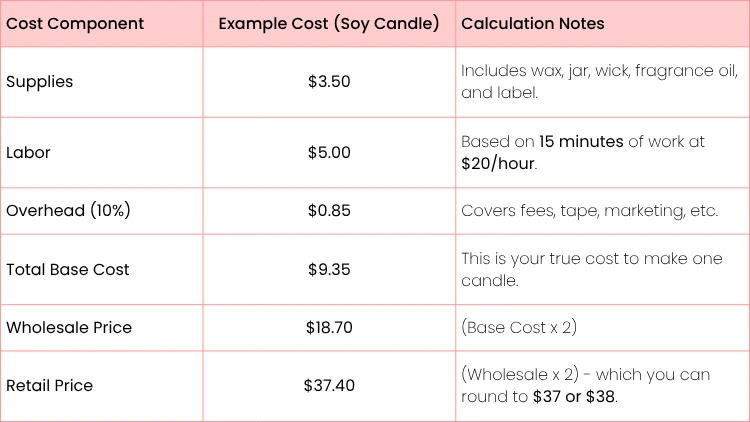
Let's walk through this using our soy candle example. This table breaks down how a real product goes from raw materials to a retail-ready price tag.
Sample DIY Product Cost and Pricing Calculation
This simple math ensures every sale is a win. You cover your costs, pay yourself for your time, and build in a healthy profit margin that allows your business to grow.
Launching Your Online Shop That Actually Sells
A great product is only half the battle. Now you need a storefront that does it justice. This is where you graduate from a passion project to a real brand, and setting up shop on a platform like Etsy or Shopify is your next big move. Getting the details right from the very beginning can make all the difference.
Think of your digital storefront as the face of your business. It’s more than just a gallery of your DIY items to sell. The e-commerce boom between 2020 and 2024 was a massive game-changer for makers, connecting artisans directly with a global audience hungry for authentic, handmade goods. If you're curious, you can dig into the data on how digital channels have blown up the handicrafts market and allowed small businesses to reach a wider audience.
Crafting Listings That Convert
The real workhorse of your online shop? Your product listings. A solid listing doesn't just display an item; it tells a story and gives the customer the confidence to click "buy". This is how you turn casual browsers into actual buyers.
It all comes down to your photos and your words.
- Practical Example (High-Quality Photos): To photograph a necklace, don't just lay it on a table. Place it on a simple bust, or have a friend model it. Take another shot next to a coin to show its scale. Use natural light from a window to avoid harsh shadows and show the true color of the materials.
- Practical Example (Keyword-Rich Titles): Instead of "Gold Necklace", use a title like, "Dainty Gold Bar Necklace, Personalized Initial Jewelry, Bridesmaid Gift for Her." This includes what the item is, its style, potential customizations, and who might buy it, hitting multiple search terms.
- Practical Example (Compelling Descriptions): Don't just say "Made with 14k gold-filled chain". Tell a story: "Our minimalist bar necklace is designed for everyday elegance. Crafted with a high-quality, tarnish-resistant 14k gold-filled chain, it's perfect for layering or wearing solo. Each necklace is handmade with care in our studio, making it a thoughtful personalized gift."
If you want to go deeper, this guide to crafting an ecommerce website with product photography has a ton more tips for creating visuals that truly sell.
Setting Up Your Shop for Success
Beyond the individual listings, the overall feel of your shop is what builds trust. A professional, cohesive storefront signals to customers that they’re buying from a serious seller, not just a hobbyist.
Here's what to focus on:
- A Memorable Brand Story: Take a few minutes to write a short "About Me" or "Our Story" section. Why did you start making these items? What’s your passion? This personal touch is what connects people to your brand.
- Simple, Clear Policies: Lay out your rules for shipping, returns, and exchanges. Keep it simple and straightforward so customers know exactly what to expect before they buy.
Actionable Insight: Your brand story isn't just fluff—it's your biggest sales tool. For example, if you started making natural dog treats because your own dog had allergies, share that! It creates an emotional connection and instantly builds trust with customers facing the same problem. This story justifies your premium price over mass-produced alternatives.
Finalizing your shop policies often goes hand-in-hand with setting your prices. For a solid look at financial strategy, learning how to price handmade jewelry for profit offers some fantastic insights that can be applied to almost any craft, helping you make sure your hard work actually pays off.

Common Questions About Selling DIY Crafts
Jumping into the world of selling your own handmade goods naturally brings up a lot of questions. We get it. This final section is all about tackling the most common hurdles new sellers face, from finding profitable products to dealing with the less-glamorous stuff like shipping and business licenses.
Getting these details sorted out from the get-go will save you major headaches down the road. Let’s dive into the questions we hear most often about DIY items to sell.
What Are the Most Profitable DIY Items to Sell
Forget chasing fleeting trends. The real key to profitability is a bit of smart strategy. The most profitable items usually fall into a few categories that strike a balance between your startup costs and what people are actually willing to pay.
Here’s a breakdown with practical examples:
- Low Startup, High Margin (Digital Products): The top choice for profitability.
- Practical Example: Create a set of 5 editable wedding invitation templates on a platform like Canva. You design it once, and customers purchase a digital file to customize themselves. Your profit margin is over 90% after platform fees.
- Medium Investment, Repeat Customers (Consumables): These create a loyal customer base.
- Practical Example: Sell handmade lavender-mint lip balm. It's a small, affordable item that customers will use up and re-order every few months, creating predictable revenue.
- Higher Investment, High Perceived Value (Personalized Goods): Items with a custom touch command premium prices.
- Practical Example: Offer personalized leather keychains with embossed initials. The act of customization adds significant value, allowing you to charge much more than the cost of the leather and hardware.
Actionable Insight: The most profitable item is one that combines your passion with a proven market need. Forcing yourself to design wedding templates when you love woodworking is a recipe for burnout. Instead, find a profitable niche within your passion, like creating personalized wooden cake toppers for weddings.
How Should I Handle Shipping and Packaging
Shipping can feel overwhelming, but it’s a huge part of your customer’s experience. Stop thinking of packaging as just an expense and start seeing it as your final marketing touchpoint.
- Actionable Insight: Create a "Branded Unboxing Experience" on a budget. Order custom-printed stickers with your logo (around $20 for 250). Use them to seal your tissue paper. Include a simple, pre-printed business card with a handwritten "Thank you, [Customer's Name]!" on the back. For just a few cents per order, you’ve made the experience memorable and increased the chance of a repeat purchase.
To start, source affordable materials from suppliers like Uline or by reusing clean, sturdy boxes. A small postal scale is non-negotiable; guessing weights is a surefire way to lose money on postage. Always use the built-in shipping calculators on platforms like Etsy or Shopify to charge the correct amount, and offer customers different shipping speeds at checkout.
Do I Really Need a Business License to Sell Crafts Online
The short answer is: eventually, yes. While you can sell a few items to friends without official paperwork, the moment you operate with the intent to make a profit, you're running a business.
Don’t let this step intimidate you. For most new makers, starting as a sole proprietorship is the simplest path.
- Actionable Insight: Before you make your first sale, open a separate bank account for your business. This is the single most important step for clean bookkeeping. Deposit all your sales into this account and make all business-related purchases from it. This simple habit will make tracking income and expenses for tax time incredibly easy, even if you just start with a basic spreadsheet.
The specific rules vary by location, but a quick search for "[Your City Name] business license" will usually direct you to the right government website. The process often involves filling out a form and paying a small annual fee. Keeping clear records of your income and expenses from day one will make tax season far less stressful and give you a true picture of your business's financial health.
Ready to build the skills for your new business? At Uplyrn, we provide the expert-led courses you need to turn your creative passion into a profitable venture. From business basics to advanced marketing, find your path to success at Uplyrn.


Leave your thoughts here...
All Comments
Reply