









How to Find Coaching Clients and Build a Thriving Business

Getting those first few coaching clients can feel like the toughest part of the journey. But it really just comes down to a clear, repeatable process.
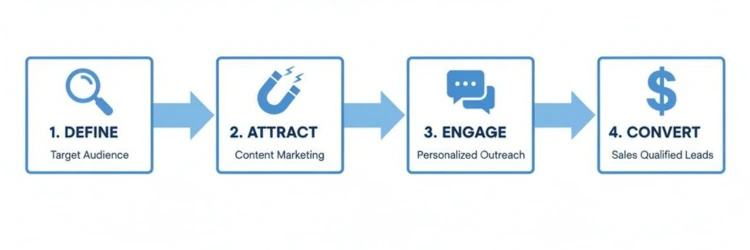
The most effective way we've seen this work, time and time again, is by focusing on a simple four-part framework: Define who you serve, Attract them with something valuable, Engage them in a real conversation, and Convert them into paying clients. If you can get these four pillars down, you'll be well on your way to building a coaching business that lasts.
Jump To Section

Earn As You Learn
Earn 25% commission when your network purchase Uplyrn courses or subscribe to our annual membership. It’s the best thing ever. Next to learning,
of course.
Your Modern Playbook for Finding Coaching Clients
When you're just starting out, landing your initial clients can seem like a monumental task. A lot of new coaches think they need a massive social media following or some complicated marketing funnel right out of the gate, but honestly, that's not true. The real secret is having a straightforward plan that guides what you do every day and helps you build momentum.
This is exactly where the four pillars of client acquisition come into play. The diagram below lays out this process perfectly, showing how you move from identifying the right person to welcoming them into your program.
See how each step builds on the last. This isn't about chasing just anyone. It's about a logical flow that brings you the right people—those who are genuinely ready to invest in what you offer.
A Growing Market is a Good Thing
If you're worried that the coaching world is too crowded, the numbers tell a much more optimistic story. The industry has absolutely exploded, jumping from a $2.85 billion market in 2019 to an estimated $5.34 billion by 2025.
That 62% growth is being driven by a 73% increase in active coaches, with now over 122,974 worldwide. Yes, that means more competition, but it also proves that the demand for specialized, expert help is at an all-time high.
This growth isn't a threat; it's validation. It confirms that individuals and organizations are actively seeking expert guidance to solve their problems, creating immense opportunities for coaches who can clearly articulate their value.
Putting the Framework into Action
So, what does this actually look like day-to-day? Instead of getting overwhelmed trying to do everything at once, just focus on one key activity for each pillar. This keeps things simple and prevents that "analysis paralysis" that stops so many coaches before they even start.
Let's break down this framework with some real-world actions.
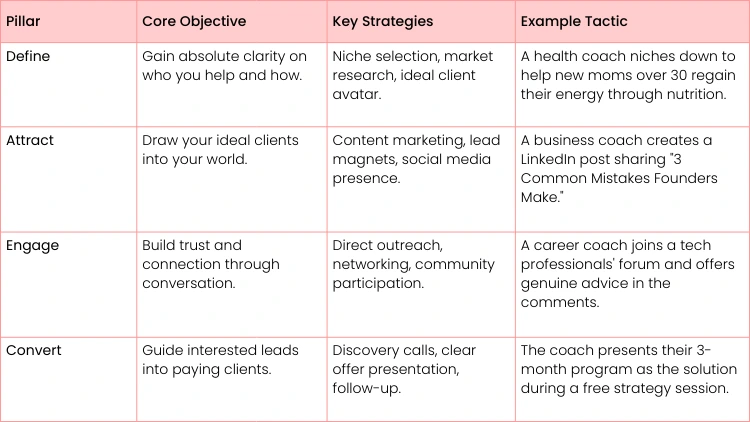
The Four Pillars of Coaching Client Acquisition
This table lays out the core framework for attracting and converting coaching clients, with actionable strategies for each stage.
By really mastering each of these pillars one by one, you’re not just hoping to find clients. You’re building a reliable system that turns a random search into a predictable part of your business.
Define Your Niche and Create an Irresistible Offer
Trying to be a coach for everyone is a surefire way to become a coach for no one. Before you can find clients, they need to be able to find you. That whole process kicks off when you get crystal clear on exactly who you help and the specific problem you solve.
Generic titles like "life coach" or "business coach" just don't cut it anymore—they get completely lost in the noise. A well-defined niche, on the other hand, acts like a magnet, pulling the right people straight to you. The very first step, and honestly the most important, is to effectively identify your target audience. When you have that clarity, everything else about finding clients just falls into place.
Once you narrow your focus, you'll find your messaging gets sharper, your marketing actually works, and potential clients immediately see you as the expert they've been looking for.
From Vague Idea to Profitable Niche
So, how do you get there? How do you go from a broad set of skills to a niche that actually makes money? It starts by mapping your unique talents to real, urgent problems that people are desperate to solve. Think about your own experiences, your skills, your passions—who are you uniquely equipped to help?
A simple but powerful way to do this is with what we call a "Problem-Solution Matrix". No fancy software needed. Just grab a piece of paper or open a doc and make two columns.
- Column 1 - Pain Points: List the specific, nagging problems a certain group of people deals with. Don't stop at the surface level. Instead of "wants a new job", dig deeper to something like, "feels undervalued in their tech role and keeps getting passed over for promotions". That's a real pain point.
- Column 2 - Your Solutions: Now, right next to each pain point, write down exactly how your coaching helps. For that undervalued tech professional, your solution might be "coaching on developing executive presence, mastering salary negotiation, and building strategic internal networks."
This little exercise forces you to connect what you do to a tangible result—something someone will gladly pay for. It’s the difference between selling a vague promise and offering a clear road to a destination they desperately want to reach.
Crafting an Offer They Can't Refuse
Once you’ve nailed down your niche, you need to package your expertise into an irresistible offer. Let us be blunt: selling your time by the hour is a trap. It commoditizes what you do and is a fast track to burnout. Your best clients aren't buying your hours; they're buying a transformation.
Your offer needs to tell a story. It should clearly map out the journey you'll guide them on, taking them from where they are now (in pain) to where they want to be. Stop selling sessions and start selling a signature program with a compelling name and a guaranteed outcome.
An irresistible offer is specific, outcome-driven, and priced on the value of the transformation, not the hours you put in. It answers the client's biggest question: "What will my life or business look like after I work with you?"
Let's make this real. Imagine a career coach who works with tech professionals. They could stop offering one-off $150/hour sessions and instead create a premium package.
Practical Example: The "Promotion Roadmap" Package
Instead of selling time, the coach builds a high-value, 3-month program.
- Program Name: The Promotion Roadmap Accelerator
- Price: $5,000
- What's Included:
- 12 Weekly 1:1 Coaching Sessions: Each one focused on breaking through a specific career roadblock.
- Resume & LinkedIn Overhaul: An expert review and rewrite to attract senior-level opportunities.
- Mock Interview & Feedback Sessions: Designed to build unshakable confidence and perfect their pitch.
- On-Demand Email Support: For quick questions and guidance between calls.
See the difference? This packaged offer is infinitely more appealing because it's a complete solution. The client isn't just buying time; they're investing in a structured path to a promotion. That makes the $5,000 price tag feel like a smart investment, not just an expense. This is how you start finding coaching clients who are serious and ready to get results.
Draw in Your Ideal Clients with High-Value Content
Once you’ve locked in who you serve and what you’re offering, it’s time to bring those perfect-fit clients into your world. The most authentic way to do this is by creating content that genuinely helps people by solving small, nagging problems for free. This simple shift in perspective moves you from being a salesperson to being a trusted authority.
Instead of chasing down clients, you’re creating a space where they come to you because you’ve already demonstrated your expertise and willingness to help. This is the heart of what we call the 'Teach and Attract' model.
The biggest pitfall here is trying to do too much. Don't spread yourself thin trying to be everywhere at once. Just choose one primary platform where you know your ideal clients hang out—whether that’s a blog, YouTube, LinkedIn, or Instagram—and commit to being a consistent, valuable presence there.
A Simple Plan for Creating Content That Connects
Your content doesn't need to be some grand, complicated production to be effective. It just needs to speak directly to the real-world challenges your audience is facing every day. A great place to start is simply brainstorming answers to the questions you hear most often from your ideal clients.
Here are a few content formats we've seen work wonders in just about any niche:
- The "Common Mistake" Breakdown: Take a frequent misstep you see your clients make and clearly explain how to sidestep it. A financial coach could create a post called, "The 3 Budgeting Blunders That Are Secretly Keeping You Broke."
- A Client's Journey (or a Hypothetical Story): Walk your audience through the transformation of a client from "Point A" (their initial struggle) to "Point B" (their successful outcome). This is storytelling at its best and provides undeniable social proof.
- The "How-To" Micro-Guide: Offer a step-by-step tutorial that solves a very specific, tangible problem. A productivity coach might shoot a short video titled, "My 30-Minute Method for Planning Your Week to Maximize Focus."
The goal of every single piece of content is to deliver a small, quick win. When someone tries your advice and it actually works, their trust in you skyrockets.
How to Create a Lead Magnet That People Actually Want
While your public content builds authority and awareness, a lead magnet is the tool that converts a casual browser into a genuine lead for your business. It's a valuable, free resource you offer in exchange for an email address, giving you a direct line of communication.
The best lead magnets solve one specific, urgent problem in a short amount of time. They offer a taste of the results you deliver in your paid programs, which naturally makes people curious about what more you can offer.
A great lead magnet isn't about giving away all your secrets. It's about solving one piece of the puzzle so effectively that your prospect trusts you're the right person to help them solve the rest.
Think of it as the perfect appetizer. It's satisfying on its own, but it leaves them wanting the main course. This is a critical step in finding coaching clients who are already warmed up and interested in what you have to say.
Real-World Lead Magnet Examples for Coaches
To get your gears turning, let's look at what this could look like in practice for different types of coaches. Notice how specific and results-oriented each of these ideas is.
For a Productivity Coach Helping Entrepreneurs:
- The Lead Magnet: A downloadable PDF, "The 5-Step Weekly Reset Checklist to Reclaim Your Focus."
- Why It Works: It tackles an immediate pain point (feeling scattered and overwhelmed) with a simple, actionable tool. An entrepreneur can download it, use it this Sunday, and feel an instant benefit.
For a Relationship Coach Helping Singles:
- The Lead Magnet: A 5-day email course, "Craft a Dating Profile That Attracts Your Ideal Partner."
- Why It Works: It breaks down a big, intimidating task into small, manageable daily actions. By the end of the week, the user has a tangible result and has started to build a rapport with the coach through the daily emails.
For a Health Coach Helping Busy Professionals:
- The Lead Magnet: A simple recipe guide, "7 Healthy Lunch Recipes You Can Make in Under 15 Minutes."
- Why It Works: It directly addresses a huge objection: "I don't have time to eat healthy." The value is immediate, practical, and easy to implement.
When you pair a compelling lead magnet with consistent, helpful content, you start building an automated system for attracting your ideal coaching clients. You're no longer just crossing your fingers and hoping people find you; you're actively building an audience of people who recognize your value and want your help.

Turning Interest into Clients: Your Outreach Playbook
So, your content is starting to draw people in. That's fantastic. But how do you bridge the gap between someone casually reading your posts and actually signing up for your coaching? The answer lies in a smart outreach strategy that combines both inbound and outbound methods.
Think of it this way: inbound methods pull clients toward you, building trust over time. Outbound tactics, on the other hand, let you proactively connect with the right people and can land clients much faster. When you use them together, you create a powerful, consistent flow of new leads without ever feeling like a pushy salesperson.
Let Your Best Clients Do the Talking: Inbound Social Proof
Inbound outreach is all about making it a no-brainer for warm leads to say "yes" to you. Nothing does this better than glowing testimonials and enthusiastic referrals. They are pure gold. In fact, the data backs this up—some studies show that a staggering 70-80% of coaching clients come from word-of-mouth.
Our best tip? Ask for a testimonial or referral the moment a client has a major breakthrough. They're on a high, feeling the full impact of your work, and they'll be genuinely excited to share their story.
Don't just hope this happens. Create a simple system to capture this excitement.
How to Get Testimonials That Sell for You:
- Time it right: When a client hits a big goal or wraps up their program, send a quick message celebrating with them.
- Keep the ask simple: Try something like, "I am so incredibly proud of what you've accomplished! If you're open to it, would you mind sharing a few sentences about your experience? It would mean the world and help so many others who are where you used to be."
- Help them help you: To get specific, powerful quotes, ask a couple of guiding questions. "What was your biggest struggle before we started?" and "What specific result are you most excited about now?" are great places to start.
- Show them off everywhere: Put these testimonials front and center on your website, in your lead magnets, and sprinkle them throughout your social media.
Making the First Move: A Guide to Outbound That Feels Good
While inbound is building your reputation, outbound puts you in control. This isn't about cold, spammy messages. It’s about starting real conversations with people you've already identified as a fantastic fit for your coaching. For this, LinkedIn is your best friend.
The secret is to lead with genuine curiosity, not a sales pitch. Your only goal for that first message is to make a human connection.
Here’s a LinkedIn connection request that actually works because it’s not salesy:
"Hi [Name], I saw your recent post on [Topic] and it really made me think. I’m also really passionate about [Your Area of Expertise] and always enjoy connecting with other pros in the [Their Industry] world. Would love to connect."
It’s about finding common ground. After they accept, you can start building a real relationship by engaging with their content and looking for natural ways to add value.
The Hidden Gem: Strategic Partnerships
One of the most powerful—and most overlooked—ways to find clients is through strategic partnerships. It’s simple: you team up with other professionals who serve the same audience but offer a different service. This is a total win-win, giving you direct access to a pre-built audience that already trusts your partner.
The possibilities are endless and can create a firehose of qualified referrals. Just ask yourself: who else is already working with my ideal client?
Partnerships in Action:
- A health coach could partner with a local gym or a nutritionist. They could offer a free workshop on "Fueling for Energy" to the gym's members, providing massive value and generating a list of warm leads.
- A leadership coach for tech managers could team up with an HR consultant. When the consultant helps a company with promotions, they can refer the newly minted managers who need support navigating their new role.
- A relationship coach might connect with wedding photographers or family law attorneys. Both professions work with people at major life turning points who could desperately use a coach's guidance.
By blending the magnetic pull of inbound proof with the proactive reach of outbound and partnerships, you build a client acquisition machine that’s both effective and authentic. You’re not just waiting for the phone to ring; you’re actively building the relationships that will grow your business for years to come.

Turning Conversations into Paying Clients
All that work—the content, the networking, the late nights—it all leads right here, to this conversation. The discovery call. This is where you transition from marketer to mentor, and it’s the single most important conversation you’ll have in your business.
The biggest mistake we see coaches make is treating this like a high-pressure sales pitch. It’s not.
Think of it as an authentic coaching conversation, maybe even their first session. Your real goal isn't to "sell" a package; it's to genuinely discover if you're the right person to help them. When you lead with genuine curiosity and a desire to serve, the whole dynamic changes. You put them at ease, and frankly, you put yourself at ease, too.
The Anatomy of an Effective Discovery Call
A great discovery call shouldn’t feel scripted. It should have a natural flow that guides the conversation from curiosity to clarity. Your job is to listen more than you talk. Ask powerful questions, then get quiet and really hear what they’re telling you.
This approach builds a tremendous amount of trust. Your prospect starts to feel seen and understood, which is often the very first step in their journey. When you nail this, signing new clients feels less like closing a deal and more like the natural next step in a great conversation.
We find it helpful to think about the call in four distinct phases:
- Build Real Rapport: Spend the first few minutes making a human connection. Skip the weather.
- Actionable Insight: Ask something that shows you see them as a person, not just another lead. Example: "I saw on your LinkedIn you're into hiking. Have you been on any good trails lately?"
- Unpack Their Current Reality: Now, you put on your detective hat. Your goal is to use open-ended questions to get to the heart of their biggest challenges and frustrations.
- Paint a Picture of Their Desired Future: Help them get razor-sharp clarity on what they really want. What does success actually look like? What would it feel like to be there?
- Show How You're the Bridge: Only after you deeply understand their "Point A" (where they are now) and their "Point B" (where they want to go) can you confidently show them how your coaching is the fastest, most effective bridge to get them there.
Guiding the Conversation with Powerful Questions
The quality of your discovery call comes down to the quality of your questions. Ditch the simple yes/no stuff and start using prompts that make them think.
Questions for Uncovering Challenges:
- "What's the single biggest thing holding you back from [their goal] right now?"
- "What have you already tried to fix this on your own, and how did that go?"
- "If we were talking a year from now and absolutely nothing has changed, how would that feel?"
Questions for Clarifying Desires:
- "If you could wave a magic wand, what would your life or business look like in six months?"
- "What would achieving that specific goal make possible for you?"
The most effective sales call is one that doesn't feel like a sale at all. It feels like the first coaching session. Your job is to create so much clarity and value during the call that working with you becomes the obvious next step for the right person.
Handling Objections with Empathy and Confidence
Sooner or later, you're going to hear objections. Don't panic! They're a totally normal part of the conversation. An objection isn't a "no"—it's usually a request for more information or a cry for reassurance. Welcome them as a chance to go deeper.
The most common one you'll get is about money: "I can't afford it." A pushy, defensive response will kill the conversation instantly. Empathy is the only way forward.
A Non-Pushy Response to Price Objections:
Instead of stumbling over your words, try this:
"I completely understand that this is a significant investment. Let's put the money aside for just a moment. If this program were free, would you feel confident that it's the right solution to help you achieve [the desired outcome we discussed]?"
This simple question is incredibly powerful. First, it isolates the price as the only real barrier. Second, it gets them to reaffirm their belief that your solution is the right one.
If they say "yes," the conversation instantly pivots. It's no longer about cost, but about finding a way to invest in a future they've just admitted they desperately want. It empowers them to become a problem-solver, with you right there beside them as their trusted advisor.
Scaling Your Client Flow with Simple Systems
Once you've got a good rhythm going and clients are coming in from your organic efforts, it's time to think about systems. This is the turning point where you stop hunting for clients one by one and start building a machine that brings them to you. It's about creating a predictable flow of leads so you can spend less time marketing and more time doing what you love—coaching.
The secret is to keep it simple, especially at first. A classic, powerful system that just works is combining a targeted social media ad with an automated email sequence. It’s a tried-and-true method for a reason.
With this approach, you're not trying to sell to strangers. Instead, you're turning a cold audience into warm leads by offering real value upfront, building trust, and then inviting them to have a conversation.
Your First Paid Advertising Funnel
Forget running ads that scream "Buy my coaching!" That's a tough sell to someone who doesn't know you. A much smarter move is to promote your high-value lead magnet. This feels like a gift, not a sales pitch, which dramatically lowers the barrier to entry and pulls in people who are genuinely wrestling with the problems you solve.
Here's a real-world example: A Facebook Ad for a Life Coach
- Ad Copy: "Feeling stuck? It’s probably not you—it’s your system. Grab my free guide, 'The 5-Minute Morning Routine,' and learn how to build momentum and reclaim your day before you even finish your coffee."
- Image: A bright, optimistic photo of someone journaling next to a steaming mug.
- Targeting: Women aged 30-45 in the US who are interested in personal development, mindfulness, and follow thought leaders like Brené Brown.
See how that works? The ad doesn't ask for a huge commitment. It offers a quick, tangible win, making it an incredibly easy "yes" for the exact person you want to attract.
The Automated Nurture Sequence
This is where the magic happens. The moment someone downloads your guide, an automated email sequence kicks in. This isn't about spamming them; it's a series of thoughtful emails designed to build on the value you've already delivered. You're carefully nurturing that new relationship until they feel ready for the next step.
And the numbers back this up. A well-executed paid ad strategy can deliver a 5-10x Return on Ad Spend (ROAS). Couple that with an automated email funnel, and you could see 20-30% of your subscribers convert into clients within 90 days. You can dig into more of the data in this in-depth coaching industry report.
The goal of your email sequence is simple: prove you understand their problem better than they do and show them you have a clear path to the solution.
Here’s what a simple 5-email flow could look like:
- Email 1 (Immediately): Here's Your Guide! The first email delivers the goods. Send the link to the lead magnet and quickly remind them of the core benefit they're about to get.
- Email 2 (Day 2): A Quick Win Story. Share a short, relatable story about a client who used a similar principle to get a fast result. Make it real.
- Email 3 (Day 4): The Common Mistake. Talk about a common pitfall your audience runs into related to the lead magnet's topic. This positions you as the expert who can help them avoid it.
- Email 4 (Day 6): Paint the Picture of What's Possible. Shift from the problem to the solution. Describe what life looks like when they finally overcome their challenges.
- Email 5 (Day 7): The Invitation. This is your gentle call-to-action. Invite them to book a free discovery call to chat about how you can help them implement these ideas personally.
This simple system creates a consistent, predictable way to find coaching clients who are already warmed up and genuinely interested in what you have to offer.

Common Questions About Finding Coaching Clients
Even with a solid plan in hand, you're going to have questions. It's only natural. Staring down the path to finding your first clients can feel a little daunting, but getting straight answers to the most common hurdles can be the difference between spinning your wheels and moving forward with real confidence.
Let's dive into the questions we hear most often from new coaches.
How Much Time Should I Actually Spend on Marketing?
When you're just starting out, think of client acquisition as your main gig. A good rule of thumb is to block out 10-15 hours a week dedicated only to marketing and outreach.
The key here isn't to burn yourself out with marathon sessions, but to be relentlessly consistent. It's much better to do a little every day than to try to do everything at once.
Focus your energy on a few high-impact activities. For example, a solid weekly plan could look like this:
- Create one truly helpful piece of content that speaks directly to a major frustration your ideal client faces.
- Show up and be helpful in two or three online communities where your people are already congregating (think specific Facebook or LinkedIn groups).
- Send personalized, non-spammy messages to 5-10 ideal prospects just to start a real conversation.
What's the Best Strategy If I Have Zero Budget?
If you're working with a budget of zero, don't sweat it. Your most valuable assets are your time and your expertise. The most powerful no-cost strategy is a simple one-two punch: targeted, direct outreach combined with giving away massive value in public forums.
This approach builds your authority and makes people come to you.
For instance, a business coach could find 50 startup founders on LinkedIn who fit their ideal client profile perfectly. They could send each one a personalized connection request—not a sales pitch, but a genuine opening for a conversation. At the same time, that coach could spend 30 minutes a day in a couple of entrepreneur-focused Facebook groups, just answering questions and offering insightful advice. No pitching, just helping.
When you have no budget, your currency is generosity. Show up consistently, solve small problems for free, and people will naturally start asking how they can pay you to solve their big problems.
How Do I Get Testimonials When I Don't Have Any Paying Clients?
The classic chicken-and-egg problem. The fix is simpler than you think. Find two or three people you'd love to work with and offer to coach them for free or for a drastically reduced "beta" rate.
The catch? In exchange for your coaching, you ask for a detailed testimonial and their honest-to-goodness feedback on your entire process.
Just be completely upfront about the arrangement. This isn't just a sneaky way to get testimonials; it’s a crucial step for you to refine your coaching methods, build your own confidence, and gather the social proof you absolutely need to land those first full-paying clients. A glowing testimonial from a thrilled beta client is worth far more than the fee you might have charged them.
Ready to build a platform that showcases your expertise and attracts a steady stream of clients? Uplyrn provides the tools you need to create courses, manage coachings, and establish your authority online. Start building your coaching business with us today.


Leave your thoughts here...
All Comments
Reply