









A Guide to Effective Active Listening Skills Training

Active listening training isn't just a corporate buzzword; it's a structured way to teach people how to fully concentrate on, understand, and remember what's being said. It's about moving beyond simply hearing words. The goal is to process the complete message—including unspoken cues and emotional undercurrents—which is the absolute bedrock of solid communication at work.
Jump To Section

Earn As You Learn
Earn 25% commission when your network purchase Uplyrn courses or subscribe to our annual membership. It’s the best thing ever. Next to learning,
of course.
Why Active Listening Is a Non-Negotiable Workplace Skill
We’ve all been there—that deeply frustrating feeling of being misunderstood at work. It's the root cause of project blunders, strained team relationships, and squandered opportunities. This guide treats active listening not as some fluffy "soft skill", but as a critical driver of performance, trust, and real collaboration. It's a skill you can learn, designed to make sure you're grasping the full message, not just the words tumbling out.
The fallout from poor listening is bigger than you might think. Professionals typically spend about 55% of their day listening, but studies reveal they only remember about 25% of what they hear. That massive gap is where misunderstandings are born, especially in today's digitally-saturated workplaces that are overflowing with distractions.
The Tangible Benefits of Listening Well
When you invest in active listening, the returns are real and measurable. Companies that build a culture where employees feel genuinely heard see higher retention, happier customers, and smoother collaboration between departments. This isn't just a hunch; one workplace study found that 74% of employees feel more engaged when they believe they're being listened to. You can dig deeper into the importance of active listening here.
It all boils down to creating an environment of psychological safety. When people feel safe, they're far more likely to share brilliant ideas or flag a small concern before it snowballs into a full-blown crisis.
Practical Example: Imagine an engineer notices a minor flaw in a product design. In a company with poor listening culture, they might stay silent, fearing their concern will be dismissed. In a company that practices active listening, they feel confident raising the issue, knowing their manager will hear them out fully. This single conversation can save the company millions in recall costs down the line.
Your Roadmap for Skill Development
Forget the generic advice. This guide offers a practical framework you can put into action immediately. My goal is simple: to give you the tools to become a more effective communicator, a better leader, and a more valued colleague.
Here’s what I’ll cover:
- Core Techniques: I'll break down the essentials, like how to paraphrase effectively, ask smart clarifying questions, and read the non-verbal cues people are sending.
- Structured Practice: You'll get actionable exercises you can do on your own or with your team to start building muscle memory.
- Measuring Improvement: I’ll show you proven ways to track your progress and see the real-world impact of your efforts.
By mastering these skills, you're not just getting better at communication. You're building stronger relationships and driving tangible business results. These abilities are at the very heart of the principles of business communication that make or break successful organizations.

Deconstructing the Art of Active Listening
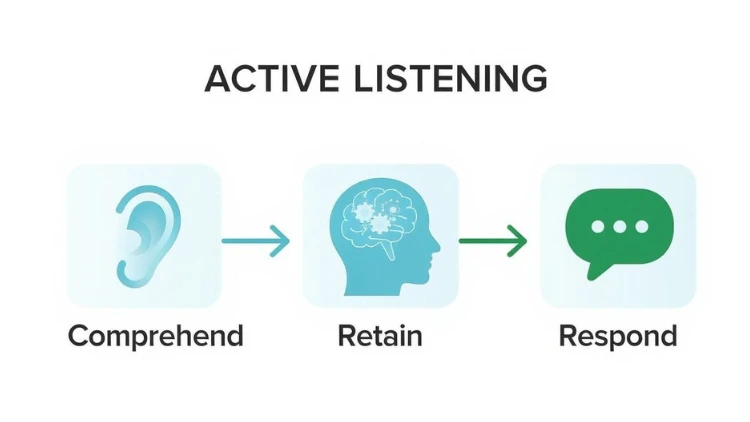
So, what is active listening, really? It's so much more than just staying quiet while someone else talks. I think of it as a full-contact sport for communication—an engaged, dynamic process built on three core skills: Comprehending, Retaining, and Responding.
To truly master this, you have to move beyond just hearing the words. You have to actively process the entire message. Any worthwhile active listening skills training zeroes in on strengthening each of these pillars.
Think of it like building a bridge. Comprehending is the foundation—really understanding the raw materials of the conversation. Retaining is the framework—organizing and holding those materials in place. Responding is the finished structure, the part that proves the bridge is sound and actually connects two points. If one piece is missing, the whole thing collapses.
Comprehending The Full Message
First up is comprehension. This is all about grasping what's said and what's left unsaid. It’s not just about the words, but the tone, body language, and the emotion fueling the entire conversation. We’ve all seen the studies showing non-verbal cues carry most of the weight in communication, and this is where that insight becomes critical.
Picture a tense project feedback session. A junior designer on your team says, "Yeah, the feedback is fine, I can make the changes." But as they say it, they're avoiding eye contact, their arms are crossed, and their voice is completely flat.
- Passive hearing only catches the words: "The feedback is fine."
- Active comprehending sees the full picture: The designer is probably feeling defensive or discouraged, even if their words say otherwise. The body language is screaming disagreement or disappointment.
This deeper level of understanding is a game-changer. It lets you address the real issue—the designer's feelings—instead of just ticking a task off your list. To get even better at this, you can learn more by harnessing different types of listening skills to interpret these nuances like a pro.
Retaining Key Information
Once you understand the message, you actually have to remember it. Our brains are leaky buckets; we can lose up to 50% of new information within an hour. The key to retention isn't developing a photographic memory, but using smart techniques to anchor the details that matter.
Let's say you're on a complex client discovery call. The client is firing off their workflows, pain points, and goals for a new software project. If you try to remember every single word, you'll just get overwhelmed and miss the big picture.
A simple but powerful technique here is mental summarization. As the client talks, create a silent, one-sentence summary in your head every few minutes. After they spend five minutes describing a data entry problem, your mental note might be: "Manual data entry is their biggest time-waster." This boils down complex information into sticky, memorable chunks.
Actionable Insight: Another powerful retention tool is note-taking, but not in the way you might think. Instead of transcribing the conversation, use a two-column method. In one column, jot down key facts and figures. In the other, write down the emotional cues or underlying questions. This helps you retain both the "what" and the "why".
Responding To Show Engagement
Finally, responding. This is where you close the communication loop and show the other person you were actually listening. A good response validates the speaker and confirms you're both on the same page. It’s the proof in the pudding.
This pillar really comes down to two key actions:
- Paraphrasing: This is my go-to move. Restate their main points in your own words. For example: "So, if I'm hearing you right, the real problem is the tight project timeline, not the budget itself?" This is incredibly powerful. It confirms your understanding and gives them a chance to correct you if you’re off base.
- Asking Insightful Questions: Go beyond generic questions like "Anything else?" and ask something that builds on what they’ve said. An open-ended question like, "You mentioned the timeline is tight. What's the biggest obstacle we'd face if we tried to meet that deadline?" shows you were paying attention.
This kind of thoughtful response proves you weren’t just waiting for your turn to talk; you were genuinely invested in understanding their world.
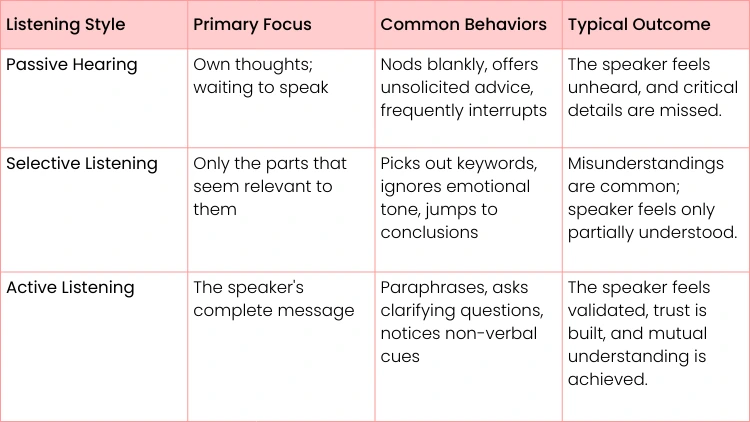
Levels of Listening: A Comparison
To pull it all together, it's helpful to see how different listening styles stack up. Most of us drift between these, but the goal is to spend as much time as possible in the "Active" column.
When you start consciously practicing these three components—Comprehending, Retaining, and Responding—you stop just hearing sounds and start building connections. You turn listening from a passive habit into a powerful tool for better relationships and better results.
A Practical Framework for Your Active Listening Skills Training
Knowing what active listening is and actually building the skill are two different things. You can’t just wing it and expect lasting change. What you need is a structured plan.
Think of it like building a house. You wouldn't start with the roof, would you? You need to lay a solid foundation first. A deliberate, module-by-module framework lets you focus on one core competency at a time, ensuring you master the basics before moving on to more advanced techniques. This is your curriculum for developing powerful, career-changing listening habits.
Any effective active listening skills training has to follow a logical path: start with mindset, move to mechanics, layer on emotion, and then finally, put it all into practice in the real world. This approach prevents you from feeling overwhelmed and helps build the muscle memory needed for these skills to become second nature.
This isn't about becoming a perfect listener overnight. It’s about making small, sustainable improvements that stick.
At its core, listening is an active process, not just a passive state of waiting for your turn to speak. It breaks down into three simple, yet powerful, actions: fully comprehending the message, retaining what's important, and then responding with intention.
Let's break down how to train each part of this process.
Module 1: Building a Listener’s Mindset
Before you learn a single technique, you have to get your head in the game. This foundational module is all about silencing your "internal chatter"—that relentless stream of judgments, comebacks, and random thoughts that pulls your focus away from the speaker.
The goal here is simple: shift your mindset from replying to understanding.
The key is to start approaching conversations with genuine curiosity. Instead of assuming you already know what the other person is going to say, treat every single interaction as a chance to learn something new. This one mental shift can change everything, forcing you to pay much closer attention.
Actionable Insight: Before your next important meeting, write down one thing you want to learn from the other person. For example: "I want to understand why Sarah is concerned about the project deadline." This simple act primes your brain to listen for information rather than just waiting to talk.
Module 2: Reflective Listening Techniques
With the right mindset in place, it’s time to get into the mechanics. This is where we cover the nuts and bolts of paraphrasing and asking clarifying questions. These two skills are the bedrock of active listening because they prove you’re engaged and confirm you’re on the same page.
Paraphrasing isn't just about parroting their words back to them. It’s about capturing the core of their message and saying it back in your own words to make sure you've got it right.
Practical Example: A team member says, "I'm totally swamped. This new report is taking forever, and I still have to prep for the client presentation." A passive listener might say, "Sounds like you're busy." An active listener would paraphrase: "So the unexpected work on this report is putting your client presentation at risk. Is that right?"
See the difference? This is also where we introduce the "Looping" technique. You simply rephrase what you heard and ask, "Did I get that right?" You keep doing this until they give you a clear "yes". It’s a powerful way to ensure you're perfectly aligned before the conversation moves on.
For any organization, identifying which teams need this kind of training is crucial. Running a training needs analysis can pinpoint exactly where these skills gaps are.
The point of reflective listening isn't to win an argument or jump to a solution. It's to make the other person feel completely and accurately understood. That validation is often more powerful than any advice you could offer.
Module 3: Engaging with Empathy
Once you've nailed the mechanics, it’s time to add the next layer: emotion. This module is all about learning to hear what's not being said. It's about listening for the feelings behind the facts.
This means tuning into tone of voice, body language, and specific word choices. Is their voice tight with stress? Are they sighing in frustration? Picking up on these emotional cues is how you build real trust and rapport.
Practical Example: Your direct report says, "I just don't feel like my idea got a fair shot in that meeting." An empathetic response isn't about agreeing or disagreeing. It's about acknowledging their reality: "It sounds like you felt dismissed, and that's frustrating. I can see why you'd feel discouraged."
That simple statement validates their experience, which is the essential first step before you can even think about problem-solving.
Module 4: Putting It All into Practice
Now we bring it all together. This final module is about integrating your mindset, mechanics, and empathy and applying them in progressively tougher real-world situations. This stage is all about structured practice and feedback.
You don't jump into the deep end right away. Start by practicing in low-stakes chats with a trusted colleague. Then, try it in your next team meeting. Eventually, you can bring these skills into a tough client negotiation.
The key is to reflect after each significant conversation. Ask yourself:
- Was I able to quiet my internal monologue?
- How many times did I paraphrase or ask a clarifying question?
- Did I notice the speaker’s emotional state, and did I acknowledge it?
When you're building out a formal training program, grounding it in solid instructional design best practices is non-negotiable. This ensures your modules actually lead to real, observable changes in behavior. A good rule of thumb is that in most conversations, you should spend about 80% of your time listening and only 20% speaking. Programs that embed this principle consistently produce stronger teams and better leaders, which is why active listening workshops are a cornerstone of management training.
Practical Exercises to Sharpen Your Listening Skills
Knowing the theory is one thing, but listening is a skill that’s built through doing, not just reading. This is where you roll up your sleeves and start turning abstract concepts into concrete habits. The exercises below are designed to be immediately useful, whether you're practicing on your own or with your team.
Think of it like a gym workout for your communication muscles. Each drill targets a specific aspect of listening, from sharpening your focus to truly grasping emotional context. This kind of action-based learning is the fastest way I've seen people make real, measurable progress in how they connect with others.
The One-Minute Rule for Individuals
This one sounds almost too simple, but it’s a game-changer for breaking the habit of interrupting. The next time you’re in a one-on-one conversation, make a commitment to listen for a full 60 seconds without saying a single word. No interjections, no "uh-huhs" and definitely no planning what you're going to say next. Just listen.
- Objective: The goal is to train your brain to silence its own commentary and focus entirely on the speaker. You’ll quickly see how often we're busy formulating a response instead of actually absorbing what's being said.
- Debrief Questions: Afterwards, ask yourself: Was it tough to stay quiet? What specific details did I pick up on that I might have missed otherwise?
Actionable Insight: Use a discreet timer on your watch or phone at first. You might be shocked at how long 60 seconds of pure silence can feel, which often reveals an interrupting habit you never knew you had.
Story Retelling for Pairs
Grab a coworker for this one. It's an incredible exercise for building both memory and empathy. Have one person share a short, meaningful story from their week—maybe a frustrating client call or a small personal win. The listener's only job is to soak it all in.
When they’re done, the listener has to retell the story back to the speaker. The key here isn't just reciting facts. It's about capturing the feeling behind the story and why it was important to them.
Practical Example: The speaker shares, "I was so frustrated because I spent all day on the presentation, and right before the meeting, the client changed the requirements." The listener retells, "So you felt completely blindsided and like all your hard work was wasted because of a last-minute change. That sounds incredibly discouraging." The goal is for the speaker to say, "Yes, that's exactly how it felt."
The Problem-Solving Pause for Teams
In team meetings, we often jump to solutions before the problem is even fully on the table. This exercise introduces a deliberate slowdown to get everyone aligned. The next time someone brings up a challenge in a meeting, hit the "Problem-Solving Pause".
Here's how it works:
- No Solutions Allowed: For the first five minutes, nobody can offer a solution, a suggestion, or a fix.
- Paraphrasing Rounds: Before any brainstorming starts, at least three different people must paraphrase the problem in their own words. For example, "What I'm hearing is..." or "So the core issue is..."
- Confirmation: The person who shared the problem has to confirm that each paraphrase is accurate before the next person can go.
This simple structure kills misunderstandings at the root and makes sure the team is solving the right problem. It gives the speaker the validation of being heard and almost always leads to better, more relevant solutions once the pause is over.
Of course, once you’ve mastered these foundational exercises, there’s always more to learn. To refine your skills even further, you can explore proven strategies to improve English listening skills.
The power of these exercises is that they’re practical. They’re a perfect example of action-based learning, the future of skills development, because they move you from passive knowledge to active application. Practicing these drills consistently will sharpen your focus, deepen your empathy, and make you a far more effective communicator in any setting.

How to See If Your Listening Skills Are Actually Getting Better
Going through active listening exercises is a great first step, but how can you tell if the training is sticking? If you want to turn this skill into a real professional asset, you need a way to track your growth and see its impact on your daily work. Otherwise, you’re just guessing.
The good news is you don’t need a complex analytics dashboard for this. It's really about connecting your practice to outcomes you can actually see and measure. This is how you shift active listening from a fuzzy concept into a concrete behavior that gets results.
Start with Self-Assessment Tools
The most direct way to track your progress is to simply start paying closer attention. A personal rating scale or, even better, a conversation journal can give you powerful insights into your habits and how they're changing.
A conversation journal is especially effective. After a key interaction—like a client call or a weekly team sync—take two minutes to jot down a few notes. This isn't about writing an essay; it’s about quick, honest reflection.
Here’s a simple template to get you started:
- What was my goal? (e.g., Understand the client's core problem.)
- What went well? Where did I consciously use a listening technique? (e.g., "I paraphrased the client's concern, and they confirmed I got it right.")
- What could have been better? Where did I slip into old habits? (e.g., "I jumped in with a solution before my colleague finished explaining the issue.")
- One thing I'll do next time: What’s one specific action I’ll focus on in my next important conversation?
This simple act builds self-awareness, which is the bedrock of any real behavioral change. It helps you pinpoint exactly where your active listening skills training is paying off and where you still need to focus.
Using Feedback for Growth
Self-reflection is powerful, but you can’t see your own blind spots. That's where external feedback comes in. For managers and team leads, building listening skills into performance reviews and 360-degree feedback loops shows that it's not just a personal goal—it's a team value.
When you're giving feedback, be specific. Focus on what you actually observed. Saying "you need to be a better listener" is vague and unhelpful.
- Ineffective Feedback: "You weren't listening in that meeting."
- Actionable Feedback: "During the project update, when Sarah shared her concerns about the timeline, you immediately offered solutions. A better approach might have been to first ask a clarifying question, like, 'What part of the timeline worries you the most?' That would have shown you were working to fully understand the problem before solving it."
This kind of specific, behavior-based feedback gives people a clear target to aim for. For organizations wanting to formalize this, it helps to use a proven framework for measuring training effectiveness. You can learn more by exploring the best way to use the Kirkpatrick Model for evaluating L&D impact. This connects the dots between an individual's skill development and broader business goals.
Applying Skills When the Stakes Are High
Ultimately, the true test of your listening progress is how well you perform under pressure. This is where you really see the ROI of all that practice.
Think about these common high-stakes situations at work:
- De-escalating a Tense Client Call: A frustrated client isn't just giving you information; they're expressing emotion. Before you rush to a solution, validate how they feel. A simple, "I can hear how frustrating this has been for you, and I completely understand why you're upset" can immediately lower their defenses. It shows you heard their emotional message, not just their words.
- Running Inclusive Meetings: When an active listener runs a meeting, they make sure everyone feels heard. You can do this by intentionally inviting quieter team members to contribute ("David, we haven't heard your thoughts on this yet—what are you thinking?") and by summarizing key decisions to confirm everyone's on the same page. The success metric here is simple: fewer follow-up meetings because you cleared up misunderstandings in the moment.
- Giving Motivating Employee Feedback: When it's time for a tough conversation, start by listening. Ask an open-ended question like, "How do you feel that project went?" Then just listen—really listen—to their side of the story first. This simple shift turns a dreaded monologue into a productive dialogue that actually inspires growth instead of deflating morale.
Common Questions About Active Listening Training
Even with the best training plan, theory and reality don't always line up. Real-world conversations are messy, unpredictable, and rarely follow a script. So, what happens when you run into those inevitable roadblocks?
This is where the rubber meets the road. Let's tackle some of the most common hurdles people face when they start putting active listening into practice. Think of this as your field guide for navigating those tricky, all-too-common situations.
How Can I Listen Actively in a Fast-Paced Virtual Meeting?
Virtual meetings are a minefield of distractions. Between chat notifications pinging, emails popping up, and the siren song of multitasking, staying focused feels like a Herculean task. The trick is to be intentional about creating a distraction-free zone.
Actionable Insight: The moment a virtual meeting begins, physically close all other tabs and applications. Turn your phone face down and move it out of arm's reach. This creates a "digital clean room" that forces your brain to focus on the conversation at hand.
Next, turn on your camera. It’s a small thing, but being visible creates a bit of social pressure to stay engaged. You're less likely to drift off if you know people can see you. It also gives you a chance to pick up on the limited non-verbal cues available on screen.
Finally, make it your job to summarize what’s being said. When you verbally paraphrase a colleague's point—"So, just to confirm, you're suggesting we shift the Q3 budget to the new marketing initiative?"—it forces you to process what you're hearing. It not only proves you're listening but also helps clarify the conversation for the entire group.
What Do I Do When Someone Won’t Stop Talking?
We've all been there, trapped in a conversational filibuster. Someone is dominating the discussion, leaving zero air for anyone else to contribute. Interrupting feels rude, but saying nothing isn't helping anyone. The key is to interject respectfully but firmly.
Your moment is when the speaker takes a breath. It might only be a split second, but that's your opening. Jump in with a comment that both validates what they said and redirects the conversation.
Practical Example: "That's a really interesting point about the supply chain issues, and I want to make sure we capture it. Before we move on, I'd love to quickly hear from Sarah on how this might impact her team's timeline."
This technique is effective because it starts by acknowledging their contribution, which makes them feel heard. Then, it skillfully pivots the discussion to include others without completely shutting them down.
Is Active Listening Still Important If I Disagree Completely?
Absolutely. In fact, it’s most important when you disagree. The purpose of active listening isn't to agree with the other person; it's to fully understand their perspective. When you truly listen to a viewpoint you oppose, you get a clear picture of their reasoning, their values, and what's driving their argument.
Practical Example: You believe Project A is the top priority, but your colleague is arguing passionately for Project B. Instead of planning your rebuttal, ask clarifying questions: "Help me understand what success for Project B looks like to you," or "What's the biggest risk you see if we delay Project B?" By listening to their rationale, you might discover their priority is driven by a customer commitment you weren't aware of, allowing for a more informed, collaborative decision.
This isn't just a "nice-to-have" skill. Globally, active listening and empathy are seen as vital for the modern workforce. The World Economic Forum consistently highlights these abilities as being in high demand, right alongside analytical thinking. While the need for this training is growing everywhere, a significant skills gap remains, proving that these human-centric abilities are more critical than ever. You can read more about these in-demand core skills here.
By listening first, even when you fundamentally disagree, you build a bridge of respect. That bridge is often the only path toward finding common ground.
At Uplyrn, we believe that strong communication skills are the foundation of professional success. Our platform offers expert-led courses and personalized mentoring to help you master active listening and other critical workplace abilities. Start building your skills with Uplyrn today.


Leave your thoughts here...
All Comments
Reply