









Baking for Beginners: A Guide to Building Kitchen Confidence
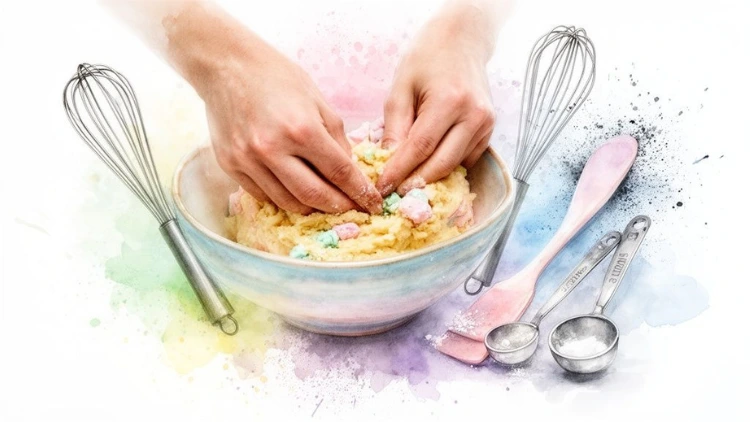
Let’s be honest, the whole idea of baking from scratch can feel pretty intimidating. A lot of us have this notion that you either have the "baker's touch" or you don't. But that’s one of the biggest myths out there.
The secret to great baking isn't some innate talent—it's about understanding a few core principles. Think of it more like a science than a mysterious art form, especially when you're just getting started.
Every step in a recipe has a real, tangible purpose. Take creaming butter and sugar, for example. You're not just mixing them together; you're actively whipping tiny air pockets into the fat. Those little pockets are what give a cake its light, tender crumb. Once you understand the "why" behind an instruction like that, it stops being a chore and becomes an actionable technique. This shift in perspective is the first real step toward feeling confident in the kitchen.
Actionable Insight: We've found the biggest hurdle for new bakers is almost always psychological. The moment you see a "failed" recipe not as a disaster, but as a learning opportunity—a clue telling you something about your oven temperature or how you measured your flour—you’ve cracked the code to getting better. For instance, if your cookies spread too much, don't just throw them out. Note that the dough was likely too warm and make a plan to chill it longer next time.
Learning to bake is a lot like how our brains learn any new skill: it takes repetition and recognizing patterns. You don't have to nail it on the first try. Your only goal is to start.
This guide is designed to pull back the curtain on baking by focusing on practical, repeatable steps that actually work. We'll walk through everything you need to build a solid foundation, including:
- The Core Principles: The simple rules that govern how your ingredients work together.
- The Essential Tools: The handful of items you actually need (it's fewer than you think!).
- Foolproof Recipes: Simple, reliable recipes we've chosen specifically for beginner success.
By the time we're done, you'll see that baking is something anyone can master. If you're interested in the nuts and bolts of skill acquisition, this post on how the brain learns new skills is a great read and applies perfectly to your new baking adventure.
Jump To Section

Earn As You Learn
Earn 25% commission when your network purchase Uplyrn courses or subscribe to our annual membership. It’s the best thing ever. Next to learning,
of course.
Building Your Essential Baking Toolkit
You don’t need a kitchen bursting with expensive gadgets to start your baking journey. Honestly, it's better to start small. Master the basics with a few key pieces of equipment, and you can always add to your collection later.
Let’s focus on the handful of tools that will get you through almost any foundational recipe you’ll want to tackle.
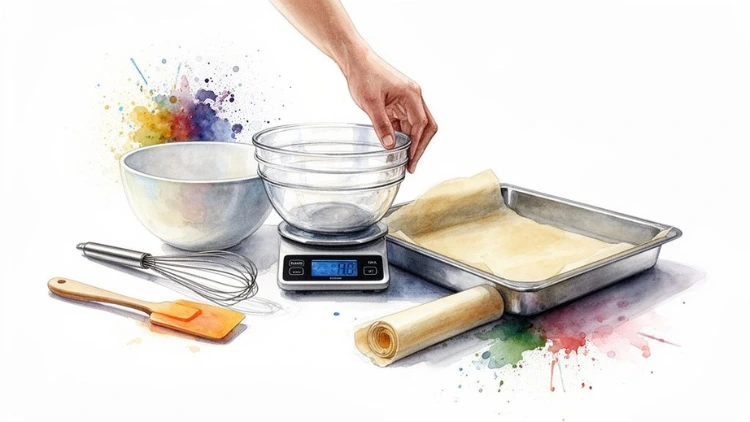
The absolute first thing you should get is a digital kitchen scale. We can’t stress this enough. While many older recipes use cups, weighing your ingredients—especially flour—is the secret to consistent results. A cup of flour can vary in weight by 20% or more depending on how you pack it into the cup, which is the hidden culprit behind so many failed recipes. A scale removes all that guesswork.
Core Equipment for Everyday Baking
Beyond the scale, a few other items form the backbone of a great starter kit. You'll want a good set of mixing bowls, a flexible silicone spatula for scraping down every last bit of batter (waste not, want not!), and a classic balloon whisk for whipping air into eggs and cream.
- Versatile Baking Pan: A simple 9x13 inch metal baking pan is a true workhorse.
- Practical Example: Use it to make a batch of brownies one day, a simple yellow sheet cake the next, and even a savory lasagna for dinner.
- Parchment Paper: This stuff is magic. It makes for non-stick baking and cleanup is an absolute breeze. Just line your pan, and you can lift your creations right out.
Actionable Insight: So many beginners make the mistake of buying a huge, specialized set of pans they never use. Our advice? Just start with one great, versatile pan. Once you realize you have a passion for making muffins or artisan bread, then you can go out and buy the specific bakeware you need. Don't let the desire for "perfect gear" stop you from starting.
If you're particularly interested in bread but find the process intimidating, a machine can be a fantastic way to build confidence. You can explore options for the best bread machine for beginners to get perfect loaves with minimal effort.
With just these core items, you’re more than ready for your first few baking projects. And when you're ready to take a more structured approach, feel free to check out this baking for beginners course.
Getting to Know Your Five Core Ingredients
Amazing baked goods aren't complicated. In fact, they usually come down to a handful of simple ingredients working together in perfect harmony. If you want to master baking for beginners, you first need to get acquainted with the "why" behind the five core players: flour, sugar, eggs, butter, and leavening agents. They do way more than just add flavor; they create structure, give things their signature texture, and add that melt-in-your-mouth tenderness.
Think of flour as the literal backbone of your bake. For most things you'll start with, all-purpose flour is your best friend. It provides the essential structure for everything from chewy cookies to light-as-air cakes. It’s the protein inside the flour—gluten—that forms an intricate web to hold everything else together.
The Science Behind the Magic
Baking is less about just mixing things in a bowl and more about chemistry. Take creaming softened butter and sugar, for example. It’s a critical first step in so many cake and cookie recipes for a reason. You're not just combining them; you're creating thousands of microscopic air pockets. These tiny pockets expand like crazy in the oven's heat, which is what gives you that light, fluffy texture. It's a simple mechanical action that acts as a form of leavening.
Another detail that trips up a lot of new bakers is ingredient temperature. When a recipe calls for room-temperature eggs and butter, it’s not a suggestion—it’s a rule.
Actionable Insight: Cold ingredients are the enemy of a smooth batter. They just don't emulsify properly. If you’ve ever had a cake batter look curdled, greasy, or separated, cold eggs were almost certainly the culprit.
- Practical Example: To bring eggs to room temperature quickly, place your cold eggs in a bowl of warm (not hot) tap water for 5–10 minutes before you start mixing. This simple action ensures your batter comes together smoothly.
This tiny step makes a world of difference, ensuring your batter comes together into a smooth, cohesive mixture. That translates directly to a more uniform crumb and a tender final product. Learning these fundamentals is where understanding the "why" unlocks your creativity.
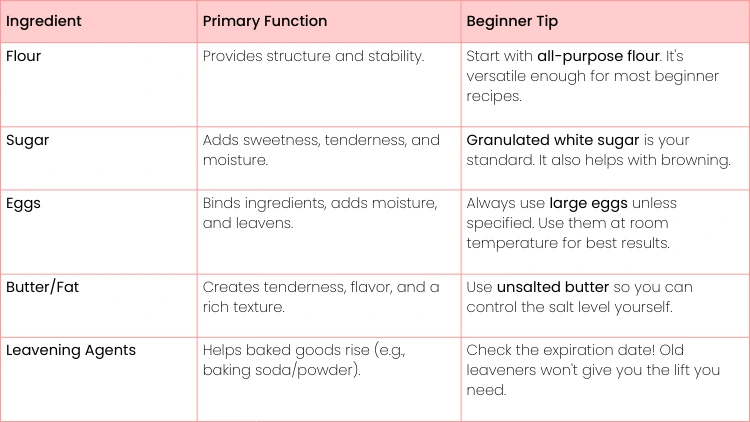
Now, let's break down the role of each key player. This quick reference table will be your go-to guide as you start your baking journey.
The Role of Core Baking Ingredients
Think of these five as your starting lineup. Once you understand what each one brings to the table, you'll be able to troubleshoot recipes and even start experimenting on your own.
And it’s a great time to be getting into baking! The global appetite for it is exploding. The bakery ingredients market is projected to more than double from USD 23.67 billion in 2025 to a massive USD 48.79 billion by 2035. For us home bakers, that growth means we'll keep seeing better and more interesting ingredients hitting the shelves. You can dive deeper into the numbers and discover more insights about this expanding market.
Getting a Feel for Four Foundational Baking Techniques
You can follow a recipe to the letter, but until you understand the physical feel of the techniques, your results will always be a bit of a gamble. So many guides on baking for beginners toss around terms like "cream", "fold" or "proof" assuming you know what they mean.
Let’s change that.
These aren't just fancy chef words; they're specific actions that build the texture and structure of whatever you’re making. Nailing them is one of the biggest leaps you can take toward baking with real confidence.
The Art of Creaming and Folding
Creaming is about so much more than just mixing butter and sugar together. The real goal is to force tiny air bubbles into the fat, creating an emulsion that gives cakes and cookies their light, tender crumb.
- Practical Example: Using a stand mixer or hand mixer on medium speed, beat room-temperature butter and granulated sugar. Watch for the visual cues: the mixture will visibly lighten in color, transforming from a deep buttery yellow to a pale, creamy off-white. It should look fluffy and almost like a thick frosting. This isn't a 30-second job—give it a full 3-5 minutes. Don't cut this step short!
Folding, on the other hand, is the complete opposite. It’s all about gentle persuasion. You’ll use this when you need to combine something light and airy (like whipped egg whites or whipped cream) into a much heavier batter without losing all that precious air.
Actionable Insight: The motion is key. Imagine drawing a line down the middle of the batter with your spatula. Scrape along the bottom of the bowl from that line, then lift what's underneath up and over the top. Give the bowl a quarter turn and repeat. This "cut, scrape, fold" motion gently incorporates ingredients while preserving the air you worked so hard to create.
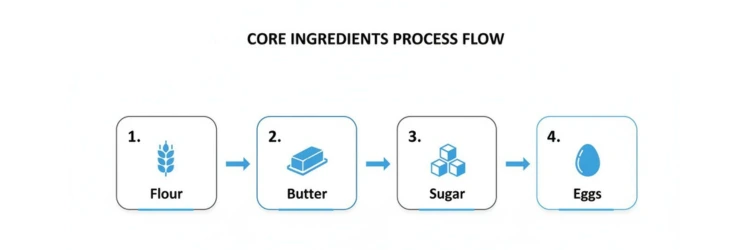
The ingredients you're working with are the building blocks for these techniques. Each one plays a critical role.
How to Properly Proof Yeast
Proofing sounds technical, but it’s incredibly simple: you're just proving that your yeast is alive and kicking before you add it to your dough. It’s a non-negotiable first step for most bread recipes.
Actionable Insight: Dissolve your active dry yeast in warm water (the sweet spot is 105–115°F — about the temperature of a comfortable bath) with a little pinch of sugar to give it something to eat. Let it sit undisturbed for about 5-10 minutes.
If you come back to a mixture that is foamy, bubbly, and smells slightly like beer, your yeast is active and ready to go. If it’s just sitting there looking like sad, murky water, your yeast is dead. Tossing it out at this stage saves you from wasting flour and time on a dough that will never rise.
Once you get these core skills down, you'll have the foundation to tackle more advanced pastry and dessert techniques.
Foolproof Recipes for Your First Bakes
Alright, it's time to get your hands dirty and put all that theory into practice. Reading is one thing, but the real magic—and the confidence boost—happens when you pull something warm, fragrant, and delicious out of your own oven.
These recipes are our go-to recommendations for anyone just starting out. They’re designed to be forgiving while reinforcing the core techniques we’ve already talked about. The goal is a tasty, successful bake, every single time.
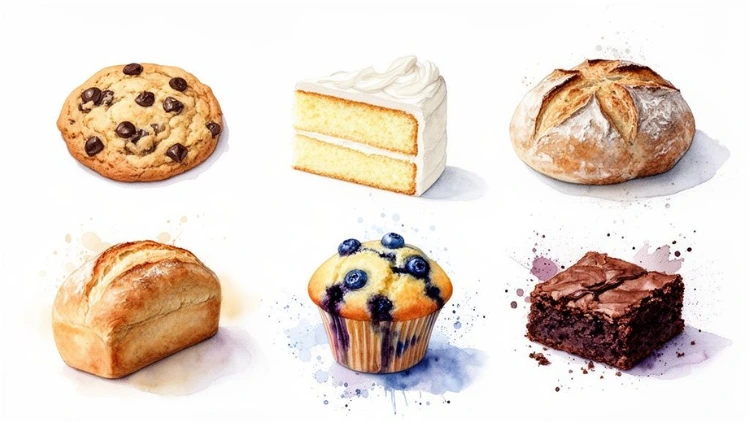
We'll kick things off with classic Chocolate Chip Cookies. The non-negotiable secret here is chilling the dough.
- Practical Example: After mixing, scoop your cookie dough onto a baking sheet, cover it with plastic wrap, and refrigerate for at least 30 minutes. This solidifies the butter, preventing the cookies from spreading into sad, flat discs in the oven.
The point here isn't just to blindly follow steps; it's to see the 'why' behind them. You'll witness firsthand how creaming butter and sugar creates a light, airy crumb in your cake, or how a gentle touch with the muffin batter is the key to keeping them tender.
Baking isn’t all about sugar, though. We'll move on to make a No-Knead Bread that requires almost zero effort for a ridiculously impressive loaf with a crackly, artisan-style crust. It’s the perfect way to get comfortable with yeast without the intimidation of all that kneading. It's a hands-off approach that fits perfectly into a busy schedule. Speaking of which, you can learn more about fitting cooking into your routine with this guide to organized meal planning.
Next up, we’ll tackle Fluffy Blueberry Muffins. This recipe is a masterclass in the "muffin method", a specific mixing technique designed to avoid overworking the batter—the number one culprit behind tough, rubbery muffins.
And to finish? Going out with a bang: decadent, gooey Fudgy Brownies. The trick is using melted butter and mixing just enough to combine the ingredients. That’s how you get that dense, rich texture that separates a truly great brownie from a dry, cakey one.
If you're feeling adventurous and want to experiment with different fats, you might be surprised by the amazing results you can get from using olive oil for baking. It can be a secret weapon for incredibly moist cakes and breads.
How To Troubleshoot Common Baking Problems
Every baker we know, ourselves included, has pulled something disappointing out of the oven. It’s just part of the process. But don't toss that sunken cake in frustration! Think of these moments as your most valuable lessons in baking for beginners.
Figuring out what went wrong is the single best way to make sure it doesn't happen again. These little hiccups are what turn a nervous beginner into a confident, intuitive baker.
Why Your Bakes Aren't Working
Let's play detective and diagnose some of the most common kitchen crimes.
- Dry, Crumbly Cake: Nine times out of ten, the culprit is overbaking.
- Actionable Insight: Set your timer for 5 minutes less than the recipe calls for and check for doneness with a toothpick. If it comes out with a few moist crumbs attached, it's done. A clean toothpick can often mean it's already overbaked.
- Cookies That Spread Too Thin: If your cookies melted into one giant, flat sheet on the baking tray, the dough was too warm. Chilling it for at least 30 minutes before baking is non-negotiable. This firms up the butter, stopping it from melting too fast and taking your cookie structure down with it.
- Dense, Heavy Bread: This is almost always a yeast problem. Either your yeast never got going (did you remember to proof it?), or your dough was left to rise in a spot that was too cold. Yeast is a living thing, and it needs a cozy environment to work its magic.
Actionable Insight: The go-to tip for a foolproof proofing environment is to use your oven. Turn the oven on to its lowest setting for just one minute, then turn it completely off. This creates a slightly warm, draft-free box that is the perfect spot for your dough to rise.
Even as baking trends evolve—like the 22% growth in gut-healthy recipes using alternative flours—the fundamentals never change. A dense loaf is still a dense loaf, no matter what it's made of. You have to master the basics first. You can dive deeper into bakery manufacturing trends here.
Your Baking Questions Answered
Starting any new skill means you're bound to have questions, and baking is certainly no different. Recipes are fantastic roadmaps, but they can't possibly cover every "what if" scenario that pops up in the real world—your kitchen.
Let's dive into some of the most common questions we hear from beginner bakers.
Can I Use Salted Butter Instead of Unsalted?
This one comes up all the time. The short answer is yes, you can, but you have to adjust the salt in the recipe. If you don't, you risk a final product that tastes overly salty.
- Practical Example: If your cookie recipe calls for 1 teaspoon of salt and 1 cup (two sticks) of unsalted butter, and you only have salted butter, you would reduce the added salt by ½ teaspoon. So, you would only add ½ teaspoon of salt to the recipe.
My Oven Seems Off—What Do I Do?
"My oven runs hot" is a baker's lament we know well. Don't just cross your fingers and hope for the best. The single most important thing you can do is invest in an inexpensive oven thermometer.
Seriously, don't just trust your oven's built-in display. We've seen them be off by as much as 25-50°F, which is more than enough to ruin a delicate cake. An external thermometer sits right on the rack and gives you the real temperature, so you can adjust your dial accordingly. It’s a game-changer.
Are My Ingredients Still Good?
What about expired ingredients? While pantry staples like flour or sugar are generally fine long past their "best by" dates, your leavening agents—baking powder and baking soda—are a different story.
These are the ingredients that give your bakes lift, and they lose their potency over time. Using old ones is a fast track to flat, dense results.
- Actionable Insight: Test your baking powder by dropping half a teaspoon into a small bowl of hot water. If it fizzes and bubbles vigorously, it’s still active. If you get a weak reaction or nothing at all, it's time to buy a new container.
The best advice for beginners is to read the entire recipe from start to finish before you even touch an ingredient. So many mistakes happen simply because a step was missed or misunderstood in the heat of the moment.
Stand Mixer vs. Hand Mixing
Finally, a lot of new bakers wonder if they can just use a stand mixer when a recipe calls for hand mixing. Absolutely, but you need to be careful. A stand mixer is a beast—it's far more powerful than your arms.
It’s incredibly easy to overmix batter, which develops the gluten in the flour and leads to tough, dense cakes and muffins.
- Practical Example: When making muffins, if the recipe says to mix until just combined, use your stand mixer on its lowest speed and stop it the instant you no longer see dry streaks of flour. A few small lumps are perfectly fine and are actually desirable.
Ready to put these tips into practice? Uplyrn offers hands-on courses designed to build your kitchen confidence from the ground up. Explore our expert-led classes and start your baking adventure today.


Leave your thoughts here...
All Comments
Reply