









How to Build Personal Brand: Opens Doors to Opportunities

Building a personal brand is really about taking the reins of your own professional story. It’s how you intentionally showcase your unique skills, what you stand for, and who you are as a person. We like to think of it as a four-part journey: figuring out your foundation, positioning yourself for the right audience, creating things that show your value, and connecting with people in your field.
Jump To Section

Earn As You Learn
Earn 25% commission when your network purchase Uplyrn courses or subscribe to our annual membership. It’s the best thing ever. Next to learning,
of course.
Your Blueprint for an Authentic Personal Brand
A powerful personal brand isn't something that just happens. It's built, piece by piece, through a deliberate effort to manage your reputation and shine a light on what makes you different. Forget sleazy self-promotion; this is about clearly communicating the value you bring to the table. When you get this right, it acts like a magnet for opportunities, drawing them to you instead of you having to chase them down.
This whole process is about owning your narrative. Instead of letting your job title or a stale resume define you, you're the one sharing your knowledge and point of view. It’s the difference between just being a "software developer" and being known as the developer who breaks down complex code for junior engineers with amazing tutorials.
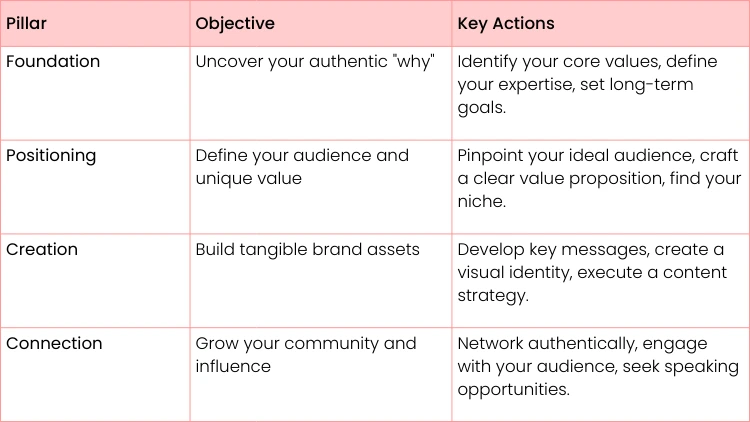
The Four Pillars of Personal Branding
To build a brand that actually lasts, you need a solid framework. We've broken down the process into four core pillars that will guide you from initial self-discovery all the way to becoming an influential voice in your space. This isn't about just throwing content out there and hoping for the best—it’s about building a presence that’s cohesive, intentional, and genuinely impactful.
These pillars provide a repeatable structure for growth. You start with the internal work and build outward, ensuring every piece of content and every interaction is grounded in a clear strategy.
Here’s a look at the core components needed to build a brand that truly reflects you and resonates with your audience.
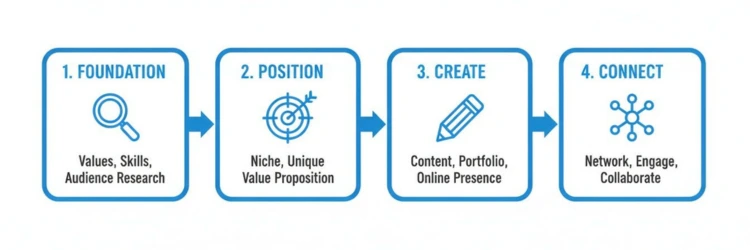
Personal Branding Process Flow
This visual really brings it to life, showing how these four steps—Foundation, Position, Create, and Connect—are part of a cycle.
It’s a great reminder that building a brand is an ongoing journey, not a one-and-done task. As you get started, you might find it helpful to explore a more general guide on how to create a brand for additional context. And if you really want to dig into the heart of this framework, understanding what is authenticity is absolutely critical for long-term success.
Laying Your Foundation With Authenticity
Before you even think about writing a single post or tweaking your LinkedIn profile, the real work starts. It’s not about inventing some slick persona; it’s about digging deep and clearly defining the professional you already are.
Too many people jump straight to the tactics—posting content, networking—without this critical first step. A personal brand built without a solid, authentic foundation is like a house on sand. It just won’t hold up.
The goal here is to get specific. We want to move from a vague idea like "I want to be known in my field" to something sharp and focused that feels completely natural to you. It's the difference between being another project manager and being the project manager everyone knows for untangling messy stakeholder politics in big tech companies. One is a job title; the other is a brand.
This whole stage is about self-discovery. Authenticity is your most valuable asset because you can actually sustain it. Faking it is exhausting, and people see right through it eventually. A genuine brand, on the other hand, acts like a magnet for the right kinds of opportunities because it’s a true signal of what you’re great at and what you care about.
Pinpoint Your Unique Expertise
Your expertise isn't just your job title. It's that sweet spot where what you're good at, what you actually enjoy doing, and what the market needs all come together. To find it, you have to look past the label on your business card and pinpoint the specific problems you're brilliant at solving.
Actionable Insight: Grab a notebook and dedicate 15 minutes to brainstorming answers to these questions. Don't overthink it, just write.
- What topics do my colleagues or friends always come to me for advice on? (Example: "People always ask me how to make their PowerPoint slides look better.")
- Looking back at the last two years, which projects left me feeling the most energized and competent? (Example: "I loved that project where I had to organize all our scattered customer feedback into a coherent report.")
- If I had to give a 30-minute talk tomorrow with zero prep, what could I confidently speak about? (Example: "I could easily talk about how to set up an effective content calendar.")
The answers will help you zero in on your niche. Maybe you're a software developer who realizes your unique gift is refactoring ancient, clunky code into something sleek and modern. Or perhaps you're a marketer who discovers your real talent is crafting killer case studies for SaaS startups. This isn’t about being an expert in a dozen things; it’s about owning your one thing.
Your expertise isn't your job title. It's the specific, high-value problem you solve better than almost anyone else. This is the pillar your entire brand will stand on.
Define Your Core Values and Mission
If your expertise is the "what" you do, your values are the "why" behind it all. These are the non-negotiable principles that steer your professional life. Without them, your brand will feel inconsistent and aimless. Your mission is simply how you bring those values to life through your work.
So, what really drives you? Is it a passion for innovation? A commitment to community? An obsession with craftsmanship? Take a moment and list out three to five core values you won't compromise on.
- Practical Example: Imagine a financial advisor whose core values are transparency and education. Her brand won't be about jargon and exclusivity. Instead, she'll focus on demystifying complex financial topics for people investing for the first time. Her mission isn't just to manage money; it's to empower her clients with financial literacy. That core belief will shape every single piece of content she creates.
- Actionable Insight: Create a "Values" note on your phone. Write down 3-5 words that guide you. Before you take on a new project or create content, quickly check if it aligns with those values. This helps you stay authentic and avoid brand drift.
This kind of deep self-reflection is a huge part of professional growth. If you want to go deeper, checking out frameworks on how to increase self-awareness can give you some structured exercises to really nail down these crucial parts of your identity.
Articulate Your Unique Value Proposition
Okay, you’ve got your expertise and your values. Now it’s time to put them together into your unique value proposition (UVP). This is just a clear, punchy sentence that explains who you serve, what you do for them, and why you’re the right person for the job. Think of it as the elevator pitch for your brand.
A simple formula that works well is: "I help [Your Target Audience] achieve [Their Desired Outcome] by [Your Unique Method or Approach]."
Let's see what this looks like with practical examples:
- For a UX Designer: "I help early-stage startups boost user retention by applying human-centered design principles that make their products a joy to use."
- For a Corporate Trainer: "I help new managers grow into confident leaders through practical, hands-on workshops focused on communication and conflict resolution."
Actionable Insight: Draft three versions of your UVP using the formula above. Read them aloud. Which one feels the most natural and powerful? Share it with a trusted colleague and ask, "Does this sound like me?" Use their feedback to refine it.
This statement becomes your North Star. It keeps you focused, guides what content you should create, and makes it easy to say "no" to things that don't align with your brand. Once this foundational work is done, you'll know you're building on solid ground.
Crafting Your Message and Visual Identity
Okay, you’ve done the foundational work. You know who you are, who you serve, and what you stand for. Now comes the fun part: building the tangible pieces of your brand that people actually see, hear, and interact with.
This is where you translate your internal clarity into an external reality. Your message and visuals are the practical expressions of your expertise and values. They’re the tools you’ll use every single day to communicate your worth, whether you're updating your LinkedIn profile or hopping on a video call.
Develop a Core Messaging Framework
Ever get tongue-tied when someone asks, "So, what do you do?" A messaging framework solves that for good. This isn't about memorizing rigid scripts; it's about having a toolkit of clear, concise language ready to go at a moment's notice. The goal is effortless consistency.
Actionable Insight: Open a new document and create three sections: Elevator Pitch, Bio, and Talking Points. Spend 20 minutes filling them out. This document is now your "brand bible" that you can copy-paste from, saving you time and ensuring consistency.
- Your Elevator Pitch: A single, powerful sentence that summarizes your unique value. A data scientist might say, "I help e-commerce brands turn raw customer data into predictable revenue growth." Simple, clear, and focused on the outcome.
- A Professional Bio: Think 50-100 words that expand on your pitch.
- Practical Example: "As a data scientist with 8 years of experience in e-commerce, I specialize in building predictive models that uncover hidden revenue opportunities. I've helped brands like X and Y increase their customer lifetime value by over 20% by transforming messy data into actionable strategies."
- Key Talking Points: Jot down three to five bullet points that highlight your core skills, unique methods, or core beliefs. These are perfect for fleshing out your LinkedIn "About" section or having in your back pocket for networking events.
Having these prepared is a game-changer. It removes the guesswork and makes you sound polished and confident every time. For a deeper dive into this, this guide on how to craft your core message walks you through some great templates.
Bring Your Brand to Life with Visuals
Your visuals are your brand’s first handshake. Before anyone reads a word you've written, they see your headshot and banner images. A cohesive visual identity makes you look professional and memorable, reinforcing that you’re someone to be taken seriously.
You don't need to be a designer. You just need to be consistent.
Focus on getting these three elements right:
- A Professional Headshot: This is absolutely non-negotiable. Get a high-quality photo that reflects your personality and industry.
- Actionable Insight: Use your phone's portrait mode and stand in front of a simple background with good natural light (like facing a window). Ask a friend to take a few shots. It’s better than a cropped selfie.
- A Simple Color Palette: Pick one or two primary colors and one accent color. Use these consistently in your social media banners, presentation slides, and personal website.
- Practical Example: A leadership coach might choose a deep blue (trust), a clean white (clarity), and a pop of gold (excellence).
- Consistent Typography: Choose one or two easy-to-read fonts. One for headlines, one for body text. That’s it.
- Actionable Insight: Use a free tool like Google Fonts to find a professional pair. For instance, using "Montserrat" for headlines and "Lato" for body text is a clean, modern combination.
A consistent visual identity does more than just look good; it builds subconscious trust. When people see your familiar headshot and colors, they instantly connect it with the value and expertise you represent.
This consistency signals professionalism and a keen eye for detail.
Make Authenticity Your Anchor
In a world overflowing with corporate jargon and faceless logos, people are craving connection with real, identifiable humans. And it's not just a nice-to-have; it drives real results.
Studies show that up to 74% of adults are more likely to trust an individual with an established personal brand over a corporate account. Even more telling, 86% of shoppers say they prefer authentic and honest brands.
When you consistently show up as yourself—sharing your expertise, your journey, and even your mistakes—you build a level of trust that big brands can only dream of. That human connection is what turns followers into advocates and casual connections into career-defining opportunities.

Choosing Your Platforms and Content Strategy
Alright, you’ve nailed down your messaging and visuals. Now for the million-dollar question: where do you actually show up, and what do you say?
The single biggest mistake we see people make here is trying to be everywhere at once. It’s a recipe for burnout and ensures your message gets lost in the noise.
Forget posting on every platform. The real goal is to go deep and dominate one or two channels where your target audience already lives. Authority isn’t built by spreading yourself thin; it’s built by showing up consistently and delivering real value where it counts.
This focused approach lets you create killer content, build a genuine community, and attract the right kind of opportunities—all without turning your life into a content creation nightmare.
Select Your Primary Platforms
Before you post a single thing, you have to answer one question: where does my ideal audience spend their time? This isn't about your personal favorite app; it's a strategic decision based on where your people are.
Actionable Insight: Identify 3-5 people who represent your ideal audience (e.g., potential clients, hiring managers). Look them up online. Where are they most active? That's your starting point.
- Practical Example (B2B): If you’re a consultant, sales pro, or SaaS founder talking to other businesses, LinkedIn is your home turf. Period. It's the digital town square for professional conversations.
- Practical Example (Visual): A chef or a fitness coach who needs to show their work should be on YouTube or Instagram Reels. These platforms are built for engaging video and eye-catching tutorials.
- Practical Example (Writer): If you are a policy analyst who loves digging into complex topics, a personal blog or a newsletter (think Substack) is perfect. You can build a loyal audience that truly values your insights.
Once you’ve picked your main stage, find a secondary platform that complements it. A data scientist might write in-depth articles on their blog but use Twitter/X to share quick charts, hot takes, and jump into industry chats. It’s about creating a smart, manageable ecosystem for your content.
Choosing the right platform isn't about chasing trends. It's about finding that sweet spot where your audience hangs out and your content format thrives. Go where your people are and be relentlessly helpful.
Brainstorm Your Core Content Pillars
You don't need a million different ideas. In fact, that's a terrible approach. All you need are three to five core content pillars—these are the big-picture topics you’ll own, rooted in your expertise and your audience’s biggest challenges.
The easiest way to find them? Map what you know to what they need.
Practical Example: Content Pillars for a Cybersecurity Consultant
- Pillar 1 - Demystifying Threats: Breaking down scary topics like phishing and ransomware into plain English for small business owners. (Example Post: "3 Simple Ways to Spot a Phishing Email in Under 30 Seconds")
- Pillar 2 - Proactive Defense Strategies: Actionable guides and checklists businesses can use right now to beef up their security. (Example Post: "Your 5-Step Weekend Security Audit Checklist")
- Pillar 3 - Industry News & Analysis: Your expert take on the latest data breaches and what they actually mean for the average company. (Example Post: "The Latest Big Tech Breach: What It Means for Your Small Business")
- Pillar 4 - Career & Skill Development: Advice for people trying to break into the cybersecurity field. (Example Post: "The #1 Skill Cybersecurity Recruiters Are Looking For in 2026")
With these pillars in place, content creation stops being a chaotic mess. Instead of staring at a blank screen, you just ask, "What can I share this week about Proactive Defense?"
We're seeing a clear trend: attention is shifting toward video, long-form content, and tight-knit communities. Video is king on most platforms, and marketing research shows that about 81% of marketers now rely on content branding to connect with audiences. Creators building focused communities through paid newsletters or private groups are also reporting much higher revenue and loyalty than those just chasing broad social media fame.
Implement a Sustainable Content System
Consistency beats intensity, every single time. A simple, repeatable system is what separates brands that last from those that fizzle out. Our favorite model? "Create Once, Distribute Many."
The idea is simple: create one big, meaty piece of "pillar" content, then slice and dice it into smaller assets for your different channels.
Here’s a practical example of this system in action:
- Create Pillar Content: You write a detailed, 1,500-word blog post titled "The 5 Biggest Financial Mistakes New Freelancers Make."
- Repurpose for Video: Film a 5-minute YouTube video breaking down those five mistakes.
- Break It Down for LinkedIn: Schedule five separate LinkedIn posts, each one dedicated to a single mistake and a practical solution.
- Create a Visual for Instagram: Design a carousel post where each slide highlights one of the five mistakes.
- Spark Discussion on Twitter/X: Write a thread that summarizes the key takeaways, with each tweet focusing on one point.
With this system, one good idea can fuel an entire week's worth of content. You stay visible and valuable without burning yourself out.
As your audience grows, you might even think about bringing them together on a dedicated community platform for deeper engagement. If you're curious about that path, you can check out this guide on the best online options for community platforms.

Building Your Network and Amplifying Your Reach
You can craft the most brilliant personal brand on the planet, but it doesn't really exist until people actually experience it. Pouring your soul into the perfect messaging and visuals is only half the job. The real magic happens when you start connecting with a network that can carry your voice further than you ever could alone.
Think of it like this: a great content strategy without a network is like throwing a killer party but forgetting to send out the invites. The goal isn't just to shout your expertise into the digital void. It's to build genuine relationships that spark a ripple effect of opportunities.
Give Value Before You Ask for It
If you remember one thing about networking, make it this: give, give, give, then ask.
Far too many people treat networking like a transactional chore. They fire off generic connection requests on LinkedIn and immediately follow up with a sales pitch. That approach almost never works because it completely skips the human element.
Your focus should be on being relentlessly helpful. Authentic engagement is the most powerful currency you have for building a network that trusts and respects you.
- Actionable Insight (Comments): Don't just type "Great article!" under an industry leader's post. Add a unique perspective, ask a thoughtful follow-up question, or share a quick, relevant story from your own experience.
- Practical Example: "This is a great point on stakeholder management. I recently used a similar RACI chart on a tough project and it completely changed the dynamic. Have you found it works best when introduced at kickoff or later on?"
- Actionable Insight (Sharing): Find a valuable piece of content from a peer? Share it with your network and make sure to tag the creator.
- Practical Example: "Excellent breakdown of the latest AI trends from @JaneDoe. Her point about data privacy is a must-read for anyone in marketing." This simple act of generosity builds goodwill and puts you on their radar.
- Actionable Insight (Communities): Find your people in relevant LinkedIn groups, Slack channels, or industry forums. Become the person who consistently provides helpful, clear answers. You'll quickly build a reputation as the go-to expert.
The most effective networking isn't about collecting contacts; it's about making contributions. When you consistently provide value to others, you build a magnetic brand that attracts opportunities organically.
Master the Art of the Connection Request
A generic connection request is a massive missed opportunity. Taking just 30 seconds to write a personalized message shows you’ve done your homework and are genuinely interested in that specific person. It can easily be the difference between being accepted and being ignored.
A great connection request is short, specific, and focused on them, not you.
- Bad Example: "Hi, I'd like to connect with you."
- Good Example: "Hi Sarah, I really enjoyed your recent article on content repurposing. The point you made about turning blog posts into Twitter threads was brilliant. I'd love to connect and follow your work."
Actionable Insight: Create a template you can quickly customize. Something like: "Hi [Name], I came across your [post/article/talk] on [Topic] and was really impressed by your point about [Specific Insight]. I'm also passionate about this space and would love to connect."
This approach works because it's authentic and proves you value their expertise. For a deeper dive, this guide on how to network effectively breaks down some fantastic frameworks for building these meaningful professional relationships.
Turn Your Visibility Into a Win-Win
Here’s something people often miss: a strong personal brand isn't just for you. It's a huge asset for your employer, too.
The data backs this up in a big way. Leads generated through employee social media activity convert about 7x more frequently than other leads. And when employees share company content, those messages get reshared up to 24x more often than when the company posts from its own page.
When you build your professional presence, you're not just climbing your own career ladder—you're becoming a powerful ambassador for your company. This visibility is measurable career capital. In fact, 80% of recruiters say personal branding is important when they evaluate candidates, and a whopping 70% of hiring managers are less likely to even interview someone they can't find online.
This creates an amazing feedback loop. The more you share your expertise, the more you elevate both your own brand and your company's reputation. This mutual benefit is what turns a simple online presence from a "nice-to-have" into a strategic tool that delivers real results for everyone involved.
Measuring and Evolving Your Personal Brand
Building a personal brand isn't a one-and-done project you can check off your list. It's a living, breathing thing. Think of it like tending a garden—it needs constant attention, pruning, and care to really thrive. If you’re not tracking what’s happening, you’re basically guessing in the dark.
Measuring your brand’s pulse doesn't mean you need a dashboard full of complicated analytics. It’s really about paying attention to the right signals, the little clues that tell you if your message is actually connecting with the people you want to reach. This feedback loop is what lets you sharpen your strategy over time.
Key Metrics to Monitor Regularly
Let’s get one thing straight: vanity metrics like your total follower count are mostly noise. You need to look deeper, at the numbers that show real connection and create actual opportunities. That’s where the story of your brand’s health is told.
Actionable Insight: Create a simple spreadsheet with four columns: "Date", "Profile Views", "Engagement Highlights" and "Inbound Opportunities". Spend 10 minutes at the end of each week filling it out. This makes tracking your progress tangible.
- LinkedIn Profile Views: Are more people checking you out over time? If you see a big jump after you post something, that's a fantastic sign your content is making people curious enough to learn more about you.
- Content Engagement Rate: Forget about empty likes. Are people leaving thoughtful comments? Are they sharing your stuff or asking follow-up questions?
- Practical Example: Track the number of comments that are more than 5 words long. This filters for genuine conversation.
- Quality of Connection Requests: Look at who is trying to connect with you. Are they peers, potential clients, or recruiters in your target industry sending personalized notes? This is a crystal-clear sign that you’re attracting the right crowd.
- Inbound Opportunities: This is the ultimate proof your brand is working. Tally up the unsolicited DMs you get for collaborations, speaking gigs, job interviews, or new projects. When opportunity starts knocking on your door, you know you’ve built something valuable.
Your personal brand is a dynamic asset. Regularly reassessing it ensures it stays aligned with your career goals and continues to open doors. What worked last year might not be what gets you to the next level.
A Framework for Quarterly Brand Reviews
Block out an hour on your calendar every three months for a quick brand audit. This simple check-in moves you from just posting stuff reactively to proactively managing your brand’s direction. It’s the key to knowing how to build a personal brand that grows with you.
Actionable Insight: Use these four questions as your agenda for your quarterly review.
- What’s Working? Look back at the last 90 days. What was your best-performing content?
- Practical Example: "My posts with quick video tutorials got twice the engagement of my text-only posts."
- What’s Not Working? Be brutally honest here. Which posts or ideas consistently flopped?
- Practical Example: "My long, theoretical posts about industry history fell flat. People seem to want more practical tips."
- Is My Messaging Still Aligned? Go back and read your professional bio, your key talking points, and your "about" sections. Do they still sound like you?
- Practical Example: "I've pivoted more into management, but my bio still focuses on my old technical skills. I need to update it."
- What Should I Adjust for Next Quarter? Based on your answers, pick one or two concrete changes to make.
- Practical Example: "For next quarter, I will create one video tutorial per week and update my LinkedIn bio to reflect my new focus on leadership." This simple, iterative process is what will keep your brand sharp, relevant, and effective.

Of Course, You Have Questions
Building a personal brand is a journey, not a destination. It’s totally normal for questions to pop up along the way. We've heard a lot of them over the years, so let's tackle some of the most common ones right now.
How Long Does This Actually Take?
Look, there's no magic switch to flip. But you can absolutely expect to see some real traction—like more profile views and higher-quality connection requests—within 3-6 months of consistent effort.
- Practical Example: Think about a junior software developer who starts posting twice a week on LinkedIn, sharing what they're learning. Recruiters will start noticing them in that timeframe because they are demonstrating initiative and a passion for their craft.
But if you're talking about building true authority, the kind where opportunities actively land in your inbox? That's more of a 12-18 month game. The secret sauce here is consistency, not intensity. Just focus on sharing value, one post at a time. It adds up faster than you think.
I'm an Introvert. Can I Still Do This?
Yes, absolutely. In fact, some of the strongest personal brands are built by introverts. Personal branding isn't about being the loudest person in the room; it's about sharing your unique expertise authentically.
Introverts often crush it with thoughtful, written content where their depth can really shine.
- Practical Example: A quiet but brilliant data analyst could start a niche newsletter that breaks down complex industry reports into plain English. Their entire brand is built on substance and insight, not flashy, on-camera performances.
- Actionable Insight: If you're an introvert, focus on platforms that prioritize text and deep thought, like a blog, a Substack newsletter, or long-form LinkedIn posts. Engage in one-on-one DMs rather than trying to command a huge live audience.
The key is to pick platforms and formats that play to your natural strengths. Your power lies in deep thinking and one-on-one connections, not necessarily broadcasting to the masses. Lean into that.
What if My Company Has Super Strict Social Media Policies?
This is a common hurdle, but it's rarely a dead end. First things first: get a crystal-clear understanding of your company's guidelines. Most organizations actually want their employees to build a professional presence, as long as you're not sharing confidential information or going off-brand.
Your sweet spot is sharing public industry insights, celebrating team wins, or explaining a complex topic in your field. This approach positions you as a valuable expert and a company asset at the same time.
Actionable Insight: Frame your content as "learning out loud". Instead of presenting yourself as an official company spokesperson, share your personal perspective on public information. Use phrases like, "Here's what I'm learning about..." or "An interesting trend I'm seeing in our industry is..."
Practical Example: A marketing manager at a tech company can't share upcoming product details. But they can post: "Fascinating new report out on consumer AI adoption. The data on voice search, in particular, has me thinking about how brands need to adapt their SEO strategies. Here's my key takeaway..." This builds their brand without violating any policies. It's a win-win.
Ready to turn these insights into action? At Uplyrn, we provide the expert-led courses and mentorship you need to master your skills and build a brand that opens doors. Start your learning journey today!


Leave your thoughts here...
All Comments
Reply