









How to Onboard New Employees: A Playbook for Success

Effective onboarding is more than just a first-day orientation; it’s the entire journey from the moment a candidate accepts your offer to the point where they are a fully integrated, productive member of the team. The whole process really boils down to three things: culture, connection, and clarity.
It’s a structured path that blends the necessary paperwork and setup with crucial role-specific training and, just as importantly, social integration. When you get this right, new hires feel welcomed, prepared, and genuinely engaged from day one.
Jump To Section

Earn As You Learn
Earn 25% commission when your network purchase Uplyrn courses or subscribe to our annual membership. It’s the best thing ever. Next to learning,
of course.
Why Exceptional Onboarding Is Your New Competitive Edge
It’s time to stop thinking of onboarding as just another tedious HR checklist. In today’s competitive market, a thoughtful onboarding experience is a critical business function that has a direct, measurable impact on your bottom line.
This is the first real taste a new hire gets of your company’s culture and how you operate. Fumble it, and you're looking at real costs—like early turnover and painfully slow ramp-up times.
But the rewards for nailing it are huge. A well-designed process can turn a new hire's natural first-day jitters into genuine excitement and loyalty. It dramatically shortens their path from learning the ropes to becoming a confident, valuable contributor. This is about building a stronger, more resilient company.
The True Cost of a Bad First Impression
We’ve all heard horror stories. A bad onboarding experience feels like being pushed into the deep end of the pool with no swimming lessons. New hires are left scrambling to find basic information, unsure who to ask for help, and completely in the dark about what success in their role even looks like. That initial burst of enthusiasm? It vanishes. Fast.
The consequences are as clear as they are costly:
- Early Departures: It's no surprise that new hires who have a negative onboarding experience are twice as likely to start looking for another job.
- Lost Productivity: Without clear direction, it takes an employee much longer to start delivering value. That lag doesn’t just affect them; it drags down the whole team's momentum.
- Cultural Disconnect: A disorganized welcome sends a powerful, unspoken message: "we're chaotic" or worse, "we don't really value our people". It's almost impossible to build a sense of belonging from that starting point.
Actionable Insight: A great onboarding program is your first, best chance to prove that the company culture you promised is real. For example, if you claim to be a 'collaborative' company, ensure the first week includes scheduled, informal meet-and-greets with team members, not just solo paperwork.
From Welcome Email to Valued Contributor
The modern employee journey kicks off the second an offer is accepted and should extend far beyond the first week. Think of each stage as an opportunity to build momentum and reinforce their decision to join your team.
The data backs this up in a big way. Organizations with strong onboarding processes see an 82% increase in new hire retention and report over a 70% improvement in productivity. Yet, somehow, only 12% of employees strongly agree that their company excels at it.
This gap is your opportunity.
By focusing on a structured, engaging, and human-centered experience, you can blow past the competition. To get a better sense of what this looks like in practice, it’s worth exploring what a modern onboarding experience looks like. A huge piece of this puzzle is ongoing development, which is why understanding the benefits of investing in employees is so critical for driving long-term growth and success.
Building Excitement Before Day One
The time between a candidate accepting your offer and their actual first day is so much more than a waiting period. This pre-boarding window is a golden opportunity. It’s your chance to reinforce that they made the right choice, calm those first-day jitters, and make them feel like a part of the team before they’ve even logged in.
Leaving a new hire in silence during this phase is a recipe for anxiety and second-guessing. A thoughtful pre-boarding process, on the other hand, flips that uncertainty into genuine excitement. You're sending a clear message: "We're thrilled to have you, and we're already paving the way for your success."
Make the Welcome Tangible
A personal touch goes a surprisingly long way in making a powerful first impression. Sending a well-curated welcome package is a fantastic way to bridge that gap between the "yes" and the first day. It's a physical reminder of your company's culture and excitement.
This isn't just about cool stuff; it's about the message it sends. Think about including items that are both practical and personal:
- Company Swag: A high-quality hoodie, a nice water bottle, or a branded notebook helps them feel like an insider from the get-go.
- A Personal Note: A handwritten card from their direct manager or even the CEO can have a huge impact. It shows you see them as an individual, not just a headcount.
- Celebratory Gesture: A gift card for a local coffee shop or a meal delivery service for a "celebratory lunch on us" is a thoughtful way to mark the milestone.
These small investments pay off big in goodwill and help cement their connection to your brand.
Eliminate First-Day Friction Proactively
Nothing feeds first-day nerves like logistical unknowns. Your goal should be to get all the administrative and tech headaches out of the way before they arrive. This frees up their first day for what really matters: connection and learning, not paperwork and passwords.
Actionable Insight: Create a "First Day Logistics" email to send three days before they start. This email should include a photo of the office entrance, parking instructions, a simple first-day schedule, the name of their onboarding buddy, and login credentials for their core accounts.
Here’s how to set the stage for a smooth start:
- Tech and Hardware: Ship their laptop, monitor, and any other gear so it arrives a few days early. This gives them time to unbox and get situated without feeling rushed.
- Account Access: Create all the necessary accounts—email, Slack, project management tools—and send login credentials in a secure, easy-to-digest welcome email.
- First-Week Agenda: Share a clear, but not overwhelming, schedule for their first week. Just knowing what to expect, who they'll meet, and what they’ll be doing provides a massive sense of relief.
A seamless pre-boarding process demonstrates respect for a new hire's time and energy. It proves your organization is thoughtful, prepared, and genuinely invested in setting them up for a successful start.
Foster Connections Before They Arrive
Walking into a new office or joining a video call full of unfamiliar faces is daunting for anyone. You can easily soften this by starting the introductions before day one.
A casual introduction email to the immediate team is a perfect first step. Keep it light, share a fun fact about the new hire (with their permission, of course), and get the conversation started. This simple act transforms them from "the new person" into a real individual the team is excited to meet.
Assigning an onboarding buddy is another game-changer for social integration. This isn’t a formal mentor for career advice. It's a friendly peer who can answer all the informal questions, like "What’s the dress code really like?" or "Which Slack channel is best for random thoughts?" This gives them a safe, low-pressure person to turn to for all the small things they might feel awkward asking their manager. As you build this out, especially for remote teams, this guide on how to start welcoming new employees virtually has some great pointers.

Crafting an Unforgettable First Week
A new hire's first week is a massive tell. It predicts their entire journey with your company, setting the tone for everything that follows. That first impression can either build a rock-solid foundation of confidence or plant seeds of doubt that are tough to weed out later.
The mission is simple: design a week that perfectly blends structured learning with genuine human connection. You want them to feel both prepared for the job and truly welcomed into the fold.
Day One Is All About the Welcome Mat
Let’s get one thing straight: overwhelming someone with a mountain of HR paperwork on their first day is a classic, rookie mistake. It sends a clear message: our processes are more important than you are.
Instead, the first day should feel less like a bureaucratic hurdle and more like a warm welcome. The goal isn't to get them working; it's to make them feel comfortable, excited, and part of the team. So, ditch the long, dry policy reviews for now. Focus on creating a positive, low-pressure vibe.
A great first day usually involves a few key things:
- A Warm Welcome: Make sure their desk and all their equipment are set up and ready to go before they arrive. A small welcome kit with some company swag, a schedule for the week, and a handwritten note from their manager is a small touch that makes a huge impact.
- Real Introductions: Don't just point out faces in a blur. Take the time for real introductions where team members share what they do and maybe one fun fact about themselves. It breaks the ice instantly and helps the new hire start building their internal network.
- A Casual Lunch: Get them out of the office for lunch with their immediate team. An informal setting like this is perfect for getting to know each other on a personal level, far away from the pressures of work.
This approach ensures their first impression is one of belonging and excitement, not administrative burnout.
Building Momentum Through the Week
With a great first day in the bank, the rest of the week is about carefully layering in information and responsibility. The key is to avoid the dreaded "firehose effect"—drowning them in too much, too fast. Now is when you start easing them into the core of their role.
Days two and three are perfect for kicking off role-specific training. This isn't about them mastering everything at once; it's about giving them a solid grasp of the fundamentals. You could schedule short, focused sessions on the main tools they'll be using or have them shadow a colleague on a key task.
For more structured learning, you can integrate digital training modules. If you're looking for ideas on how to structure this, there are tons of fantastic employee training program examples that you can adapt for just about any role.
Actionable Insight: The goal of the first week isn't to create an expert overnight. It's to build a clear, manageable path to competence and confidence. A practical example: instead of a 4-hour training on the entire CRM, schedule a 45-minute session focused only on creating a new contact record.
At the same time, sprinkle in brief, 30-minute intro meetings with key people from other departments. This isn't just a meet-and-greet; it helps them understand how their role fits into the bigger company picture and who they can turn to for help down the road.
Shifting Focus to Goals and Alignment
As the week wraps up, the focus should shift from general orientation to specific alignment. By day four or five, they should have a decent feel for the team, the tools, and the company culture. Now it's time to get crystal clear on what's expected of them.
This is the perfect moment to introduce their first set of clear, achievable goals. We're not talking about massive, long-term projects. Think small "quick wins" designed to build momentum and confidence. For a software developer, it might be successfully shipping a small, non-critical bug fix. For a marketer, it could be drafting their first social media post for review.
The week should end with the first official one-on-one meeting with their manager. This meeting is critical. It's where you formally set expectations, answer any lingering questions, and reinforce that they have your full support. It's the time to review their initial goals, talk through the 30-day plan, and open the door for ongoing, honest communication.
The difference between a haphazard first week and a thoughtfully planned one is night and day. It has a direct, measurable impact on a new hire’s confidence, engagement, and how quickly they start adding value.
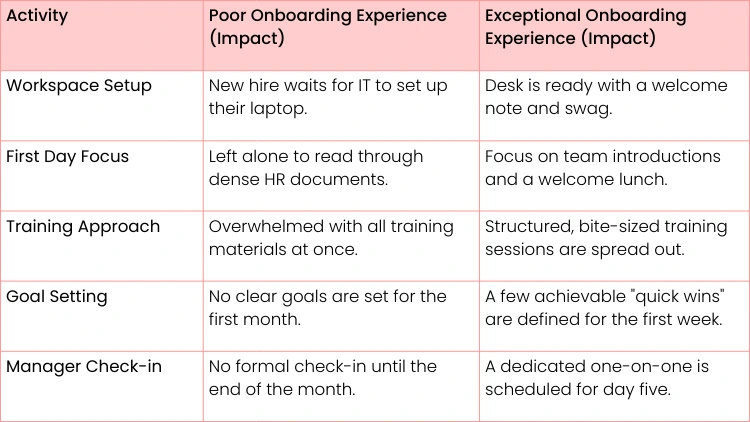
Onboarding Experience Comparison: First Week Impact
Just look at the difference a little planning makes. The contrast between a poor experience and an exceptional one shows up almost immediately, impacting everything from morale to productivity.
Ultimately, a structured first week tells your new hire they've made the right choice, setting them up for a long and successful run with your company.
The 30-60-90 Day Plan for New Hires
That first week is all about the welcome mat and getting oriented. But the real transformation—turning a promising new hire into a confident, long-term contributor—happens over the next three months. That’s where a solid 30-60-90 day plan comes in. It’s the roadmap that breaks down the massive task of "learning a new job" into clear, manageable phases.
This framework is a lifesaver. It replaces that fuzzy, undefined feeling with total clarity, giving both the new hire and their manager a shared playbook for success. This isn't about micromanaging; it's about building a transparent path that creates momentum and makes sure no one gets left behind.
For the employee, it finally answers that nagging question: "How am I actually doing?" And for you as a manager, it provides the perfect structure for coaching and giving feedback that actually helps.
This shows just how critical that first week is. It’s the launchpad, focused on a warm welcome, kicking off training, and setting some small, achievable goals right out of the gate.
This initial week sets the stage for the entire 90-day journey, building a foundation of connection and understanding that fuels their growth from day one.
The First 30 Days: Learning and Absorbing
Month one is pure immersion. The only goal here is for your new employee to listen, learn, and soak up everything they can about the company, their team, and the role itself. Think of it as building their internal GPS—they need to learn the layout of the land before they can start navigating it on their own.
During this phase, the focus should be on foundational knowledge, not revolutionary output. You want to create a space where asking questions is the norm and mistakes are seen for what they are: learning opportunities.
Practical Goals for the First 30 Days:
- Master Essential Tools: Get comfortable with the main software and systems they'll use every day, whether it's a CRM, a project management tool, or your team's chat platform.
- Understand Team Dynamics: Figure out who does what, the team's communication style, and the general rhythm of meetings and projects.
- Complete Foundational Training: Knock out all the initial training modules. To really nail this, doing a training needs analysis to guide learning and development ensures the content is a perfect fit for their role.
- Meet Key Collaborators: Schedule introductory one-on-ones with at least five key people outside of their immediate team.
Practical Example: A new marketing coordinator’s 30-day goal might be to schedule and post five social media updates (with supervision) and to simply sit in on two campaign planning meetings to see how it all works.
The first 30 days are a win if the new hire feels more confident and less overwhelmed than when they walked in. They should be able to find their way around the basic systems and know exactly who to bug for help.
The Next 30 Days: Contributing and Collaborating
The second month is where the switch happens—from passive learning to active contribution. Now that they have some foundational knowledge, your new hire should start taking ownership of smaller tasks and working more independently with the team. This is where they get to apply what they've learned and build real confidence through small, tangible wins.
Think of this phase as guided practice. Your role as a manager shifts from instructor to coach, offering support and feedback as they tackle their first real assignments. They should be adding real value to team goals, even if they still need a bit of a safety net.
Practical Goals for Days 31-60:
- Take Ownership of a Project: Manage a small, low-risk project from start to finish with help from a mentor or manager.
- Contribute in Team Meetings: Go from just listening to actively participating, maybe by offering an idea or giving an update on their work.
- Handle Routine Tasks Independently: Complete their core, recurring tasks with little to no hand-holding.
- Identify a Small Process Improvement: With their fresh eyes, they should be able to suggest one small tweak to a team workflow.
Practical Example: A junior account manager in this phase might be tasked with independently managing three small client accounts, drafting the first version of weekly client reports, and presenting one section of that report in a team meeting.
The Final 30 Days: Driving Initiative and Ownership
By day 90, the goal is to see your new hire move from guided contribution to proactive ownership. They're no longer just checking off tasks; they're starting to think more strategically, solve problems on their own, and drive their own work forward. The training wheels are officially coming off, and they should feel like a fully integrated part of the team.
This final stage is all about empowering them to take initiative. They should have a firm grasp of their responsibilities and feel comfortable making decisions within the scope of their role. Crucially, they should also have a clear line of sight into how their work directly impacts the company's bigger picture.
Practical Goals for Days 61-90:
- Lead a Small Initiative: Propose and lead a small project or initiative that lines up with the team's goals.
- Provide Constructive Feedback: Start offering thoughtful feedback to peers on projects you're working on together.
- Operate with Autonomy: Manage their own workload and priorities with only minimal check-ins from their manager.
- Set Future Goals: Work with their manager to set performance and development goals for the next quarter and beyond.
A well-structured 90-day plan like this gives you a clear, motivating, and supportive framework for a new employee's most critical months. It’s how you methodically equip them not just to do their job, but to absolutely thrive in it.
Measuring Success and Avoiding Common Pitfalls
So, you’ve built out a thoughtful onboarding program. That’s a huge first step, but the real question is: how do you know if it's actually working? A great process isn't just about fun icebreakers and swag bags; it’s about delivering measurable results that prove the return on your investment.
If you aren't tracking key metrics, you're flying blind. You could be sinking time and resources into activities that don't move the needle, all while missing the critical gaps that cause new hires to struggle—or worse, walk out the door.
Defining Your Onboarding Key Performance Indicators
To get a real sense of your onboarding's impact, you need to look past the anecdotal feedback and dig into the hard data. The right key performance indicators (KPIs) will tell you the true story of your program's effectiveness.
Start by zeroing in on these essential metrics:
- Time-to-Productivity: This is the big one. How long does it take for a new hire to perform at the level of a seasoned team member? For a salesperson, that might mean closing their first significant deal. For a developer, it could be the point they’re pushing code without needing constant oversight.
- New Hire Satisfaction Scores (NHSAT): Don't guess how they feel—ask them. Use quick pulse surveys at the 30, 60, and 90-day marks to get a read on their experience. Ask direct questions like, "On a scale of 1-10, how supported do you feel by your manager?" or "How clearly do you understand your role and its goals?"
- 90-Day Retention Rate: Think of this as the ultimate pass/fail metric. If people are leaving within the first three months, it’s a massive red flag that something in your process is fundamentally broken. A high retention rate, on the other hand, is one of the strongest signals of a successful program.
Focusing on these numbers helps you move from guessing to knowing. For a deeper look at tying your efforts to business outcomes, check out this guide on how to measure training effectiveness.
Sidestepping Common Onboarding Traps
Even the most well-intentioned onboarding plans can get derailed by a few common mistakes. Knowing what these traps are is the first step to avoiding them entirely. A proactive approach here can make all the difference between a new hire who thrives and one who just survives.
These are the mistakes that trip up even the most seasoned managers.
- Information Overload: It’s tempting to want to teach a new hire everything right away. But dumping a firehose of company knowledge on someone in their first week is a surefire recipe for burnout and anxiety. They’ll feel overwhelmed, and they'll retain almost none of it.
- Actionable Insight: Pace the information. Use a drip approach, releasing training materials and documents over the first 30 days. Week one should be laser-focused on culture, team intros, and essential tool setup. You can introduce more complex, role-specific processes in week three once they've found their footing.
- An Inconsistent Experience: Nothing confuses a new employee more than getting conflicting information. When HR says one thing, their manager says another, and their onboarding buddy offers completely different advice, it creates chaos and erodes trust from day one.
- Actionable Insight: Create a single source of truth. Your best bet is a standardized onboarding checklist and a digital handbook that everyone—from HR to managers to buddies—can reference. This ensures every single new hire gets the same core information and a consistent message, no matter their department.
- Neglecting the Social Connection: You can have the best training materials in the world, but if a new hire feels like an outsider, they won't stick around for long. Building genuine connections is just as crucial as role-specific training, especially in a remote or hybrid world where those interactions don't happen as organically.
- Actionable Insight: Be intentional about building relationships. Schedule informal coffee chats (virtual or in-person) with key team members. Assign an onboarding buddy whose only job is to be a friendly, low-pressure guide for all the "silly" questions. And please, make sure their first week includes a team lunch.
A great onboarding program is never 'finished'. It's a living process that you must constantly measure, iterate on, and improve. The feedback from your newest hires is the most valuable data you have for making it better.
By treating your onboarding as an evolving system, you can continuously refine it. Keep a close eye on your KPIs and actively work to avoid these common pitfalls, and you won't just be welcoming new people—you'll be setting them up for success from the moment they walk through the door.
Frequently Asked Onboarding Questions
Even the most buttoned-up onboarding plan runs into real-world snags. It's just the nature of the beast. Here are some of the most common questions we see pop up, with practical answers to help you handle those tricky situations like a seasoned pro.
How Long Should Onboarding Last?
Let's get one thing straight: a single week is not enough. Not even close.
While the first week is definitely the most intense, a truly effective onboarding process needs to stretch across the first 90 days. Think of it less like a sprint and more like a ramp-up period.
This longer runway gives people the space to actually breathe. Instead of just dumping a mountain of information on them, you're allowing for gradual integration, relationship-building, and real performance development. It prevents that classic "drinking from a firehose" feeling and lets them absorb, apply, and ask questions as they truly settle in.
What Is The Manager's Role In Onboarding?
HR might build the scaffolding, but the direct manager is the one who turns a generic process into a personalized journey. Honestly, their role is probably the single most critical factor in a new hire's success.
A great manager doesn't just hand things off. They own the experience by:
- Setting Clear Expectations: They define what the first 30, 60, and 90 days should look like and paint a clear picture of what success in the role actually means. No guessing games.
- Making Warm Introductions: They don't just point to an org chart. They personally introduce the new hire to key team members and collaborators in other departments.
- Providing Constant Feedback: They schedule weekly check-ins to be a sounding board, offer guidance, and make sure the new person feels seen and supported.
An involved manager is the difference between an employee who feels like part of the team from day one and one who feels like they’re shouting into the void.
How Do We Onboard Remote Employees Effectively?
Onboarding someone remotely requires you to be much more deliberate. You can't rely on the casual, organic connections that happen in an office, so you have to consciously create them. The core principles are the same, but the execution needs to be way more intentional.
- Here's a practical tip: Double down on structured communication and social rituals. For instance, schedule 15-minute virtual coffee chats for the new hire with three different team members in their first week. Also, make sure their "onboarding buddy" has a quick video call with them at the start and end of each day for that first week. It creates a powerful, reliable touchpoint.
The biggest killer of remote onboarding is isolation. You have to be almost obsessively intentional about creating opportunities for informal, human connection that have nothing to do with a project update.
How Much Is Too Much Information At Once?
We've all seen it happen. The new hire gets the "firehose" of information and ends up looking dazed, confused, and completely overwhelmed. It's a classic mistake.
A good rule of thumb is to focus the first week only on what is absolutely essential for them to feel grounded.
Try to think about it in layers:
- Week 1: Culture, team introductions, essential tools (email, Slack), and their very first small, achievable task. That's it.
- Weeks 2-4: Now you can start layering in more complex, role-specific training, internal processes, and knowledge about how other departments work.
- Month 2-3: This is the time to introduce them to longer-term projects and the bigger, more strategic company goals.
When you pace the information this way, you give people a fighting chance to actually absorb and apply what they're learning. It builds their confidence instead of crushing it.
Ready to build an onboarding and training program that sets every new hire up for success? At Uplyrn, we provide the tools to deliver engaging courses, connect employees with mentors, and track their development from day one. See how you can create an unforgettable employee experience at Uplyrn.


Leave your thoughts here...
All Comments
Reply