









How to Write a Picture Book: Your 2026 Expert Guide
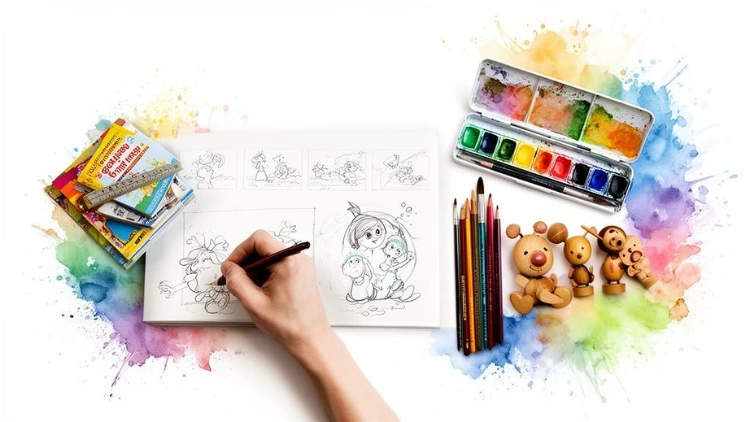
Writing a picture book is a unique challenge. You’re taking a massive idea and boiling it down into a punchy, powerful story—often in under 500 words. It’s all about finding that one compelling concept for a young audience, giving a character a clear goal, and making sure the whole thing works visually. In this world, every single word and page turn has to do some heavy lifting.
Jump To Section

Earn As You Learn
Earn 25% commission when your network purchase Uplyrn courses or subscribe to our annual membership. It’s the best thing ever. Next to learning,
of course.
Finding Your Unforgettable Story Idea
Every truly great picture book begins with an idea that connects emotionally, not just with the child but with the adult reading it aloud. Your job isn't to dream up a complicated plot, but to find a core concept that has heart.
So many writers get hung up on finding a "never-before-seen" idea. Forget that. The real magic is in taking a universal theme and giving it your own fresh, personal spin.
Think about those big, common childhood experiences and the powerful emotions they stir up. These feelings are the foundation of stories that stick.
- Losing a favorite toy is really about attachment and loss.
- Fear of the dark is a classic way to explore overcoming anxiety.
- Making a new friend digs into connection and feeling vulnerable.
Practical Example: Don't just write about a kid who's scared of the dark. What if you wrote about a child who discovers the shadows in their room are just friendly monsters who need help finding their way home? That little twist takes a common fear and turns it into a story filled with empathy and wonder.
Define Your Target Audience
Before you even think about writing, you have to know exactly who you're writing for. The age of your reader changes everything—the words you use, how you structure your sentences, and how complex your theme can be. Picture books are definitely not a one-size-fits-all game.
- Actionable Insight: The biggest difference between a book for a 2-year-old and one for a 6-year-old is interaction versus narrative. Toddlers need simple ideas and lots of repetition, while early readers are ready for a character arc and a real plot.
For instance, a board book for the 0-3 age group will likely have a word count under 300. These books focus on simple concepts like colors, animals, or counting. Eric Carle’s The Very Hungry Caterpillar is the perfect masterclass, teaching numbers and days of the week with repetition and art that pulls you in.
On the other hand, a classic picture book aimed at kids aged 4-6 can handle a full story with a beginning, middle, and end. The sweet spot for word count here is usually 400-600 words, which gives you enough room to explore a real emotional journey.
Brainstorm With Heart
The best ideas almost always come from a place of real feeling. What made you belly-laugh as a kid? What were your biggest fears? Diving into your own memories is a fantastic way to find a story that only you can tell. If you need a little help getting those creative juices flowing, you might want to learn how to boost creativity by thinking in pictures.
- Actionable Insight: Create a "memory map". Draw a circle with "Childhood" in the middle. Branch out with topics like "Favorite Games", "Biggest Fears", "Family Holidays" or "First Pet". Jot down any specific memories or feelings that come up. This is a goldmine for unique story ideas.
And don't forget, this is a booming market. The global children's book market is on track to hit USD 12.44 billion by 2026, and picture books account for a staggering 41% of those sales. This isn't just a niche hobby; it confirms that parents are actively looking for high-quality stories, which creates a huge opportunity for new authors who can make that connection.
Creating Characters Kids Will Love
So you have a great idea for a story. Now comes the most important part: finding its heart. A truly memorable character is what turns a good book into a great one—it’s the reason a child will clutch a book and beg, “Read it again!” They aren't just seeing a character on the page; they’re meeting a new friend.
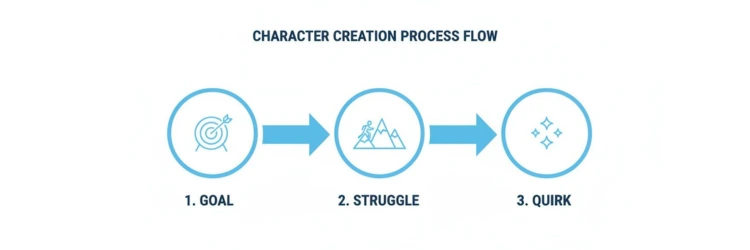
To get started, think about giving your hero three core things. Every great protagonist has a clear goal, a relatable struggle, and a charming quirk.
- Practical Example: Imagine a tiny knight who wants to win the royal tournament (goal). The only problem is, he’s terrified of his own shadow (struggle). And to make matters worse, he’s always tripping over his untied shoelaces at the worst possible moments (quirk). Just like that, you have conflict, personality, and a story waiting to happen.
Building Your Character Profile
Before you jump into writing pages, take a moment to sketch out a quick character profile. This isn't some ten-page biography; think of it more like a cheat sheet to keep your character consistent and focused. It's the blueprint for your hero.
The secret to a beloved character is making their problems feel real, even if the character is a talking badger. Universal struggles are key. A bear who can’t find his favorite hat isn't just about a hat; it's about a child’s real frustration when they lose something they love.
Here’s a simple template you can steal:
- Name: Barnaby the Bear
- Goal: He desperately wants to bake a honey cake for the annual forest festival.
- Struggle: He can't read the recipe book his grandmother gave him.
- Quirk: He hums a different little tune for every single mood he’s in.
This quick profile gives you an instant story engine. Barnaby's journey will naturally involve him trying—and hilariously failing—to figure out the recipe, creating all sorts of chaos along the way. If you want to dive deeper into this, there are some fantastic strategies on how to write compelling characters that really resonate with readers.
Plotting the Character's Journey
When you're figuring out how to write a picture book, the classic three-act structure is your absolute best friend. Even in just 32 pages, this simple framework gives your character a journey that feels emotionally complete and satisfying.
- Actionable Insight: Your character must change. They start in one place, face a challenge that forces them to learn something new about themselves or the world, and end up in a better, wiser place. This emotional growth is what makes a story stick.
Here’s what that looks like in a picture book format:
- Act 1 (The Beginning): We meet our hero and learn what they want. Barnaby the Bear announces his grand plan: he must bake a honey cake.
- Act 2 (The Messy Middle): This is where the fun and chaos live. It’s all about the "try-fail" cycle. Barnaby tries to guess the recipe from the pictures and adds salt instead of sugar. He then tries to ask a speedy squirrel for help, who just gives him a bunch of confusing, chattered advice. Tension builds with every failed attempt.
- Act 3 (The Resolution): Barnaby finally has his breakthrough moment. Maybe he realizes he can ask his friend, the wise old owl, to read the recipe to him. He learns that it’s perfectly okay to ask for help. He bakes the perfect cake, achieves his goal, and grows as a character.
This structure ensures your story has momentum from start to finish. And if you're thinking about what your hero might look like, this guide on sketching tips for character design has some great pointers to get you started on the visual side of things.
The chart below shows a simple framework for keeping your character's journey focused, which is a huge part of pacing your story across these spreads.
This visual guide is a great reminder that every part of your story—on every single page—should connect back to your character's core goal, their struggle, and their unique quirk.
Mastering Pacing And The All-Important Page Turn
A picture book isn’t just a story—it’s a 32-page performance. The rhythm and the suspense you build from one page to the next are everything. This is where you get to be the director, controlling exactly what your reader sees and when they see it.
Think of each page turn as a mini-curtain reveal. It's your single most powerful tool for creating surprise, landing a joke, or unveiling a moment of quiet wonder. A book with great pacing pulls the child right in, making them an active participant who can’t wait to find out what happens next.
Storyboarding Your Manuscript
To get a feel for pacing, you have to think visually. This is where creating a dummy book—a physical mock-up of your story—becomes absolutely essential. It lets you see the story's flow long before a single professional illustration is drawn.
- Actionable Insight: Grab eight pieces of standard paper, fold them in half, and staple them down the middle. Voila! You have a 32-page booklet. Now, start sketching out your story, spread by spread (a spread is the left and right page you see when a book is open). This simple exercise is what professionals use to see the story, not just read it.
This process forces you to make crucial decisions:
- What moments deserve a full-page reveal? Use this for your biggest emotional beats or shocking surprises.
- Where can a page turn build suspense?
- Practical Example: On one page, write "Behind the bush, something rustled..." Then, on the next page, you reveal a tiny, harmless mouse holding a flower. The page turn created the tension.
- How does the action flow visually? You’ll immediately spot where the story drags or feels too rushed.
The Art of Less is More
One of the toughest lessons for new picture book writers is learning to write with an eraser. The industry standard word count is under 500 words, and many agents and editors are looking for manuscripts closer to 300-400 words. Every single word has to earn its spot on the page.
But this isn't a limitation; it’s an opportunity. Writing with a tight word count forces you to be precise and powerful, and it leaves crucial space for the illustrator to co-tell the story.
Practical Example: Let's look at how to trim the fat.
- Original (29 words): Leo was a very brave little lion, but he felt really scared when he looked down from the top of the tall, tall tree he had just climbed.
Now, think about what the illustration can show. The artist can draw a massive tree and a terrified look on Leo’s face. The text just needs to provide the internal feeling.
- Revised (9 words): Leo was a brave lion. But he was scared.
See the difference? It’s tighter, hits harder, and respects the illustrator's role. You aren't just writing a script for an artist to follow. You're writing a duet for words and pictures to perform together.
Writing Text That Leaves Room For Art
When you’re writing a picture book, it's easy to forget you're only telling half the story. The illustrations aren't just there to look pretty; they're your co-storyteller. Your real job is to write text that sparks an illustrator’s imagination and, most importantly, leaves them space to create.
Think of it as mastering the ultimate form of "show, don't tell." You don't need to spell out every single action or emotion. Trust the art to do that heavy lifting. That beautiful partnership between words and pictures is exactly what makes picture books feel so magical to a child.
Write With An Illustrator's Eye
Before you even type a word, try to think visually. What can a picture say all on its own?
If your manuscript says, “The sad little girl sat alone on the swingset as the rain began to fall", you’ve essentially just written a to-do list for the artist. You’ve described a complete illustration, leaving them with nothing to contribute but their technical skill.
Instead, focus your words on the internal stuff. Give the illustrator the feeling and the context, not a visual inventory.
Practical Example: A new writer might describe a scene like this: “Maya was angry. She stomped up to her room and slammed the door, her face red and her fists clenched.”
Now, let's try it a different way: “Maya had had enough.”
That second version is so much more powerful, isn't it? It invites the illustrator to show us the stomping foot, the slammed door, and the furious red face. Your text provides the sharp, emotional punch, while the art brings the scene to life. To really get a feel for how text and images play together, this guide on what is graphic illustration is a great resource.
The best picture book text is like a great movie score. It doesn't describe the action on screen; it deepens the emotional experience of it.
Avoid Prescriptive Art Notes
You’ve probably seen them—art notes in brackets within a manuscript, telling the illustrator what to draw. While they have their place for crucial plot points the text can’t convey, you need to use them sparingly. Leaning on them too heavily can completely suffocate an illustrator's creative spirit.
- Actionable Insight: Only use an art note if the text and illustration are saying opposite things. For example, the text might say, "It was a perfect day." But the art note could be: [Art note: Illustration shows a massive storm cloud gathering on the horizon, unseen by the characters.] This creates irony and suspense. Otherwise, trust your illustrator.
They know how to compose a page and build a visual world. A big part of this collaboration is understanding how the graphic design layout will interact with your words to tell the best possible story.
Use Sound And Rhythm To Add Life
Remember, picture books are meant to be read aloud. The way your words sound is just as vital as what they mean. This is where you can make the story truly pop off the page and get kids involved.
Here are a few tools to play with:
- Onomatopoeia: Words that sound like what they are (Whizz! Bang! Creak!) are pure gold for young listeners. They’re instantly engaging.
- Repetition: A repeated line or a fun refrain gives kids something to listen for and chant along with. It makes them feel like part of the story.
- Dialogue: Keep your dialogue snappy and authentic to your character’s voice. It’s almost always more dynamic and interesting than a block of narrative description.
The demand for books that nail this balance is huge. North America is the single largest market for children's picture books, pulling in over 40% of global revenue. It was valued at USD 1,886.08 million in 2024, and its steady growth shows just how much our culture values early literacy and great storytelling.
Revising And Formatting Your Manuscript For Submission
Finished your first draft? Fantastic. Now, the real work begins. Revision is where a good idea transforms into a manuscript that an agent or editor will actually want to read.
Trust us, publishing professionals can spot a first draft from a mile away. Putting in the effort to revise shows them you’re serious about your craft. This isn't just about hunting for typos and grammatical errors, either. It’s about stepping back and looking at the big picture.
- Actionable Insight: Read your entire manuscript out loud. It feels a bit silly at first, but it’s an incredibly powerful way to catch awkward sentences, clunky phrasing, and rhymes that just don’t land right. If you stumble over a sentence, it needs to be rewritten.
The Self-Editing Checklist
Before you even dream of hitting "send" on a submission, you need to become your own toughest critic. Running your story through a rigorous self-edit will help you catch common issues that can sink an otherwise promising manuscript.
Be honest with yourself and ask these hard questions:
- Is my main character actually doing anything? Your protagonist needs to drive the action. If things are just happening to them, your story will feel flat and passive.
- Does this sound preachy? Kids have a finely tuned radar for being lectured. A great picture book lets a child discover the theme for themselves, rather than having a moral hammered into them.
- Are the rhymes helping or hurting? If you’ve written in verse, every rhyme should feel effortless and serve the story. Forced rhymes are one of the quickest ways to land your manuscript in the rejection pile.
Practical Example: Find a child in your target age group and read them your story. Watch their reactions. Do they lean in? Do their eyes wander? Ask them, "What was your favorite part?" and "What do you think happens next?" Their unfiltered response is more valuable than any critique you’ll get from an adult.
Professional Manuscript Formatting
Once you've polished your words until they shine, it's time to format your manuscript. This isn't the fun part, but it's crucial. The goal isn't to be fancy—it's to make your manuscript clean, professional, and incredibly easy to read.
Standard formatting signals to an agent that you know the industry and you respect their time. Your manuscript should be a plain text document. No illustrations, no wacky fonts, no exceptions.
Here’s the industry-standard format:
- Contact Information: Put your name, address, email, and phone number in the top-left corner of the first page.
- Word Count: Right below your contact details, add your approximate word count (e.g., "Approx. 450 words").
- Title and Byline: Center your title in ALL CAPS about halfway down the page. On the next line, center "By [Your Name]".
- The Text: Your story begins on the next page. Use a standard 12-point font like Times New Roman, double-space the entire document, and indent your paragraphs. Only add illustration notes if they are absolutely essential for understanding a key plot point.
Presenting your work this way removes any distractions and lets your story speak for itself. Of course, the traditional route isn't the only one. If you're exploring other avenues, this guide on how to self-publish a book on Amazon is a great resource.
It’s a competitive field, but there's plenty of room for great stories. The U.S. children's book publishing industry is a USD 3.3 billion market, and you can learn more about the children's book publishing industry stats to see the potential. A well-crafted story, presented professionally, has a real shot.
Your Picture Book Questions Answered
So, you’ve polished your manuscript until it shines. You’ve read it aloud to your cat, your kids, and your long-suffering partner. What comes next? This is where a whole new batch of questions usually starts to bubble up. It can feel like the most confusing part of the journey, but don't worry. Let's clear the air on some of the biggest questions writers have when they’re ready to send their story out into the world.
The number one question we always hear is, "Do I need to find my own illustrator?"
For anyone aiming for a traditional publishing deal, the answer is a straightforward and absolute no. Publishers have their own teams and a huge network of incredible artists they work with. Their goal is to find the perfect artistic style to bring your story to life, and that’s a matchmaking process they want to control.
In fact, showing up with a fully illustrated manuscript can actually hurt your chances. It tells the publisher you might not understand how the industry works. Your job is to write a brilliant, unforgettable story. Let them handle the art.
The Agent Versus The Editor
It's easy to get these two roles mixed up, but they're very different.
An agent is your champion in the publishing world. They represent you and your work, sending your manuscript to editors at various publishing houses. They’re the ones who negotiate contracts and fight to get you the best deal. For their work, they take a commission, which is typically 15% of what you earn.
An editor, on the other hand, works for a single publishing house. Their main job is to find and buy manuscripts for their company. Once they acquire your story, they’ll work with you to edit and shape it into its final, polished version. To get your manuscript onto an editor's desk at a major publisher, you almost always need an agent first.
Writing A Query Letter That Gets Noticed
Think of a query letter as your one-page sales pitch to an agent. Its only job is to be so compelling that the agent immediately asks to read your full manuscript. It needs to be sharp, professional, and straight to the point.
Every great query letter has three main ingredients:
- The Hook: Start with a one- or two-sentence pitch that captures your story’s unique concept, main character, and the central problem they face. This is your book's back-cover blurb.
- The Mini-Synopsis: In a short paragraph, walk the agent through the plot. Yes, this includes the ending! Agents aren't reading for suspense; they need to see that you can stick the landing with a satisfying resolution.
- The Bio: Wrap up with a brief bit about yourself. If you have writing awards or publications, mention them here. If not, don't sweat it. Just keep it short and professional.
Actionable Insight: Always, always, always follow an agent’s submission guidelines to the letter. You can find them on their website. Ignoring their rules is the quickest way to get your query deleted without a second glance. A personalized, well-researched query proves you’re a professional they’ll want to work with.
Ready to take your skills to the next level? Uplyrn offers courses and resources designed by industry experts to guide you on your writing journey. Explore our platform and start learning today.


Leave your thoughts here...
All Comments
Reply