








Learning New Skills Online: Guide to a Career Boost

Feeling like your professional skills have a shorter shelf life than a carton of milk? You're not the only one. Getting good at learning new skills online isn't just a nice-to-have anymore; it's become a fundamental survival tactic for anyone serious about their career.
Jump To Section

Earn As You Learn
Earn 25% commission when your network purchase Uplyrn courses or subscribe to our annual membership. It’s the best thing ever. Next to learning,
of course.
Why You Must Master Online Learning Now
The whole concept of "professional development" has changed. It’s no longer a once-a-year seminar; it's an ongoing, continuous process. The very skills that landed you your current job might not be enough to get you that next promotion. This constant churn creates a serious skills gap, and frankly, online learning is the perfect tool to bridge it.
- Actionable Insight: Look at your company's latest annual report or your team's quarterly goals. Do you see terms like "AI integration", "sustainability reporting" or "data-driven marketing"? If you're not familiar with them, that's your first clue for what skill to learn next. A marketing manager who only knows traditional advertising gets left in the dust by a colleague who takes an online course in programmatic ad buying and data analytics. One is maintaining, the other is growing.
The E-Learning Boom Is Here To Stay
This isn't just some passing trend. It's a massive shift in how we handle professional education, and the numbers are staggering. The global e-learning market was valued at a respectable $165 billion back in 2014, but it's projected to rocket past $1 trillion by 2028.
That's not just growth; it's an explosion. It means there are more resources, higher-quality courses, and more recognition from employers than ever before. It's a golden opportunity just waiting for you to grab it.
The real magic of learning new skills online is the speed. You can spot a knowledge gap on Monday, enroll in a course on Tuesday, and start applying what you've learned at work by Friday.
A Real-World Playbook for Your Career
Let's be clear: this guide isn't about passively watching dry, theoretical videos. This is your practical playbook for building a personal system to gain skills that lead to real results—promotions, new jobs, and career-long relevance. We’re not just going to show you where to learn, but how to build a strategy that actually works for you. This is more important than ever, as addressing the skills gap is a top priority for workers and companies alike.
Knowing what's out there can be a huge motivator. For instance, exploring specialized training specifically for remote jobs shows just how targeted learning can unlock entirely new career paths. Think of this guide as your personal strategy session for staying ahead of the curve.

Define Your Career Goals Before You Click Enroll
It’s tempting to jump right into the first cool-looking course you find. It feels productive, but without a clear destination, you’re just wandering. We’ve seen it time and again: real, career-changing results start with defining your "why" long before you even consider the "what" or "where".
This means getting way more specific than just a vague ambition. "Learn digital marketing" isn't a goal; it's a topic. A powerful goal is something you can measure, something tied to a real-world outcome. It's the compass that makes sure every hour you invest and every dollar you spend is a deliberate step forward.
From Vague Ideas to Actionable Targets
Start by picturing where you want to be in the next 18-24 months. Don't just think about job titles—think about the responsibilities you want, the problems you want to solve, and the impact you want to have. Once you have that vision, work backward.
- Actionable Insight: Go to LinkedIn or another job board right now and find 3-5 job descriptions for the role you want. Copy and paste all the "Requirements" into a word cloud generator. The biggest words are the skills you need to focus on. Patterns will emerge fast.
If every senior project manager role lists "PMP certification" or "Agile methodologies", you've just found your first critical learning objective.
Here's how this looks in the real world:
- The Project Coordinator: An ambitious coordinator wants to become a manager. They notice most senior roles require experience with budget forecasting and risk assessment. Instead of taking a generic "leadership" course, they zero in on a PMP certification prep course that specifically covers these financial and strategic planning modules.
- The Sales Professional: A top salesperson is eyeing a move into sales operations. They see that the best candidates use data to drive decisions. Their goal suddenly becomes crystal clear: "Learn SQL and data visualization with Tableau to build performance dashboards that can forecast quarterly sales with 90% accuracy."
See the difference? This level of detail turns a hopeful wish into an actionable plan.
Your goal isn't just to collect certificates. It's to acquire the exact skills that solve a specific problem for your future employer—or your current one.
Perform a Personal Skill Gap Analysis
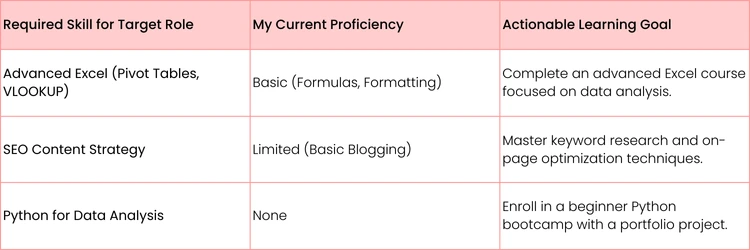
Now, it's time to turn that detective lens inward. With your list of target skills ready, grab a piece of paper or open a spreadsheet and create two columns.
In the first column, list the required skills for your dream role. In the second, be brutally honest about your current proficiency in each one. This simple exercise instantly reveals your personal skill gap—the precise distance between where you are today and where you need to be. That gap is your personalized learning roadmap.
This analysis stops you from wasting time on skills you already have or, even worse, on skills that aren't actually relevant to your goal.
If you want to go deeper on this, this guide on how to set personal goals provides a structured framework you can use right away. By pinpointing your exact needs, you ensure every ounce of effort you put into learning new skills online is targeted, efficient, and directly tied to a meaningful career payoff.
Practical Example:
Choosing the Right Online Learning Platforms
Now that you have a clear picture of your career goals, it's time to pick your training ground. The world of online learning is massive, and frankly, a little overwhelming. But here's the secret: the key is matching the platform to what you're trying to achieve.
Think of it like picking the right tool for a job. You wouldn't use a sledgehammer to hang a picture frame, right? In the same way, the platform you use to get a formal data science credential is going to be very different from the one you use to learn video editing for a weekend project.
Platforms for University-Backed Credentials
If your career path needs a formal, recognized credential—the kind that carries serious weight in fields like data science, finance, or executive management—you'll want to look at platforms that partner with major universities, for example:
- edX: Co-founded by Harvard and MIT, edX is all about rigorous, university-level coursework. If you need a verified certificate in a tough technical field like computer science or engineering from a top-tier school, edX is an incredible resource.
Practical Example: A marketing analyst wants to become a "Marketing Data Scientist". Grabbing a "Data Science Professional Certificate" from IBM on Coursera is a direct hit. It's a credential that perfectly matches their career goal and adds a powerful, recognizable name to their LinkedIn profile.
Sites for Practical Skills
But what if you don't need a formal certificate? What if your goal is to quickly pick up a practical, hands-on skill? This is where skills-based platforms really come alive. They are built for people who want to do something new, not just learn about it, for example:
- Uplyrn brings learning to life with interactive courses in business, tech, creative arts, and personal growth, all guided by real industry pros and friendly mentors. Whether you’re a student or a working professional, it’s your go-to place to level up your skills, switch paths, or land new career opportunities.
Practical Example: A social media manager wants to improve video content. Instead of a broad marketing course, they take a 2-hour Uplyrn class on "How to Go Viral on TikTok". By the end of the weekend, they have three new videos ready to post, demonstrating an immediate, tangible skill.
Bootcamps for High-Intensity Career Changes
For anyone looking for a complete career reset—like jumping from the hospitality industry into software development—immersive bootcamps offer the most direct path. These are intense, often full-time programs designed to take you from total beginner to job-ready in just a few months.
Make no mistake, bootcamps are a serious investment of both time and money. But in return, you get a highly structured curriculum, dedicated career services, and a powerful community of peers.
- Actionable Insight: When you're looking at bootcamps, get obsessed with their job placement statistics. Ask admissions staff: "What percentage of graduates from the last cohort were hired in-field within six months?" Any program worth its salt will be completely transparent about its success rates and average starting salaries.
No matter which platform you choose, you have to do your homework. Your time and money are valuable. By being deliberate about choosing a platform that truly fits your goals and carefully vetting every course, you're setting yourself up for an experience that doesn't just teach you something new, but actually helps you move forward in your career.
Build a Personal System for Learning That Sticks
Let's be honest. It’s easy to feel productive just by watching a bunch of course videos. But that’s not learning; it's just exposure. The real test is making that knowledge stick so you can use it when you need it. You need a personal system, and it doesn't have to be complicated, but it absolutely has to be intentional.
A huge part of that system is picking the right path from the get-go. Aligning your learning path with your end goal is the foundation, whether you're aiming for something academic, creative, or career-focused. Once you have that, you can start building the habits that make the knowledge last.
Structure Your Time for Consistency
Consistency will always beat cramming. Always. A few focused hours every week will do more for your long-term memory than a frantic 8-hour marathon on a Sunday. The simplest way to make this happen is through time-blocking.
- Actionable Insight: Open your calendar app right now. Find three one-hour slots this week and create recurring events called "Deep Work: [Your Skill Here]". Treat them as non-negotiable appointments with your future self. For example, a UX designer in the making might block out 7-8 PM on Tuesdays and Thursdays, plus 10 AM to noon on Saturdays. This rhythm turns learning into a habit, not a chore, and is vital for how to learn effectively in the flow of work.
Move Beyond Memorization with Active Recall
Ever finish a video lesson and realize you can't remember a single key point? That’s passive learning. To lock information into your long-term memory, you need to practice active recall—forcing your brain to retrieve information.
Practical Examples:
- The Blank Page Method: After watching a module, close your laptop. On a blank sheet of paper, write down everything you remember. This immediately shows you what you know cold and what’s still fuzzy.
- Teach Someone Else: At dinner, try explaining what you learned to a friend or partner. The act of articulating a concept out loud forces you to organize your thoughts and solidifies it.
- Use Flashcards: Use a free tool like Anki to create digital flashcards for key terms or concepts. Spend five minutes quizzing yourself before each study session.
Simply put, if your brain isn't straining to retrieve the information, you're not really learning it. You're just recognizing it.
Embrace Deliberate Practice and Project-Based Learning
This is the absolute heart of any effective learning system. Deliberate practice isn’t just mindless repetition; it’s practicing with the specific goal of getting better. And the best way to do that online is by building things.
Practical Examples:
- For a Budding Developer: You just finished a module on APIs. Don't move on. Pause the course and build a simple weather app that pulls data from a free, real-world API. You'll run into errors, have to troubleshoot, and truly learn how it all fits together.
- For a Content Strategist: You just learned about keyword research. Instead of just taking notes, use a free tool like Google Keyword Planner to create a full content brief for a fictional local business. Do the research, find the keywords, and outline an article. You're simulating the exact task you'll be paid to do.
This project-based approach gives you immediate, tangible proof of your skills. It’s what makes you someone who can do the job, not just someone who has taken a course.
Build Your Own Feedback Loops
Learning in a bubble is painfully slow. You have to create your own feedback loops to make sure you're heading in the right direction.
Actionable Insight:
- Share your work: Post your mini-projects in the course forum, a relevant Reddit sub (like r/learnprogramming), or on LinkedIn. Don't just post it; ask a specific question, such as "I struggled with the navigation bar on this project. How could I make it more responsive?"
- Find a mentor: Look for someone a few steps ahead of you and send them a polite message asking for 15 minutes of their time to look over a specific project.
- Critique yourself: Find a professional example of what you're trying to build. Open it on one side of your screen and your project on the other. Make a list of five differences.
When you build a system around consistency, active recall, hands-on projects, and feedback, you transform online learning into an active process of skill mastery.
Turn Your New Online Skills into Career Wins
Alright, this is where all your hard work pays off. You've put in the hours, and now it's time to connect your learning journey to real-world results. A certificate is a milestone, but a portfolio of work that speaks for itself is what opens doors.
The goal is simple: shift from saying you have a skill to proving you can use it. This is about a deliberate strategy to build undeniable proof of your new capabilities.
Build Your Project Portfolio
A hiring manager will always be more impressed by what you've done than by what a course says you know. Your portfolio is your evidence locker—it’s where you show, not tell.
Practical Examples:
- For a new UX/UI Designer: Find a local non-profit with a clunky website and do an unsolicited redesign. Document your process from user research to final wireframes and present it as a compelling case study. You get a portfolio piece, and they might even use your ideas.
- For a Data Analyst: Use a public dataset from Kaggle or data.gov on a topic you find interesting—like city bike usage or movie ratings. Clean the data, analyze it, and build an interactive dashboard in a tool like Tableau or Power BI to showcase your findings.
Projects like these do more than just flaunt your technical chops. They scream initiative, problem-solving, and a genuine passion for your field.
Your portfolio is your silent advocate. It works for you 24/7, showing potential employers exactly how you can add value to their team before you even step into an interview.
Network and Collaborate Within Professional Communities
Learning in a vacuum is slow and limiting. Real acceleration happens when you tap into professional communities. This is where you get feedback, find collaborators, and stumble upon opportunities.
Getting involved with others who share your professional interests is a game-changer. You can find mentors, get constructive feedback, and even team up on something cool.
Where to Connect and Showcase Your Skills
Different skills have different homes online. The key is to show up and be active where the pros in your target industry are already hanging out.
Actionable Insight:
- GitHub for Developers: This is non-negotiable for coders. This week's goal: Find one small, beginner-friendly open-source project and submit a tiny contribution, even if it's just fixing a typo in the documentation. An active GitHub profile is often the first place a technical recruiter looks.
- LinkedIn for Business Professionals: Stop just scrolling. Use LinkedIn to publish a short post about a key takeaway from your online course. Tag the instructor or the platform. This shows you're engaged and actively learning.
- Behance or Dribbble for Creatives: For designers, don't just post your final work. Share your process—the sketches, the failed attempts, the final result. This tells a much more compelling story to potential clients and employers.
Of course, to truly turn your new skills into career wins, you need to know how to present them. A fantastic resource on how to write a resume that wins interviews can show you exactly how to frame these projects for maximum impact. Ultimately, the real measure of success in learning new skills online is the impact it has on your career. Many platforms offer fantastic online courses for career growth designed specifically for this. By actively building, sharing, and connecting, you create a powerful story of competence that will get a hiring manager’s attention.

Got Questions About Learning a New Skill Online?
Even the most meticulously planned learning journey has its bumps. It's totally normal to hit a wall. So, let's tackle some of the most common questions and frustrations that pop up with practical, actionable answers.
How Do I Stay Motivated When I’m Learning on My Own?
This is the big one. Relying on sheer willpower is a fast track to burnout. Motivation isn’t something you have; it's something you build with a smart system.
- Actionable Insight: Break your learning goal into tiny, weekly wins. Instead of getting overwhelmed by "becoming a data analyst", make this week's goal "complete the SQL joins module and build one real query using a sample database". This creates a steady drip of accomplishment that builds momentum.
Next, find an "accountability partner". This could be a friend also learning a skill, or someone from your course's online forum. Set up a 15-minute check-in call every Friday to share what you accomplished. Just knowing someone else is expecting an update makes a world of difference.
The most practical tip is this: schedule your learning time in your calendar like it’s a non-negotiable meeting. When motivation fades, pull up that career outcome you defined earlier. Connecting today's effort to tomorrow's reward is the best fuel you'll find.
Are Online Course Certificates Actually Worth Anything to Employers?
The honest answer is: it depends. The value of a certificate hinges on two things: the reputation of the issuer and your ability to prove you actually know the material.
A certificate from a top-tier university definitely catches a hiring manager’s eye. It’s a strong signal. But—and this is a big but—a certificate alone won’t get you the job. The winning formula is pairing that credential with a portfolio.
- Practical Example: A digital marketer doesn't just list their Google Analytics certification on their resume. Underneath it, they add a bullet point: "Project: Analyzed traffic for a local bakery's website, identified a 30% drop-off in the checkout funnel, and proposed three data-backed UX changes to improve conversion." The certificate gets you in the door; the project seals the deal.
How Much Time Should I Realistically Dedicate to Learning a New Skill?
Consistency will always beat cramming. Carving out 3-5 hours per week, spread across a few different sessions, is way more effective for long-term memory than a single, marathon study session. This method taps into the power of spaced repetition, which is key to moving knowledge from short-term to long-term memory.
Of course, the total time you'll need depends entirely on your goal.
- For Upskilling: If you're an accountant learning Power BI, that 3-5 hours per week is a perfect, manageable target.
- For a Career Change: Making a big leap, like going from retail to software development? You're going to need a much bigger time investment. Realistically, expect to put in 10-15 hours a week for several months to get truly job-ready.
Actionable Insight: Do a "time audit" for one week. Use a simple app or a notepad to track how you spend your non-work, non-sleep hours. You'll likely find pockets of time—like your morning commute or evening TV time—that you can repurpose for learning. Craft a schedule that works without leading to burnout.
At Uplyrn, we provide the courses, expert connections, and career opportunities you need to turn your learning into real-world success. Explore our course catalog today and take the next step in your professional journey.


Leave your thoughts here...
All Comments
Reply