









A Practical Guide to New Manager Training in 2026

So, you just promoted your star employee to manager. It feels like a huge win, but there’s a catch. The very skills that made them a top performer in their last role often don't equip them to lead a team. This is where effective new manager training comes in, turning those high-achieving individuals into the confident, capable leaders your organization needs.
Jump To Section

Earn As You Learn
Earn 25% commission when your network purchase Uplyrn courses or subscribe to our annual membership. It’s the best thing ever. Next to learning,
of course.
Why New Manager Training is a Strategic Imperative
That leap from individual contributor to manager is notoriously one of the toughest transitions in anyone's career. Without any formal guidance, new leaders are basically left to learn by trial and error. That's a risky and expensive way to learn, and it directly hits your team's morale, productivity, and even retention rates.
Think about it: research consistently shows that a manager can account for up to 70% of the variance in their team's engagement. That's a staggering number.
From Doing the Work to Leading the Team
The biggest hurdle for any new manager is a fundamental mindset shift. Yesterday, their value was measured by what they produced. Today, their value is measured by what their team produces.
- Practical Example: A top salesperson gets promoted. As a seller, they were a rockstar at closing their own deals. Now, as a manager, their first instinct is to jump in and "save" a deal when a team member is struggling. It feels helpful, but it actually undermines their employee’s confidence and prevents the manager from scaling their true impact, which is coaching others to succeed.
- Actionable Insight: A structured new manager training program isn't just a nice-to-have perk. It’s a core business strategy that stops leadership disasters before they can hurt your company. It’s about moving new leaders from a mindset of doing to a mindset of empowering.
The Real-World Costs of Underprepared Managers
When you throw new leaders into the deep end without training, the ripple effects can be felt across the entire business. We all know that investing in your people is a game-changer, and managers are on the front lines of that effort. You can read more about the benefits of investing in employees in this detailed guide.
Without training, new managers tend to fall into the same predictable traps:
- Poor Delegation: They either micromanage every detail or just "dump" tasks on their team with zero context or support.
- Avoiding Difficult Conversations: They put off giving tough but necessary feedback, letting small issues fester into huge problems.
- Ineffective Communication: They don't set clear expectations, which leaves the team confused, frustrated, and more likely to miss goals.
Actionable Insight: Get ahead of these issues with a solid training program. Instead of reacting to problems, you're building a foundation for strong leadership, better employee retention, and real, measurable business results.

Designing a Curriculum for the Modern Manager
A training program is only as good as its curriculum. To be effective, it has to tackle the real-world challenges managers face every single day. We need to move past dusty management theory and focus on the core skills that actually drive team performance. Knowing how to develop training curriculum that speaks to the modern workplace is the critical first step.
The whole point is to give new leaders a practical toolkit they can start using from day one. This means your new manager training curriculum must be all about action, not abstract ideas.
Core Communication Skills
This is where so many new managers trip up. Strong communication is the bedrock of good management, and your training needs to break it down into specific, coachable skills.
- Productive One-on-Ones: These aren't status updates.
- Actionable Insight: Teach managers to use this time for connection and coaching. Let the employee drive the agenda by starting with a simple question: "What's on your mind this week?" This focuses the conversation on their wins, roadblocks, and career goals.
- Engaging Team Meetings: These have a different goal: team alignment and collaboration.
- Practical Example: Introduce a "problems and proposals" format where team members don't just bring up issues, but also suggest potential solutions. This builds a sense of ownership and moves the team from complaining to problem-solving.
- Clear Written Communication: With remote and hybrid work, being clear in writing is non-negotiable.
- Practical Example: Show them the difference between a vague project brief ("Please update the client deck") and a strong one that has a clear objective ("Update the client deck with Q3 data for the Wednesday review"), defined roles ("Sarah will pull the sales numbers, Ben will update the graphics"), and specific timelines ("Final version due in the shared folder by Tuesday EOD").
Performance Management and Feedback
Let's be honest, most new managers are terrified of performance reviews. They haven't been given the right tools, so they avoid tough conversations.
A DDI study found that a staggering 57% of employees have quit a job because of their manager. This often starts with clumsy feedback and a total lack of clear performance goals.
We can fix this by focusing on simple, actionable feedback models.
- Actionable Insight: Teach them the Situation-Behavior-Impact (SBI) framework. Instead of saying, "You seem disengaged", they learn to say, "In this morning's meeting (Situation), I noticed you were quiet and on your phone (Behavior). The impact was that we missed your input on the project plan." This simple script removes judgment and focuses on observable facts, making feedback much easier to deliver—and to hear. A competency-based training approach is a fantastic way to structure these modules for maximum impact.
Delegation and Empowerment
The leap from star "doer" to effective "delegator" is a huge one. New managers often cling to tasks because they think it's faster to do it themselves or they're afraid of losing control.
Your training needs to reframe delegation completely. It’s not about offloading work; it's a powerful tool for developing your people.
Let's look at a practical example:
- The Wrong Way: The manager shoots off an email: "Handle the Q3 sales report, due Friday." This just creates stress and leaves the employee guessing.
- The Right Way: The manager has a conversation. "I want you to own the Q3 sales report. It's a great chance to get deeper into our analytics. Let's review the template together, I'll show you where the data lives, and we can sync up on Wednesday to see how you're doing."
See the difference? The second approach gives context, sets clear expectations, and frames the task as a growth opportunity. It empowers the employee and frees the manager to focus on more strategic work.
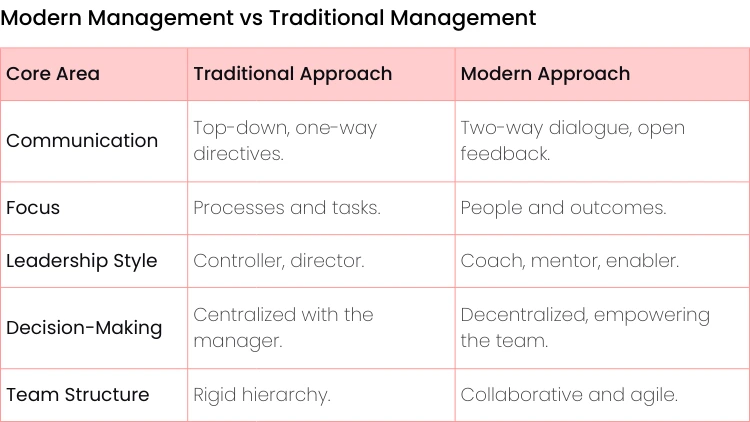
As we dive into these specific skills, it's crucial to understand the shift in management philosophy. The old command-and-control style just doesn't work anymore. Today's best leaders are coaches, enablers, and connectors.
This table highlights the fundamental change from managing work to leading people. Your training curriculum must be built on the principles of the "Modern Approach".
Choosing the Right Training Delivery Formats
When it comes to new manager training, how you deliver the content is just as important as what you teach. A one-size-fits-all, week-long workshop just doesn't cut it anymore. New leaders are already swamped, and the key is to weave learning into their actual workday.
Think of it less as a single event and more as a continuous journey. The best programs meet managers right where they are, offering a blend of formats that provide the right support, in the right way, at the right moment.
Microlearning for Just-in-Time Skills
- Practical Example: A new manager has a difficult coaching conversation scheduled in ten minutes. They don't have time for a lengthy course. They need quick, practical advice right now.
This is where the magic of microlearning comes in. It’s all about delivering focused, bite-sized content designed to solve an immediate problem. This could look like:
- A two-minute video showing how to use the SBI feedback model.
- A one-page checklist for running a great first one-on-one.
- An infographic on how to de-escalate a team conflict.
This approach respects a manager’s packed schedule and gives them on-demand support exactly when they need it. The learning sticks because they can apply it immediately.
- Actionable Insight: A core principle of modern training design is to make learning a part of the daily workflow. Instead of pulling managers out for training, push targeted, helpful resources into their workflow via Slack, Teams, or email.
By providing these just-in-time resources, you help new managers build confidence and competence one real-world challenge at a time.
Immersive Workshops and Peer Mentoring
While microlearning is perfect for quick wins, some skills just need a deeper, more hands-on approach. This is where live, immersive workshops really deliver. They create a safe space for managers to practice tough situations, like role-playing a performance review or navigating a complex team dispute.
Workshops are also fantastic for building a cohort. When new managers get to know each other, they start forming a support network that can last for years. You can take this a step further by creating peer mentoring circles.
- Actionable Insight: Group 4-6 new managers together to meet bi-weekly. Give them a simple starter for their first session, like, "Share one challenge you're wrestling with and one small win you've had this week." It’s a simple way to create a trusted space where they can talk through real problems and learn from each other.
E-Learning and Collaborative Platforms
Having a central hub for all your training materials is a must. A modern e-learning platform, like Uplyrn, can house all your microlearning videos, workshop handouts, and supplemental reading in one place. It becomes the single source of truth that managers can go back to anytime.
- Practical Example: Don't stop at a static library. Create a dedicated Slack or Teams channel for your new manager cohort. When someone faces a tricky situation, they can ask a question like, "My team is debating two different approaches for the project, how have others navigated this?" and get instant feedback from their peers and a facilitator. This shifts training from a one-off event to an ongoing, collaborative experience. Learning how to connect virtual training with organizational impact is crucial for getting the most out of these tools.
Recent workplace learning reports underscore a major pain point: 50% of organizations admit their managers aren't equipped to lead coaching and career development conversations. A blended approach with on-demand resources and peer support directly tackles this gap.
A Practical 30-60-90 Day Plan for New Managers
All the training in the world won't stick if a new manager can't apply it on the job. A 30-60-90 day plan is the bridge between knowing the theory and actually leading with confidence. It gives new leaders a concrete roadmap with real, measurable actions to build momentum from day one.
Think of it as sequencing the learning process. You move from quick, digestible knowledge to more hands-on, collaborative practice.
This modern, blended approach starts with easy-to-absorb microlearning and builds toward deep-dive workshops and invaluable peer mentoring.
The First 30 Days: Listen and Build Rapport
The first month has one job: listen, learn, and build trust. This is absolutely not the time to come in and make sweeping changes. It’s all about getting to know the team, the work they do, and how they see the world.
- Actionable Insight: The most important thing a new manager can do is schedule one-on-one meetings with every single person on their team. These aren't just casual "hellos". They need to be focused conversations to understand what each person does, what they're working on, what they love about their job, and what drives them crazy.
Practical Example: Don't just ask, "So, what are you working on?" Go deeper with open-ended questions like these:
- "If you had a magic wand, what's one thing you'd change about how our team works?"
- "Tell me about a recent win you're proud of, no matter how small."
- "How do you like to get feedback? What about recognition?"
This kind of questioning immediately starts building psychological safety and gives the manager a treasure trove of insights.
Days 31-60: Find Quick Wins and Fix Processes
Okay, you've built a foundation of trust. Now it’s time to show the team you were listening and are ready to take action. The next 30 days are about making small, visible improvements and scoring a "quick win".
A quick win is a small but incredibly frustrating problem that has been plaguing the team. Fixing it is a fast way to show you're effective and build major credibility.
- Actionable Insight: Hunt for the "pebble in the shoe"—that annoying, persistent issue everyone gripes about but no one has ever fixed. It could be a terrible reporting template, a useless meeting, or a confusing communication flow. Solving it speaks volumes.
- Practical Example: Let's say the team constantly complains that the weekly status meeting is a total waste of time. The new manager can jump on this. They could experiment with an async update on a shared digital dashboard and use the old meeting slot for collaborative problem-solving instead. It's a targeted fix that solves a real pain point and shows the manager is listening.
Days 61-90: Set the Vision and Direction
By day 90, a new manager should have a real feel for the team's rhythm and the nuts and bolts of the operation. The focus now shifts from small fixes to long-term strategy. It's time to build a vision.
- Actionable Insight: Put consistent team rituals in place. The manager needs to lock in a predictable schedule for things like team meetings, one-on-ones, and project check-ins. This consistency creates stability and gets everyone on the same page.
Finally, the manager should work with the team to define clear, ambitious goals for the next quarter. When goal-setting is a collaborative process, you get buy-in from everyone. They understand how their work directly connects to the team's bigger mission.
Using AI and Avoiding Bias in Management
By 2026, it won't be sci-fi to see managers working alongside powerful AI assistants. These tools will be analyzing performance data, recommending pay raises, and even helping map out entire projects. The new manager training you develop today needs to prepare them for this reality.
The key is teaching them to use these tools responsibly. We need managers who are critical thinkers, seeing AI as a powerful assistant, not an unquestionable authority. It's all about blending the insights from technology with irreplaceable human empathy and judgment.
It’s happening faster than you think. A shocking 60% of managers are already using AI for major employee decisions. That includes 78% who lean on it for salary increases and 77% for promotions. With numbers that high, ethical training isn't just a good idea—it's non-negotiable.
The Human-in-the-Loop Principle
The single most important concept you can teach your new managers is the "human-in-the-loop" model. It's a simple idea: AI is great at spotting patterns, but it has zero understanding of context. Your managers have to be the ones to question, challenge, and ultimately validate what the AI suggests.
- Practical Example: An AI tool flags a developer for low productivity because their "lines of code written" are down. A rookie manager might take that at face value and raise a performance concern. A properly trained one knows that’s just where the real work begins.
- Actionable Insight: Teach them to dig into the why:
- Was this developer spending their week mentoring a junior team member?
- Were they wrestling with a complex bug fix that was more about thinking than typing?
- Could they be dealing with a personal issue that's temporarily affecting their focus?
An algorithm can’t see that. A person can. That's the context only a human manager can provide.
Training Managers to Spot and Counter Bias
AI systems are only as good as the data they're trained on. And unfortunately, that data is often packed with decades of historical, human biases. Your training program has to give managers the skills to spot and challenge these biases before they turn into unfair decisions. If you're curious about this dynamic, you can read more about how teams with AI agents and humans will perform in the future.
- Practical Example: An AI might recommend promoting an employee who consistently works late, unintentionally penalizing a working parent who is just as productive but logs off at 5 PM on the dot. A great manager sees this, ignores the "hours logged" metric, and evaluates the person's actual output and impact.
By teaching managers to be skeptical of AI-driven suggestions, you're not just preventing bad decisions. You're empowering them to build fairer, more inclusive, and ultimately more effective teams. In the end, the manager—not the machine—is always accountable for the final call.
Answering Your Top Questions About New Manager Training
Even with the best-laid plans, a few key questions always pop up when you're rolling out a new manager program. Let's tackle the big ones we hear all the time from HR leaders and first-time managers.
How Do We Actually Measure the ROI of This Training?
Measuring the return on your training investment means looking way beyond who finished the course. To see the real impact, you have to track metrics before and after the training kicks off.
Actionable Insight: Compare the teams of your newly trained managers against a control group of those who haven't gone through the program yet.
- The Hard Numbers: Look at concrete data like team retention rates, productivity numbers (think project deadlines or sales quotas), and the employee engagement scores you get from pulse surveys. Seeing even a 5-10% improvement in retention on a trained manager's team is a huge win and a clear sign of ROI.
- The Human Element: Use 360-degree feedback to find out if the manager’s behavior has genuinely changed for the better.
- Practical Example: Ask direct reports specific questions like, "On a scale of 1-5, how has the clarity of communication improved?" or "Are feedback sessions more constructive than they were three months ago?" These qualitative insights are just as critical as the numbers.
What’s the Single Biggest Mistake Companies Make?
The biggest pitfall by far is treating training as a one-and-done event. A two-day workshop might feel productive, but most of that knowledge evaporates within weeks if it isn't reinforced. This "fire and forget" mentality is exactly why so many programs don't stick.
- Effective training is not an event; it's a continuous process woven into the manager's daily work. Lasting change comes from ongoing application, feedback, and support—not from a single, isolated workshop.
Actionable Insight: To avoid this, you have to build a system of ongoing support. Think peer coaching circles, a library of on-demand microlearning videos for quick answers, and regular check-ins with a seasoned mentor. That’s what turns a training session into real, lasting skill.
Should We Just Use an External Platform for Everything?
It's tempting. Using an external learning platform gives you access to high-quality, scalable content on core skills like delegation or communication. But relying on it exclusively is a massive missed opportunity. The magic really happens when you blend expert external content with your own internal context.
- Practical Example: An e-learning course can teach a manager the theory of how to give feedback. But an internal workshop is where they can practice giving that feedback on real, company-specific performance issues (e.g., using your internal performance review template) with a colleague they actually know.
This blended approach is powerful. It gives your managers both the foundational knowledge and the specific, organizational context they need to put it into practice and truly thrive.
Ready to build a culture of confident, capable leaders? Uplyrn provides a flexible skills ecosystem where your new managers can access expert-led courses, connect with mentors, and get the continuous support they need to thrive. Start designing your impactful training program with Uplyrn today!


Leave your thoughts here...
All Comments
Reply