









Mastering Quality Assurance and Audit: A Complete 2026 Guide
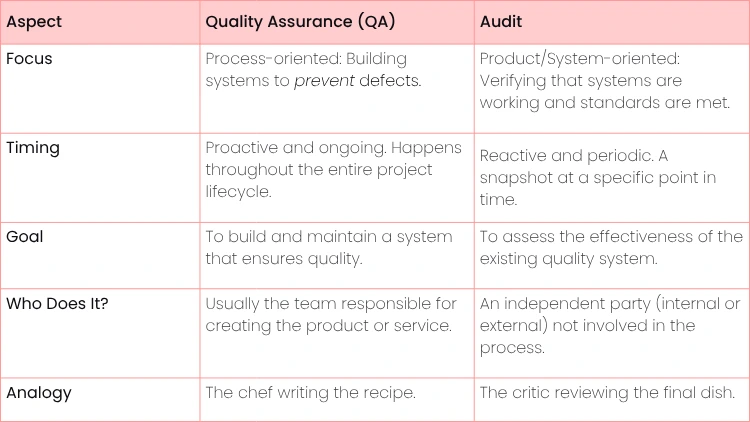
It’s easy to get quality assurance and audit mixed up. While they both aim for high standards, they play completely different roles in the game of quality management. Think of them as two sides of the same coin—one looking forward, the other looking back.
Quality assurance is all about being proactive. It's the ongoing work of designing and refining your processes to prevent defects from ever happening. An audit, on the other hand, is a periodic check-in. It’s a reactive snapshot to verify that the systems you built are actually working as intended.
Jump To Section

Earn As You Learn
Earn 25% commission when your network purchase Uplyrn courses or subscribe to our annual membership. It’s the best thing ever. Next to learning,
of course.
QA vs. Audits: What's the Real Difference?
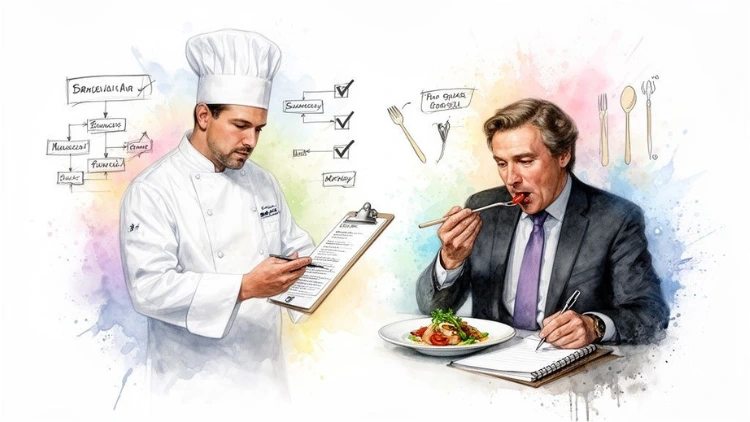
Let’s break it down with an analogy. Imagine a top-tier restaurant.
Quality Assurance (QA) is the head chef obsessively creating the perfect recipe. They source the best ingredients, define every cooking step with precision, and train the entire kitchen staff to ensure every single plate that leaves the kitchen is spectacular. This is a constant, hands-on effort to build quality in from the very start.
- Practical Example: The chef creates a visual guide with photos for plating each dish and requires two line cooks to sign off on every complex order before it goes to a table.
- Actionable Insight: Document your most critical processes with simple, visual aids (like checklists or photos). This makes it easy for your team to maintain standards, even during busy periods.
An audit is like an independent food critic showing up for a surprise inspection. This critic isn’t there to write the recipe; they’re there to verify it. They’ll systematically check the kitchen's cleanliness, confirm the staff is following the chef’s exact methods, and, of course, taste the final dish. Their goal is to provide an objective report on whether the restaurant is living up to its own standards.
- Practical Example: The critic uses a checklist to sample a steak, checking its temperature against the restaurant's "medium-rare" specification (130-135°F) and verifying that the plating matches the guide.
- Actionable Insight: When auditing, don't just ask if a process is being followed. Test it against specific, measurable criteria. Instead of asking "Is the steak good?" ask, "Does the temperature match the standard?"
Why This Distinction Matters
This difference is absolutely critical for any business. You can’t just wait for an audit to catch mistakes. By that point, a shoddy product might already be in a customer's hands, and your reputation could be on the line.
Truly effective quality assurance makes the audit feel like a formality—a simple confirmation of what you already know: your processes are solid. Take a software company, for example. The QA team spends its time developing coding standards, creating automated test protocols, and training developers. When the internal audit team comes around, their job is simply to review a few projects and confirm everyone followed the playbook.
Ultimately, these two functions create a powerful cycle of continuous improvement. It’s a core principle you can dive into by understanding what Lean management is and how it drives efficiency. QA sets the stage for success, and a quality assurance and audit provides the proof that you’ve delivered.

Building Your Quality Management System
If quality assurance sets the daily rules of the game, your Quality Management System (QMS) is the entire stadium where the game is played. It's the official, documented framework that holds all your QA processes, giving you the structure needed for audits to even make sense.
Think of your QMS as the constitution for your company’s quality goals. A standard like ISO 9001 acts as the blueprint for writing that constitution.
A good QMS is way more than just a pile of documents you dust off for compliance checks. It’s about building quality into the DNA of your company, a cultural shift where quality becomes part of every single decision. By weaving in essential quality assurance best practices, you turn what feels like a chore into a serious competitive advantage.
Core Principles of an Effective QMS
Any solid QMS stands on a few key pillars, most famously laid out by the ISO 9001 standard. Getting these right is what makes the whole system actually work for you, not against you.
- Customer Focus: Everything circles back to this. The ultimate goal is to meet—and hopefully blow past—customer expectations.
- Practical Example: A SaaS company implements a simple "one-click feedback" button after a user completes a key task. This data is reviewed weekly to prioritize bug fixes and feature improvements.
- Leadership Commitment: The bosses have to be all in. This isn’t just about a CEO signing a policy document.
- Practical Example: The VP of Operations starts every weekly leadership meeting with a 5-minute review of the top quality metric, whether it's defect rates or customer satisfaction scores. This signals that quality is a top priority.
- Process Approach: Stop thinking in silos. Your business is a series of connected processes.
- Practical Example: A manufacturer maps the entire "order-to-delivery" journey, identifying three key handoffs between sales, production, and shipping. They then create a shared dashboard to track orders at each stage, reducing blame and improving flow.
These pillars make sure your quality efforts aren't random but are strategic and pushed forward by the people at the top.
A QMS creates the trust infrastructure that keeps businesses resilient. Its purpose is to ensure that numbers, narratives, and risk assessments can be relied upon, especially during periods of market volatility.
From Principles to Actionable Insights
Putting these ideas into practice is where a QMS really shines. A well-built system doesn't just help you pass a quality assurance and audit; it actively makes your business better.
For instance, a hospital using an evidence-based approach can track how quickly patients recover based on different treatment plans. By analyzing the data, they can spot which methods get better results and cost less money.
- Actionable Insight: Don't just collect data; use it to run small experiments. Identify one key process and track its outcome (e.g., customer resolution time). Tweak one variable (e.g., a new script for support agents) and measure the impact. This turns your QMS into a tool for active learning.
This systematic thinking hits your bottom line directly. When you streamline processes, you cut down on waste. When you consistently put out great products or services, your customers stick around, and you spend less time and money on fixing mistakes. You can learn more about how to measure and manage service quality and really sharpen that edge.
Ultimately, a QMS transforms quality from an annoying expense into a powerful engine for growth and efficiency.

Understanding the Different Types of Audits
Not all audits are the same. Far from it. Knowing the difference is a game-changer in the world of quality management. Think of it like this: there's a big difference between checking your own work, having a partner review it, and bringing in an official inspector.
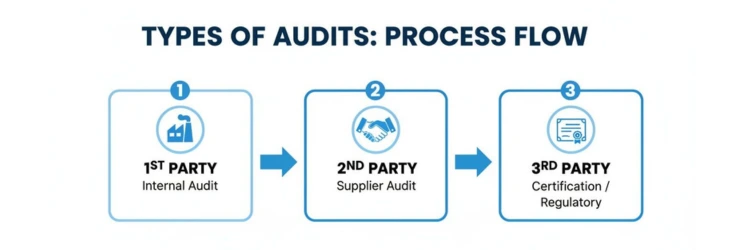
Each type of audit plays a unique role in your overall quality assurance and audit strategy. Let's break down the three main players you'll run into: first-party, second-party, and third-party audits.
First-Party Audits for Self-Improvement
A first-party audit is simply an internal audit. This is your company, using your own people, to check your own systems. The goal isn't to get a fancy certificate to hang on the wall—it's about honest-to-goodness self-improvement. Are we actually following the rules we set for ourselves?
- Practical Example: A bank's internal compliance team randomly selects 20 new loan applications from the previous month. They review the files against the bank's own documented lending procedure to ensure all required credit checks and income verifications were completed and signed off.
- Actionable Insight: To make internal audits effective, create a rotating schedule where different departments audit each other (with proper training). This cross-pollination spreads knowledge and brings a fresh set of eyes to established processes.
Second-Party Audits for Supplier Confidence
Next up is the second-party audit. This is an external audit, but with a twist. It's performed by a customer on one of its suppliers. This happens when you absolutely need to know that your vendors can meet your specific contractual demands. It’s all about managing supply chain risk and making sure their idea of "quality" matches yours.
- Practical Example: A coffee chain sends an auditor to a farm that supplies their organic coffee beans. The auditor inspects the farm's records to verify its organic certification is valid and that no prohibited pesticides have been used, ensuring the "organic" claim on the coffee cup is true.
- Actionable Insight: Before conducting a second-party audit, send your supplier the audit checklist in advance. The goal is not to "catch" them but to ensure they understand your standards and are prepared to demonstrate compliance. This fosters partnership over policing.
An audit isn't just about finding faults; it's a systematic review to provide assurance. Whether it's an internal check or a formal certification, its purpose is to create a foundation of trust that processes are working as intended.
Third-Party Audits for Certification
Finally, we have the third-party audit. This is the most formal of the three, performed by a completely independent, accredited organization. The big reason to do this is to get certified against a major standard, like ISO 9001. The auditors here have no skin in the game; they aren't tied to your company or your customers, so their assessment is completely impartial.
- Practical Example: A medical device manufacturer hires an accredited registrar to conduct an ISO 13485 audit. The auditors spend a week on-site, scrutinizing everything from design controls to sterilization records. Passing this audit is a legal requirement to sell their products in many countries.
- Actionable Insight: Treat your third-party audit as a free consultation. While the auditor's primary job is to check for compliance, they see dozens of companies a year. Ask them about common industry best practices related to the clauses where you are compliant but could be stronger.
A Practical Guide to the Audit Process
Let's be honest, the word "audit" can make anyone a little nervous. But a good quality assurance and audit process isn't about catching people out—it's about having a clear roadmap to make things better.
When you break it down, the process is actually a logical journey from planning what to check to making sure any fixes actually stick. Each step builds on the last, giving you a thorough and, most importantly, constructive review of your systems.
Think of it like a professional inspection before buying a house. First, you'd figure out what needs checking (the plan). Then, you'd walk through the property, looking at the plumbing, wiring, and foundation (the execution). Afterward, you'd get a detailed report of the findings. Finally, you’d make sure any critical issues are addressed before closing the deal (the follow-up).
The Four Stages of an Audit
Let's walk through the four key stages of any audit. Whether you're doing a quick internal check-up or gearing up for a major certification, this framework holds true.
1. Planning and Preparation
Success is often decided before the audit even begins. This is where you set the ground rules by defining the scope (what, exactly, are we looking at?) and the objectives (why are we looking at it?).
- Practical Example: For an audit of the customer support department, the scope is "all ticket handling processes for Tier 1 support". The objective is "to verify compliance with the 24-hour response time SLA". The audit plan then lists the specific team members to be interviewed and a request for a data export of all tickets from the past 30 days.
2. Execution and Evidence Gathering
This is the hands-on part. Auditors will be on the ground, talking to team members, watching processes as they happen, and digging into the paperwork. The goal here is to collect objective evidence—hard facts, not feelings or opinions.
- Actionable Insight: Use the "show me" technique. Don't ask, "Do you follow the backup procedure?" Instead, say, "Can you show me the log from last night's data backup?" This moves the conversation from opinion to fact and is the cornerstone of effective evidence collection.
3. Reporting and Communication
Once all the evidence is gathered, the auditor sits down to analyze it and spot any non-conformances—that is, any place where the reality doesn't match the requirements. These findings are then compiled into a formal audit report.
- Actionable Insight: When writing a finding, use the "Requirement, Evidence, Consequence" model. State the rule that was broken (Requirement), the proof you found (Evidence), and the potential risk or impact (Consequence). This makes the finding undeniable and motivates action.
4. Follow-Up and Corrective Action
An audit is a waste of time if it doesn't lead to improvement. In this final stage, the department that was audited creates a corrective action plan to tackle the issues found. The auditor's job isn't over yet, though. They need to review that plan and, later, circle back to confirm that the actions were actually effective in fixing the root cause of the problem for good.
- Practical Example: The audit found that 15% of support tickets missed the 24-hour SLA. The corrective action plan isn't just "try harder". It includes a root cause analysis (e.g., "inadequate staffing on weekends") and a specific action ("hire two part-time weekend support agents by Q3"). The follow-up verifies that the new hires are in place and the SLA miss rate has dropped below 5%.
Turning Theory into a Practical Tool
To bring this all to life, let's talk checklists. A well-designed audit checklist is your best friend, turning abstract standards into simple, concrete questions.
An audit checklist is more than a to-do list; it's a navigational tool. It keeps the audit consistent, stops you from forgetting critical areas, and gives you a clear path for gathering evidence.
For instance, if you were auditing your process controls and employee training, your checklist might have questions like these:
Process Controls:
- Actionable Question: "Show me where the procedure for Task X is located. Now, can you walk me through how you perform that task?" (This checks both accessibility and actual adherence).
- "Can you show me the calibration record for this specific piece of equipment (ID #123)?"
- "Walk me through the last time a non-conforming product was identified. Show me the report and how it was resolved."
Training and Competence:
- "Let's look at the job description for this role. Now show me the training records that prove this employee has met these requirements."
- "How do you verify that training was effective? Can you show me a post-training assessment or a supervisor sign-off?"
This practical approach ensures your quality assurance and audit activities are thorough and genuinely useful. If you’re looking to sharpen your own operational processes, this guide on the steps in service process improvement is a great next step.
As you can see, audits aren't a one-size-fits-all activity. They range from internal self-checks to mandatory third-party certifications, each playing a vital role in keeping your quality promises.
Seeing Quality in Action: Real-World Success Stories
Theory is one thing, but seeing top-tier quality assurance and audits in the wild is where the real learning happens. When you look at how the best companies in the world handle their quality systems, you start to see how it all connects back to business success.
These aren't just stories about passing an inspection. They’re about how a serious commitment to quality protects a company's finances, builds a rock-solid reputation, and opens up amazing career paths. Getting good at quality management isn't just for a certificate; it’s a skill set that the world's leading companies absolutely rely on.
The Power of Always Getting Better
One of the best examples of this comes from the professional services industry. Take a global firm like PwC. For their 2025 inspection cycle, they put 1,807 of their own audit engagements under an intense internal microscope. What they found was that 96.8% were rated Compliant. That's a solid improvement from 95.3% the year before and a huge leap from 83.3% just five years ago. You can dig into the nitty-gritty of their journey on PwC's global review site.
- Actionable Insight: This improvement wasn't accidental. It came from analyzing the root causes of non-compliant audits and investing heavily in specific training and technology to address those weak points. For your own business, don't just fix audit findings—analyze them in aggregate. If 30% of your findings are related to documentation, you don't have 10 documentation problems; you have one systemic problem that requires a targeted training or process solution.
What does that data really tell us? Excellence in this field isn’t a one-and-done deal. It’s the result of being relentless and making small, steady improvements over time. Only 3.2% of their audits were Non-Compliant, and of those, only five were serious enough to require financial restatements. That’s what a well-oiled quality system does—it catches the small stuff before it becomes a big, expensive disaster and keeps stakeholders confident.
Turning High Standards into High-Demand Careers
The kind of commitment you see at top firms creates a direct pipeline to great jobs for people with the right skills. A solid quality assurance and audit program isn't just a "nice to have" anymore; it's a critical part of the business that needs dedicated pros. This has created roles that are much more than just traditional number-crunching.
An audit isn't just about finding faults; it's a systematic review to provide assurance. Its purpose is to create a foundation of trust that processes are working as intended, safeguarding the integrity of the entire organization.
Today’s quality professionals are expected to be experts in a few key areas, which has made this a seriously in-demand skill set for anyone building a career.
- Risk Management: You’re not just finding problems; you’re spotting potential failures before they even happen and building controls to stop them.
- Practical Example: An auditor at a fintech company doesn't just check if transactions were processed correctly. They use data analysis to model what a fraudulent transaction pattern looks like and then audit the system's ability to automatically flag those patterns in real-time.
- Data Analytics: You’re using data to see what’s really going on, spot trends, and make decisions based on hard evidence, not guesswork.
- Actionable Insight: Learn to use a simple data visualization tool like Power BI or Tableau. You can connect it to your quality data (e.g., defect reports, customer complaints) to create a live dashboard. This transforms static reports into a dynamic tool for spotting trends instantly.
- Regulatory Governance: You need to know the rulebook inside and out, from complex financial reporting standards to data privacy laws, and make sure the company is playing by them.
These are the skills that keep companies hitting those high compliance rates. As more businesses invest in their quality systems, the need for people who can design, manage, and audit them is only going to grow. Your journey into mastering quality assurance is a direct investment in a secure and rewarding career.
The Future of Quality and Auditing
The world of quality assurance and auditing is changing, and it's changing fast. Forget the old days of just ticking boxes on a checklist. We're now in an era where artificial intelligence is weaving its way into every part of the testing process, and entirely new kinds of risks are popping up. This isn't some far-off future—it's happening right now, mostly because businesses are under huge pressure to push out perfect digital products faster than ever before.
And you can see this pressure reflected in the money being spent. The World Quality Report for 2025-2026 points to a major shift: 38% of companies are planning to boost their spending on quality and testing. That’s a big jump, and it’s a direct response to the relentless demand for quicker, more stable software releases. You can read the full report on quality trends from OpenText to dig into the numbers yourself.
The Expanding Role of the Modern Auditor
As the tech gets more complicated, the auditor's job is getting bigger and way more interesting. The role is stretching to cover challenges that we weren't even talking about a few years ago. Auditors aren't just compliance checkers anymore; they’re becoming critical advisors on some seriously technical and ethically tricky subjects.
A modern auditor needs to be ready to get their hands dirty with:
- AI and Algorithmic Bias:
- Practical Example: An auditor for an insurance company tests the firm's new AI-powered premium calculator. They feed it thousands of anonymized, hypothetical customer profiles with varying demographics to ensure the algorithm doesn't produce discriminatory pricing based on race, gender, or zip code.
- Cybersecurity Threats: It’s not enough to have a firewall. Auditors now have to verify that a company’s defenses can actually stand up to the sophisticated cyberattacks happening today.
- Practical Example: An IT auditor doesn't just review password policies. They work with an ethical hacking team to run a controlled phishing simulation on 500 employees to test the effectiveness of the company's security awareness training.
- Climate and ESG Disclosures: Companies are making big promises about their environmental, social, and governance (ESG) impact. Auditors have to make sure what they’re reporting is actually true.
The future of auditing is all about building trust that goes beyond the balance sheet. As businesses lean on complex tools like AI, the auditor’s job is to assure everyone that these systems are not only working, but are also fair, secure, and transparent.
Essential Skills for Tomorrow's Quality Professional
If you're in the quality assurance and audit field, this new landscape means it's time to upskill. The era of being purely a manual tester or a process checker is drawing to a close. Getting comfortable with new technology isn't just a "nice-to-have" for your career anymore—it’s a must.
- Actionable Insight: Start small. You don't need to become a data scientist overnight. Begin by taking a free online course in "SQL for Beginners" or "Introduction to Python". The ability to query a database or run a simple script to analyze a log file is a powerful first step that will immediately set you apart.
This means getting good at data analytics to see patterns in performance logs, truly understanding automated systems so you can audit them properly, and even getting a handle on AI ethics to navigate new compliance minefields. Companies are already building teams that mix human smarts with AI tools, and the people with these skills are the ones who will be in demand. To get a better sense of where this is all heading, you can explore how teams with AI agents and humans will perform. If you want to stay ahead in quality, you have to be willing to adapt.
Quality and Audits: Your Questions Answered
We’ve walked through the ins and outs of quality assurance and the world of audits. But when the theory meets the real world, questions always come up. Let's tackle some of the most common ones you’ll face.
What's the First Step in Preparing for an Audit?
Before you do anything else, you need to start with audit planning. Think of it as creating a roadmap for the entire process.
- Actionable Insight: Your very first practical step is to create a simple "Audit Charter" document. In one page, define the audit's purpose, scope, timeline, and team members. Have the audit sponsor (e.g., a department head) sign it. This simple act secures buy-in and prevents scope creep later on.
Can a Small Business Really Implement a Quality Management System?
You bet. A Quality Management System (QMS) isn't just for massive corporations; it's designed to scale.
- Practical Example: A five-person bakery can implement a simple QMS by focusing on three things: 1) A documented recipe for each product (process control), 2) A daily checklist for oven temperature and cleaning (monitoring), and 3) A logbook to track any customer complaints and what was done about them (corrective action). It's that simple.
How is an Audit Finding Different from a Recommendation?
This is a crucial distinction. An audit finding is a formal flag for non-conformance. It means a specific requirement wasn't met, and the auditor has objective proof to back it up.
- Practical Example of a Finding: "The procedure requires weekly safety checks, but the log for the cutting machine shows no entries for the last three weeks." This is a clear breach of a rule.
- Practical Example of a Recommendation: "The safety checks are being completed weekly as required. However, consolidating the three separate paper logs into a single digital checklist could reduce documentation time by 50% and prevent lost records." This is a suggestion for improvement, not a violation.
How Often Should We Conduct Internal Audits?
There’s no single right answer here—it all comes down to your company's size, complexity, and specific risks. As a rule of thumb, most organizations run a full internal audit of their QMS at least once a year.
- Actionable Insight: Create a "risk-based" audit schedule. Instead of auditing everything annually, rank your processes by risk (high, medium, low). Audit high-risk areas (like payment processing or product safety) twice a year, medium-risk areas annually, and low-risk areas (like office supply ordering) every 18-24 months. This focuses your limited audit resources where they matter most.
The regulatory world also plays a big part. New changes to standards like AS 1105 are pushing many companies to rethink their approach, especially as cybersecurity and governance become bigger priorities.
Ready to build the skills for a career in quality management? At Uplyrn, we provide the expert-led courses and resources you need to advance in your professional journey. Start your upskilling path today.


Leave your thoughts here...
All Comments
Reply