









Your Practical Guide to the 7 Steps of Problem Solving

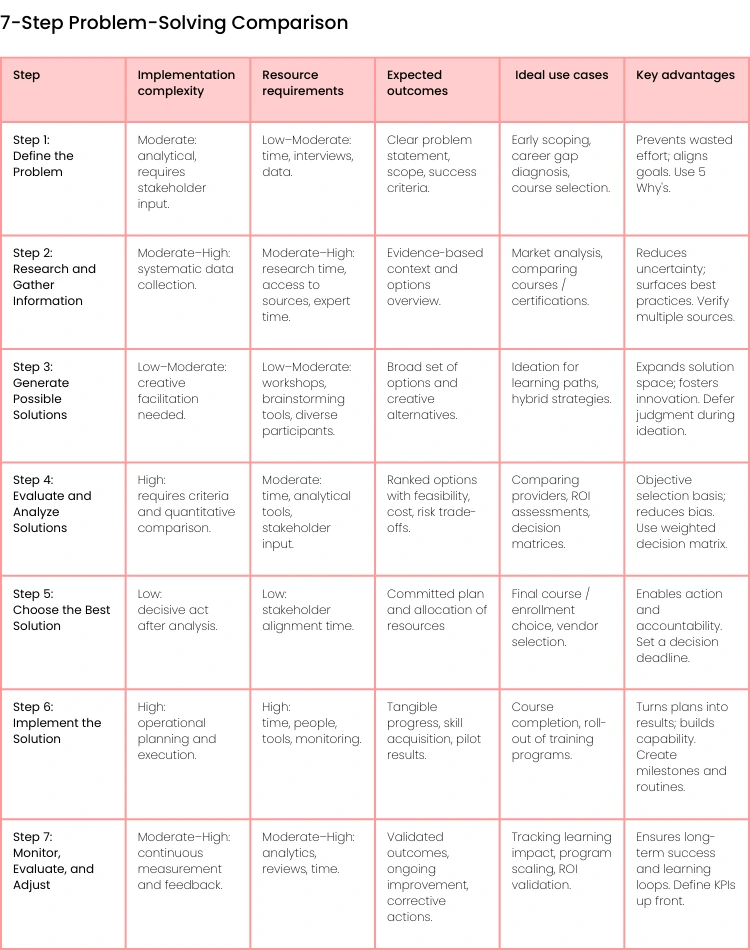
Feeling stuck? Whether you're facing a complex project at work, a career roadblock, or a personal learning challenge, the path forward can seem unclear. We often treat problem-solving as an innate talent, but it's a skill, one that can be learned, practiced, and mastered. This guide breaks down a proven, structured method into a clear framework. Forget abstract theory; we're diving into the essential 7 steps of problem solving with practical examples and actionable insights you can apply immediately.
By mastering this process, you can transform challenges into opportunities for growth, turning uncertainty into a confident plan of action. This article provides a universal toolkit, empowering you to dismantle any obstacle systematically and effectively, one step at a time.
Jump To Section

Earn As You Learn
Earn 25% commission when your network purchase Uplyrn courses or subscribe to our annual membership. It’s the best thing ever. Next to learning,
of course.
Step 1: Define the Problem
The first and most crucial of the 7 steps of problem solving is to clearly define the issue you face. This foundational phase involves moving beyond surface-level symptoms to uncover the root cause. Instead of rushing toward a solution, effective problem-solvers invest time in understanding the problem's scope, context, and impact. This ensures that all subsequent efforts are focused and efficient, preventing wasted time on fixing the wrong thing.
Why It Works
Defining the problem correctly is like setting the right coordinates on a GPS before a long journey; a small error at the start can lead you miles off course. For instance, a company might notice high employee turnover and assume the cause is low pay. However, a deeper analysis could reveal the actual problem is a lack of professional development opportunities. This distinction is vital for creating a solution that truly works.
- Practical Example: A marketing team sees their ad campaign engagement is low. A vague problem definition is "our ads aren't working". A precise definition is "Our click-through rate on social media ads for Product X has dropped by 40% in the last month, despite a consistent budget, indicating a mismatch between ad creative and target audience."
Actionable Insights: How to Define Your Problem
To implement this step effectively, try these techniques popularized by methodologies like the Toyota Problem-Solving approach:
- Use the "5 Whys" Technique: Ask "why" repeatedly to drill down past symptoms.
- Actionable Insight: If your problem is "I'm not getting promoted", asking "why" five times might reveal the root cause is not "my boss doesn't like me" but rather "I haven't taken the initiative to lead a project, which demonstrates the skills required for the next level."
- Quantify the Impact: Whenever possible, attach numbers to the problem. Instead of "our team is slow", define it as "our team’s project delivery time has increased by 20% in the last quarter."
- Write It Down: Formulate a clear, concise problem statement. This simple act forces you to articulate the issue and share it with others for feedback.
For professionals and businesses, achieving clarity on a problem is the first step toward innovation. You can explore more on identifying problem-solution fit to understand how this applies in a startup environment. By mastering this initial step, you set the stage for a successful resolution.
Step 2: Research and Gather Information
After defining the problem, the second of the 7 steps of problem solving is to gather comprehensive information. This phase is about building a well-rounded understanding of the challenge by collecting data, context, and diverse perspectives. Instead of making assumptions, this step requires you to become an investigator, exploring the problem's various facets, constraints, and potential precedents. This informed approach ensures that your potential solutions are grounded in reality, not guesswork.
Why It Works
Jumping to solutions without proper research is like trying to navigate a new city without a map. You might eventually find your way, but you'll waste significant time and energy.
- Practical Example: A student is struggling with exam scores. Instead of just "studying more", they research effective study techniques. They discover the "active recall" and "spaced repetition" methods, interview top-performing students about their habits, and review their past exam papers with a professor to identify patterns of error. This data reveals the problem isn't time spent, but ineffective study methods.
Actionable Insights: How to Research Effectively
To implement this step, apply systematic research principles used by business intelligence experts and scientific researchers:
- Consult Multiple Sources: Don't rely on a single data point.
- Actionable Insight: When choosing a skill to learn, review job market trends on LinkedIn, consult with mentors on platforms like Uplyrn, and read reviews from learners who have completed relevant courses on different forums.
- Set Clear Research Objectives: Define what you need to know. For instance, if the problem is choosing the right professional development course, your objectives could be "identify top 3 in-demand skills", "compare course costs and durations" and "verify instructor credentials".
- Organize Your Findings: Use a spreadsheet or document to structure the information you collect. This helps you compare options objectively and identify patterns or gaps in your knowledge.
For businesses, this methodical approach to information gathering is fundamental. Mastering this step ensures your decisions are strategic and well-informed.
Step 3: Generate Possible Solutions
After defining the problem and analyzing its components, the next of the 7 steps of problem solving is to generate a wide range of potential solutions. This creative phase, often called ideation, is about quantity over quality. The goal is to brainstorm freely without premature judgment or criticism, allowing for both conventional and unconventional ideas to emerge. This process expands the solution space, ensuring the final choice is the most effective, not just the most obvious.
Why It Works
Jumping on the first idea that comes to mind can lead to a suboptimal outcome. Generating multiple solutions encourages innovative thinking and provides a richer set of options to evaluate.
- Practical Example: The problem is a chronically messy shared office kitchen. The first solution might be "send a stern email". Brainstorming generates more options: a rotating cleaning schedule, hiring a cleaner for 15 minutes a day, removing shared items that cause mess (like the microwave), or creating a "clean desk" policy that extends to the kitchen. This provides a much better set of choices.
Actionable Insights: How to Generate Solutions
To effectively generate a variety of solutions, adopt techniques popularized by creative thinkers like Alex Osborn and Edward de Bono:
- Practice Deferring Judgment: During brainstorming, the primary rule is to avoid criticism.
- Actionable Insight: Use a whiteboard or a shared digital document where everyone can add ideas anonymously for 10 minutes. This prevents people from self-censoring or dismissing others' thoughts prematurely.
- Encourage Wild Ideas: Sometimes the most outlandish suggestions contain the seed of a brilliant solution. Thinking outside the box can break down mental barriers and lead to breakthroughs.
- Use the "SCAMPER" Method: Ask questions to spur creativity: Can we Substitute something? Combine it with something else? Adapt it? Modify it? Put it to another use? Eliminate something? Reverse it?
For professionals and teams aiming to innovate, mastering ideation is key. You can learn more about creative problem-solving methods to expand your toolkit. By dedicating time to this divergent thinking phase, you set yourself up for a more robust and effective resolution.

Step 4: Evaluate and Analyze Solutions
After brainstorming potential fixes, this stage of the 7 steps of problem solving requires a systematic and objective assessment of each option. This critical phase moves beyond creative ideation into logical analysis, ensuring the chosen solution is the most effective and efficient one possible. It involves comparing each potential solution against a set of predefined criteria, such as feasibility, cost, time, and potential impact. This analytical rigor prevents decision-making based on gut feelings or personal bias.
Why It Works
Properly evaluating solutions ensures you commit resources to the path with the highest probability of success and the best return on investment.
- Practical Example: A freelancer wants to get more clients. Their brainstormed solutions are: (A) run social media ads, (B) attend networking events, and (C) build a portfolio website. They evaluate them against criteria: Cost (A is high, B is medium, C is low), Time (A is fast, B is slow, C is medium), and Quality of Leads (A is low, B is high, C is high). The analysis shows that building a website offers the best balance.
Actionable Insights: How to Evaluate Your Solutions
To implement this step effectively, use structured techniques popularized by management experts like Peter Drucker:
- Create a Decision Matrix: Actionable Insight: List your solutions in rows and your evaluation criteria (e.g., cost, time, impact, effort) in columns. Score each solution against each criterion using a simple 1-5 scale. Multiply the scores by a "weight" for each criterion to find the objectively best option.
- Identify Potential Risks: For each top contender, list potential obstacles or negative consequences. This helps you prepare mitigation strategies and avoid unforeseen setbacks down the line.
- Calculate Potential ROI: Estimate the return on investment for each solution. For a business, this might be financial. For a student, it could be career advancement or skill mastery relative to the time and money spent.
By rigorously analyzing your options, you build confidence in your final decision and significantly increase your chances of resolving the problem effectively.
Step 5: Choose the Best Solution
After thoroughly evaluating potential solutions, the fifth of the 7 steps of problem solving is to make a definitive choice. This crucial decision-making phase involves synthesizing your analysis, weighing the pros and cons, and committing to a single path forward. It's the moment where analysis transitions into action, requiring confidence and clarity to select the option with the highest probability of success based on your established criteria.
Why It Works
Making a clear, well-reasoned decision prevents "analysis paralysis", a common pitfall where endless deliberation stalls progress. Committing to one solution channels resources, energy, and focus effectively, creating momentum.
- Practical Example: After comparing several training platforms using a decision matrix, a company decisively chooses one. They immediately sign the contract and schedule the onboarding. This quick, committed action gets employees learning weeks faster than a company that continues to debate minor differences between top contenders for months.
Actionable Insights: How to Choose Your Solution
To implement this step effectively, you need a structured and confident approach to decision-making:
- Set a Hard Deadline: Avoid indefinite deliberation by giving yourself a clear timeline to make the choice.
- Actionable Insight: Put a "Decision Day" meeting in the calendar a week in advance. All analysis must be complete by then, and the purpose of the meeting is only to make the final call.
- Document Your Rationale: Write down why you selected a particular solution, referencing your evaluation criteria. This provides clarity and serves as a reference point for future review. To aid in this rigorous process, exploring a structured tool like a decision tree template can help visualize outcomes and formalize your logic.
- Commit and Communicate: Once the decision is made, commit to it fully. Communicate the choice and its reasoning to all relevant stakeholders to ensure alignment and buy-in.
For professionals, making sound choices is a skill that directly impacts career growth. You can explore techniques to improve your decision-making and apply them to complex problems. By mastering this step, you turn potential solutions into tangible progress.
Step 6: Implement the Solution
After careful analysis and decision-making, the sixth of the 7 steps of problem solving is to put your chosen solution into action. This is the critical transition from planning to doing, where abstract strategies become concrete results. This phase requires a detailed action plan, resource allocation, clear communication, and consistent execution. Success at this stage hinges on turning your decision into a series of manageable, systematic steps that move you toward the desired outcome.
Why It Works
A brilliant solution remains just an idea without effective implementation. This step works because it forces you to translate theory into practice, revealing any unforeseen challenges or gaps in your plan. Concepts like W. Edwards Deming’s PDCA (Plan-Do-Check-Act) cycle emphasize that doing is an essential part of learning and improving.
- Practical Example: A team decides to improve communication by implementing a daily stand-up meeting. The implementation plan includes: (1) creating a recurring calendar invite for 9 AM, (2) defining the three questions each person will answer, (3) assigning a rotating facilitator, and (4) agreeing to a 15-minute time limit. This structure turns the idea into a reality.
Actionable Insights: How to Implement Your Solution
To effectively implement your solution, focus on structured execution and engagement:
- Create a Detailed Action Plan: Actionable Insight: Use a simple project management tool (like Trello or Asana) to break your solution into small, specific tasks (e.g., "Draft email announcement", "Create training doc", "Schedule kickoff meeting"). Assign responsibilities and set realistic deadlines for each.
- Establish a Consistent Routine: If your solution involves skill-building, like enrolling in an Uplyrn course, establish a consistent daily or weekly learning schedule to maintain momentum.
- Engage Actively: Don't just passively consume information. Actively participate in courses, apply new skills to real-world projects immediately, and seek feedback from mentors or peers.
- Track Your Progress: Regularly monitor your progress against your plan. Celebrating small wins can provide motivation, while tracking metrics helps you stay accountable.
By systematically implementing your solution, you build the momentum needed to solve your problem effectively and ensure the changes you make are lasting and impactful.

Step 7: Monitor, Evaluate, and Adjust
The final and most dynamic of the 7 steps of problem solving is to continuously monitor, evaluate, and adjust your solution. Problem-solving doesn't end with implementation; it transitions into a cycle of learning and refinement. This crucial stage involves tracking the outcomes of your chosen solution to see if it's truly resolving the root problem as intended. It ensures your efforts lead to lasting, effective change rather than a temporary fix.
Why It Works
This step is the feedback loop that turns a good solution into a great one. Without it, you’re flying blind, unable to know if your solution is working, why it's working, or how to replicate success.
- Practical Example: A company implements a new software to speed up customer service response times. They monitor the "average response time" metric daily. After one week, they see the time has actually increased. They gather feedback and learn the software is too complex. They adjust by scheduling mandatory training sessions for the team, which then leads to the desired decrease in response time.
Actionable Insights: How to Monitor, Evaluate, and Adjust
To effectively close the problem-solving loop, integrate these evaluation practices:
- Define Success Metrics Upfront: Before you even implement the solution, decide what success looks like. Will it be a 15% reduction in costs, a 20% increase in team productivity, or a 10-point jump in customer satisfaction scores?
- Schedule Regular Reviews: Actionable Insight: Set a recurring 30-minute "Check-in" meeting every Friday to review performance data against your initial goals. This creates accountability and ensures you don't forget to track progress.
- Gather Qualitative and Quantitative Feedback: Don't just rely on numbers. Talk to the people affected by the solution. Their experiences can reveal insights that data alone cannot.
- Be Prepared to Pivot: If the data shows the solution isn't working, don't be afraid to adjust your approach or even try a different solution from your earlier brainstorming sessions.
By mastering this final step, you transform problem-solving from a one-time event into a continuous improvement engine. For those in leadership roles, these principles are key to understanding performance management best practices. This ongoing vigilance is what separates temporary fixes from permanent solutions.
Turn Your Problem-Solving Skills into Your Greatest Asset
Navigating through the 7 steps of problem solving is more than just a procedural checklist; it's about cultivating a mindset of proactive inquiry and strategic action. By moving sequentially from defining the problem to monitoring the outcome, you create a reliable framework for dismantling even the most intimidating challenges. This systematic approach transforms ambiguity into clarity and turns reactionary panic into methodical progress.
The true power of this process lies in its cyclical nature. The final step, monitoring and adjusting, often loops you back to earlier stages with new information, creating a continuous improvement cycle. This adaptability is what separates good problem-solvers from great ones. You learn to embrace feedback, pivot when necessary, and refine your approach with each iteration, building not just solutions but also resilience and expertise.
Key Takeaways for Effective Problem Solving
Remember these core principles as you apply this framework:
- Clarity is King: A poorly defined problem almost guarantees a flawed solution. Invest ample time in Step 1 to ensure you are tackling the root cause, not just the symptoms.
- Creativity and Logic are Partners: Brainstorming a wide array of potential solutions (Step 3) must be balanced with a rigorous, data-driven evaluation process (Step 4). One without the other is ineffective.
- Action Overcomes Inertia: A perfect plan is useless without implementation. Committing to a course of action (Step 6) and seeing it through is the critical link between strategy and results.
Ultimately, mastering the 7 steps of problem solving equips you with a universal skill that is highly valued in every professional field and personal endeavor. It builds confidence, enhances critical thinking, and empowers you to become an architect of positive change rather than a spectator of circumstances. Begin applying these steps to a small, manageable problem today and watch as this structured thinking becomes second nature, turning your problem-solving ability into your most powerful professional asset.
Ready to move from theory to application and master the skills that drive career growth? Uplyrn offers a rich ecosystem of courses and mentorship designed to help you not only learn frameworks like the 7 steps of problem solving but also apply them to solve real-world challenges. Explore our offerings and start building your professional superpower today.


Leave your thoughts here...
All Comments
Reply