







Inspiring Abstract Painting Ideas Acrylic Artists Should Try
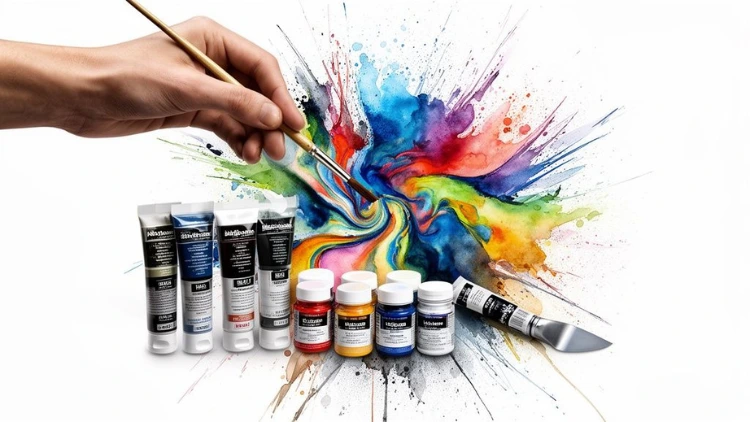
Staring at a blank canvas can feel daunting, but it's also a space of infinite possibility. For artists drawn to the expressive power of non-representational art, the challenge is often not a lack of skill but a need for a starting point. This article is designed to be that spark. We've curated a comprehensive roundup of eight distinct abstract painting ideas for acrylics, moving far beyond generic advice to provide actionable project briefs.
Each entry is packed with practical examples and specific techniques to help you translate abstract concepts into tangible, stunning artwork. Before you begin applying paint, it can be incredibly beneficial to delve into foundational skills. You can learn how to sketch confidently and creatively, helping you to refine your initial concepts and compositions.
Whether you're a beginner seeking direction or an experienced painter looking to break a creative rut, these ideas provide a structured path to explore new styles. We'll delve into the 'how' and the 'why' behind each approach, offering step-starters, composition tips, and even advice on finishing and photographing your work. Let's transform that empty canvas into a testament to your unique artistic voice.
Jump To Section

Earn As You Learn
Earn 25% commission when your network purchase Uplyrn courses or subscribe to our annual membership. It’s the best thing ever. Next to learning,
of course.
1. Gestural Abstraction with Dynamic Brushwork
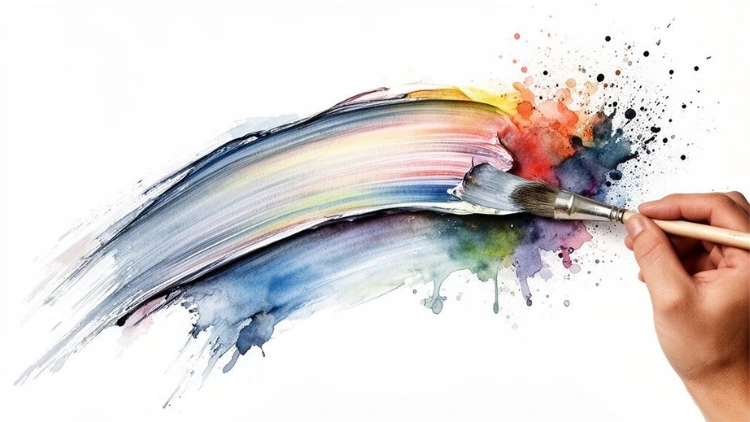
Gestural abstraction is an abstract painting idea that prioritizes the physical act of painting. It's about conveying energy and emotion through bold, spontaneous brushstrokes and mark-making rather than creating a realistic image. This approach, rooted in the Abstract Expressionist movement, turns your canvas into an arena for action, where every flick of the wrist and sweep of the arm is recorded in paint.
The core of this technique is allowing your physical movements to guide the composition. Think of the sweeping, energetic marks of Helen Frankenthaler or the iconic drips of Jackson Pollock. This method is excellent for artists looking to break free from rigid constraints and develop a more intuitive, confident painting style.
How to Get Started
- Project Prompt: Create an artwork that captures the feeling of a specific, powerful emotion like joy, anger, or tranquility. Use only movement and color to express it.
- Suggested Palette: Limit yourself to 3-5 colors to maintain visual harmony. A high-contrast palette such as black, white, and a vibrant primary color (like cadmium red) can produce dramatic results.
- Actionable Insight: For a softer feel, try analogous colors like blues and greens with a touch of white.
- Recommended Technique: Use large brushes (2 inches or wider), palette knives, and even unconventional tools like squeegees or silicone spatulas. Apply paint quickly and energetically.
- Practical Example: Try layering colors while they are still wet (wet-on-wet) to create organic blends and soft edges, such as dragging a wet cerulean blue over a patch of wet Hansa yellow to create varied greens directly on the canvas.
- Composition Tip: Work on a larger canvas (18x24 inches or bigger) to allow for broader, more expressive movements. Focus on creating a strong focal point with a dense cluster of marks or a particularly bold color application. To understand how movement and balance work together, explore the core elements of art and principles of design.
2. Color Field Painting
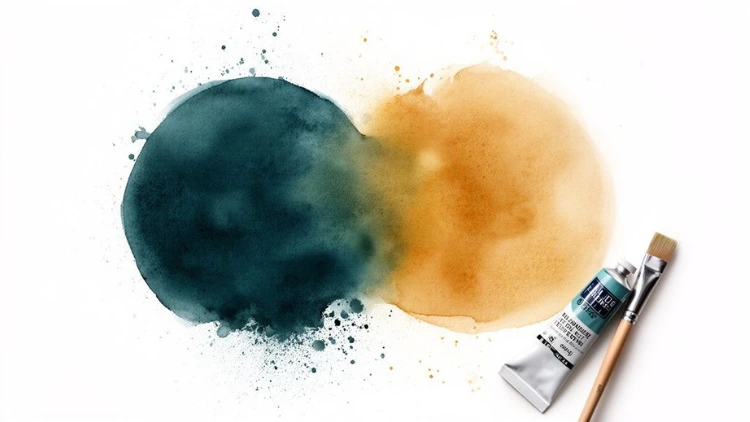
Color field painting is an abstract painting idea that focuses on large, flat areas of solid or stained color to create an atmospheric and emotional response. Instead of representing objects, this approach uses expansive blocks of color that interact with each other and the viewer's perception. For acrylic painters, this method is a brilliant way to explore color theory, mixing, and the profound impact of chromatic relationships without needing complex drawing skills.
Popularized by artists like Mark Rothko and Barnett Newman, the goal is to make color the subject itself. The viewer is meant to be enveloped by the hues, allowing for a contemplative or spiritual experience. This technique is perfect for artists who want to master the subtle power of color and create impactful, minimalist compositions. The emotional weight of the hues is paramount, and a deeper dive into various books on color psychology can provide valuable insights into how different shades influence perception and feeling.
How to Get Started
- Project Prompt: Choose two or three colors that represent a specific memory or feeling. Create a composition where these colors sit side-by-side or are layered as thin washes, allowing them to interact and generate a new, combined emotional atmosphere.
- Suggested Palette: Limit your palette to 2-3 colors to focus on their relationship.
- Practical Example: Try pairing a deep ultramarine blue with a burnt orange to explore complementary contrast, or use phthalo green and cerulean blue to investigate harmonious, analogous relationships.
- Recommended Technique: Thin your acrylics with water or a flow medium to create translucent washes.
- Actionable Insight: Apply paint with a wide, soft brush, like a hake brush, to achieve smooth, even layers without visible brushstrokes. Allow each layer to dry completely before adding the next to maintain clarity and prevent muddying.
- Composition Tip: Divide your canvas into simple geometric shapes or bands of color. Experiment with the scale of these color areas; a large, dominant field of one color next to a thin sliver of another can create powerful visual tension. To better predict the outcome of your color choices, it's helpful to understand how color works on a fundamental level.
3. Drip and Pour Technique
The drip and pour technique is a dynamic approach to abstract painting that prioritizes chance and the physical properties of paint. Famously associated with Jackson Pollock, this method involves dripping, splashing, or pouring thinned acrylic paint onto a canvas rather than applying it with traditional brush-to-surface contact. It's a method that celebrates spontaneity and the natural flow of liquid, turning the creative process into a performance of controlled chaos.
This technique is an excellent abstract painting idea for acrylics because it encourages artists to let go of precise control and embrace unexpected outcomes. By allowing gravity and the paint's own movement to dictate parts of the composition, you can create intricate, organic patterns that are nearly impossible to achieve with a brush alone. It’s a powerful exercise in learning to react to your medium and build confidence in a non-linear creative process.
How to Get Started
- Project Prompt: Create a composition that resembles a natural formation like a river delta, a nebula, or a cross-section of a geode. Focus on layering fluid colors to build depth and complexity.
- Suggested Palette: Choose a palette with a mix of opaque and transparent colors to create visual interest. For a high-energy look, combine complementary colors like a deep phthalo blue with a vibrant cadmium orange.
- Practical Example: For a more subtle effect, use a monochromatic scheme with varying tints and shades of a single color, such as Payne's grey, titanium white, and light blue.
- Recommended Technique: Dilute your acrylic paint with a pouring medium (like Floetrol or a specific acrylic pouring medium) until it reaches the consistency of warm honey.
- Actionable Insight: Use squeeze bottles for thin lines, sticks for drips, or even turkey basters for larger, controlled splatters. Work with the canvas lying flat on the floor or a table to prevent the paint from running off before it settles.
- Composition Tip: Tilt and rotate the canvas to guide the flow of paint, letting colors merge and create new forms. Avoid over-mixing the colors on the canvas, which can lead to a muddy appearance. Instead, let distinct areas of color interact at their edges. Allow layers to dry partially before adding new ones to build up a sense of dimension.
4. Layering and Translucent Glazing
Layering with translucent glazes is an abstract painting idea that builds depth and luminosity through multiple thin coats of paint. This technique involves thinning acrylics with a medium to create transparent layers, allowing each one to show through the next. The result is a composition with rich, complex color interactions and a palpable sense of history, as if viewers are looking through time itself.
This methodical approach, adapted from Renaissance glazing techniques, teaches patience, foresight, and the science of color interaction. It’s ideal for artists who enjoy a more strategic process, creating intricate surfaces that reward close inspection. The work of contemporary painters like Gerhard Richter, who scrape and reapply layers, showcases the powerful, atmospheric effects this method can achieve.
How to Get Started
- Project Prompt: Create a painting inspired by a "palimpsest", an old manuscript with traces of earlier writing. Build layers of color that both obscure and reveal what lies beneath, suggesting a hidden story.
- Suggested Palette: A limited palette of 3-4 colors is highly effective.
- Practical Example: Try working with a primary triad (e.g., quinacridone magenta, phthalo blue, and Hansa yellow light) plus titanium white. This lets you explore how transparent layers mix optically to create a full spectrum of secondary and tertiary hues.
- Recommended Technique: Mix your acrylic paint with a gloss or matte medium to increase translucency without losing pigment integrity. Apply a thin, even layer of color and let it dry completely (15-30 minutes) before adding the next.
- Actionable Insight: Vary your application by alternating between transparent glazes and occasional opaque marks to create focal points and contrast.
- Composition Tip: Plan your color progression. Start with lighter colors and build towards darker tones, or experiment by placing a dark, transparent wash over a light background. This technique adds a visual and conceptual feeling of space, closely related to the principles found when learning about 3D drawing and exploring the third dimension in art. Documenting each stage with photos can help you understand how the layers interact.
5. Texture and Mixed Media Integration
This approach to abstract painting moves beyond the two-dimensional surface by combining acrylic paint with various textural elements. By integrating materials like sand, fabric scraps, collage papers, or even found objects, you can create tactile, multi-dimensional artworks. This method breaks the traditional boundaries of painting and encourages a more experimental, interdisciplinary mindset.
This technique is about more than just adding texture; it's about building layers of meaning and physical depth. Artists like Kurt Schwitters with his "Merz" compositions and Anselm Kiefer with his large-scale, material-heavy works show how non-traditional materials can become part of the artistic narrative. This is an excellent way to add a unique, personal dimension to your work.
How to Get Started
- Project Prompt: Create an abstract piece that tells a story using at least three different non-paint materials. Consider how the texture and origin of each material (e.g., a piece of old newspaper, dried leaves, a scrap of lace) contribute to the artwork's overall theme.
- Suggested Palette: Choose a palette that complements your chosen materials.
- Practical Example: An earthy palette of burnt sienna, yellow ochre, and raw umber works well with natural elements like sand or wood. Alternatively, a monochromatic scheme (shades of one color) can unify diverse textures without overwhelming the composition.
- Recommended Technique: Use a strong adhesive like acrylic gel medium or heavy-body gesso to affix your materials to the canvas.
- Actionable Insight: Apply it both underneath and on top of lighter elements (like tissue paper) to seal them. You can embed heavier objects directly into thick layers of gesso or modeling paste. For more guidance on developing your unique artistic voice through these experiments, you can find valuable advice from actual artists who have forged their own paths.
- Composition Tip: Balance is key. Avoid covering the entire canvas with texture. Instead, create focal points by clustering textured elements in one area, leaving other areas with flat color or smooth brushwork to give the viewer’s eye a place to rest. This contrast between textured and non-textured areas creates visual interest and a more dynamic composition.
6. Geometric Abstraction and Hard-Edge Painting
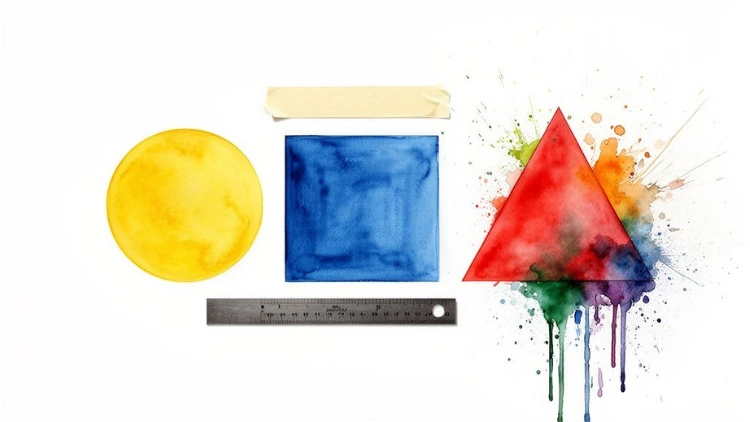
Geometric abstraction is an analytical abstract painting idea that relies on precise shapes, clean lines, and structured compositions. This style, also known as hard-edge painting, values clarity and order, using tools like painter's tape and rulers to create sharp, defined boundaries between fields of color. It's a method that builds precision, planning, and a deep understanding of compositional balance.
Unlike spontaneous gestural work, this approach is deliberate and controlled. Think of the iconic primary-colored grids of Piet Mondrian or the meticulous color-square studies by Josef Albers. This technique is perfect for artists who enjoy structure and want to explore the powerful relationships between color, shape, and space in a methodical way.
How to Get Started
- Project Prompt: Design a composition using only three geometric shapes (e.g., a circle, a square, a triangle) and explore their interaction through overlapping and color choice.
- Suggested Palette: A minimalist palette of primary colors (red, yellow, blue) plus black and white is a classic starting point.
- Practical Example: Explore an analogous color scheme (e.g., shades of blue and green) to create a more subdued, harmonious feel by painting a cerulean blue square next to a teal triangle.
- Recommended Technique: Use high-quality painter's tape to mask off sections and achieve crisp, hard edges.
- Actionable Insight: To prevent paint from bleeding under the tape, first seal the edge of the tape with a clear medium or the background color before applying your main color. Carefully peel the tape off while the top layer of paint is still slightly tacky.
- Composition Tip: Plan your layout before painting. Use principles like the rule of thirds or the golden ratio to place your shapes for a balanced, visually pleasing arrangement. If you're new to this style, start with a simple composition on a smaller canvas (like 12x12 inches) to practice your taping technique.
7. Spontaneous Ink and Acrylic Fusion
Spontaneous ink and acrylic fusion is a hybrid technique that merges the watery, unpredictable nature of acrylic inks with the controlled body of traditional acrylic paints. This method is about creating a dialogue between fluid, organic patterns and deliberate, structural marks. Inks flow and pool in ways that heavy-body paints cannot, generating surprising color interactions and delicate, web-like details.
This abstract painting idea teaches an artist to balance intention with chance. By letting the inks flow with a degree of freedom, you learn to respond to the artwork as it develops, making it a powerful practice for overcoming creative blocks and embracing ambiguity. The process draws inspiration from both contemporary fluid artists and the elegant simplicity of Japanese sumi-e ink wash traditions.
How to Get Started
- Project Prompt: Create a composition that represents the meeting of two different elements, like water and rock, or wind and sand. Use fluid inks for the more chaotic element and thicker acrylic paint to represent the stable one.
- Suggested Palette: Choose a monochromatic scheme with a single accent color.
- Practical Example: Use various dilutions of black or indigo ink on a white surface, then introduce a striking gold or crimson acrylic paint for controlled highlights and focal points, applied with a palette knife.
- Recommended Technique: Begin by wetting your surface (heavyweight paper or gessoed canvas) with water.
- Actionable Insight: Drop or pour diluted acrylic inks onto the wet areas and tilt the surface to let gravity guide the flow. Once the ink layer is dry, use a brush or palette knife to apply thicker acrylic paint, adding structure and defining shapes that have emerged.
- Composition Tip: Plan for negative space. The beauty of this technique often lies in the delicate, spreading tendrils of ink. Avoid covering the entire surface; instead, let the ink's movement create natural, unpainted areas that give the composition room to breathe. Use the heavier acrylic paint to ground the fluid elements, preventing the composition from feeling too chaotic.
8. Monochromatic Depth and Tonal Studies
Monochromatic painting explores the full tonal range of a single color, from its purest form to its lightest tints and darkest shades. This abstract painting idea challenges you to set aside the distraction of multiple hues and instead master value, tone, and contrast. By focusing on one color family, you develop a deep understanding of how light and shadow create form, mood, and visual interest.
This foundational approach is less about color theory and more about compositional relationships. It trains your eye to see the subtle shifts that give a painting its structure and emotional weight. The minimalist works of Agnes Martin, who used single colors to explore texture and line, show how powerful this constraint can be. It's an excellent method for building core skills that apply to all other forms of painting.
How to Get Started
- Project Prompt: Create a painting that explores the concept of "silence" or "energy" using only one color plus black and white. Focus on how different values and textures can communicate the theme without relying on a diverse palette.
- Suggested Palette: Choose one high-quality, pigment-rich color like Phthalo Blue, Quinacridone Magenta, or Cadmium Yellow. You will also need Titanium White and Mars Black (or Payne's Gray for a cooler dark) to create your tints and shades.
- Recommended Technique: Before starting, create a value scale on a separate sheet of paper.
- Actionable Insight: Mix your chosen color with increasing amounts of white to see its tints, and with black to see its shades. Use palette knives to create sharp-edged shapes and flat brushes to lay down smooth, even fields of tone. Varying the surface texture with thick and thin paint applications can add significant visual interest.
- Composition Tip: A strong composition in a monochromatic piece relies on the clear separation of values.
- Practical Example: Arrange your shapes so that light, mid, and dark tones are thoughtfully distributed. Place your lightest light (a tint of your color with a lot of white) next to your darkest dark (a shade of your color with black) to create a powerful focal point and an immediate sense of depth.
Your Next Masterpiece Awaits
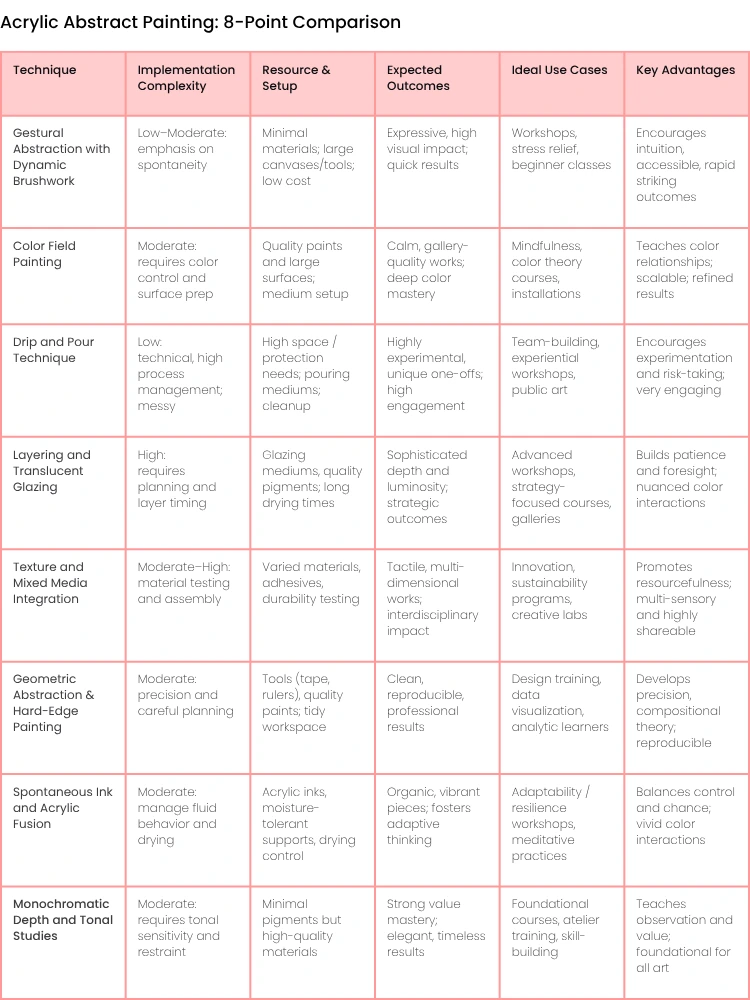
You now have a complete toolkit of eight distinct and actionable blueprints for creating compelling abstract art with acrylics. We have journeyed through the explosive energy of gestural painting, the meditative calm of color fields, and the calculated precision of geometric forms. Each of these abstract painting ideas is more than just a project prompt; it's a doorway to a new method of creative expression and problem-solving on the canvas.
The true work, however, begins not with the idea, but with the action. The most crucial step you can take right now is to choose one concept that sparked your curiosity and simply begin. Don't wait for the perfect set of expensive brushes or a sudden bolt of inspiration. Progress is made in the act of doing.
Turning Ideas into Art
The value in these techniques is not in perfect replication but in adaptation. For instance, you could take the Layering and Translucent Glazing idea and apply it to a Monochromatic Study. Imagine building depth with varying transparencies of a single color, like Payne's Grey, creating a moody, atmospheric piece. Or, combine the spontaneity of the Drip and Pour Technique with the structure of Geometric Abstraction by taping off sections of your canvas first, allowing the fluid acrylics to fill defined shapes.
This practice of combining and experimenting is where your unique artistic voice will emerge. Consider these key takeaways as you move forward:
- Process Over Perfection: Embrace the journey of creation. Every canvas, whether it becomes a finished piece or a learning exercise, adds to your skill set. ‘Happy accidents’ are often the source of the most interesting outcomes in abstract art.
- Technique as a Language: View each method, from palette knife work to ink fusion, as a new word in your visual vocabulary. The more techniques you practice, the more fluently you can express your ideas.
- Active Observation: Pay attention to how different pigments interact, how mediums change the viscosity of your paint, and how light plays across a textured surface. This deep observation is critical for mastering your materials.
Your next masterpiece isn't a distant dream; it's a direct result of the decisions you make today. The most profound abstract painting ideas acrylic are those you bring to life through consistent practice and courageous experimentation. Pick the concept that excites you most, gather your fundamental materials, and make that first mark.


Leave your thoughts here...
All Comments
Reply