







How to Master the After Interview Thank You Email
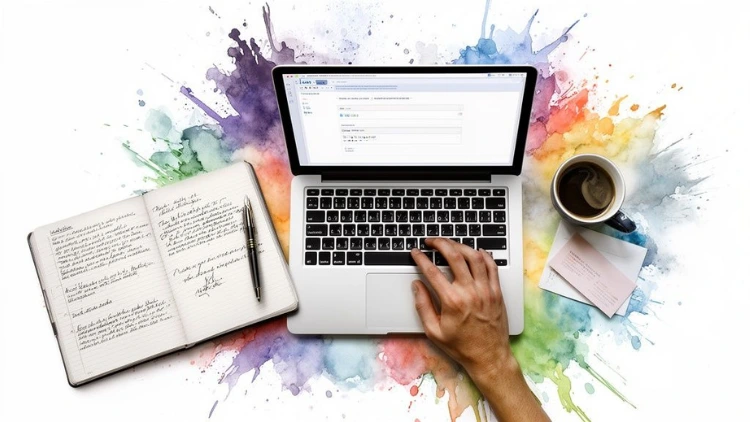
You just nailed the interview. You answered every question with confidence, built a great rapport, and walked out feeling like you have a real shot.
So, what's next?
Don't just sit by the phone. Sending a thank-you email is your final pitch—that one last chance to make an impression. It's not just a dusty old formality; it's a strategic move that can be the tiebreaker between you and another great candidate. Think of it as a way to stay top-of-mind and show them you genuinely value their time.
Jump To Section

Earn As You Learn
Earn 25% commission when your network purchase Uplyrn courses or subscribe to our annual membership. It’s the best thing ever. Next to learning,
of course.
Why Your Thank You Email Is More Than Just Polite
It’s tempting to think, "The interview went great, I don't need to send an email." That's a huge missed opportunity. This quick message is your best shot at following up, reminding them of your value, and leaving a positive impression that lingers long after you've left the building.
And this isn't just a hunch; the numbers tell the same story. One survey found that 80% of hiring managers said a thank-you note actually influences their decision. What's even more revealing? Another study showed that 22% of employers are less likely to hire someone who skips this step. It’s a small detail, but it clearly matters.
Solidify a Strong First Impression
Think of your interview as the main event and the thank-you email as the encore. It reinforces the fantastic impression you just worked so hard to build. A thoughtful, well-written email is a subtle way to showcase soft skills every employer is looking for.
- Professionalism: It proves you understand basic business etiquette.
- Attention to Detail: A personalized, error-free note shows you’re careful and diligent in your work.
- Follow-Through: It signals that you're proactive and reliable—exactly the kinds of traits that make a great employee.
A well-crafted thank you email doesn’t just say "thanks for your time." It says, "I am organized, professional, and genuinely interested in contributing to your team's success."
Stand Out from the Competition
In a packed job market, any little edge helps. You’d be surprised how many candidates forget or just don't bother to send a thank-you note, giving you an easy win. It’s a simple action that proves you’re willing to put in that extra bit of effort.
If you really want to get every part of the interview process right—including crucial follow-ups like this—knowing the importance of email in business communication can't be overstated, and this is a perfect example of how to use it to your advantage. It’s your chance to turn a simple courtesy into a strategic career move.
Building an Email That Gets Noticed
The difference between a good thank-you email and a great one really comes down to the details. Anyone can send a generic, copy-pasted message, and honestly, it can feel a bit impersonal. A thoughtful, well-structured email, on the other hand, shows you're a professional who pays attention.
Let's walk through the four key components that will make your message stand out in what's likely a very crowded inbox.
Your Subject Line: The First Impression
Think of your subject line as the gatekeeper. It needs to be clear, concise, and professional enough to get opened right away. Vague phrases like "Thank you" just don't cut it. You want to give the hiring manager immediate context.
Actionable Insight: Make the hiring manager's job easier. A specific subject line helps them quickly categorize your email and recall your conversation, especially if they are interviewing for multiple roles.
Practical Examples:
- Good: Thank you - [Your Name]
- Better: Thank you for your time - [Job Title]
- Best: Great speaking with you about the [Job Title] role or Following up on our conversation re: [Job Title]
The best options instantly jog their memory about who you are and which position you discussed. This is a lifesaver for them, especially if they're interviewing dozens of candidates for multiple roles.
Crafting a Memorable Message
Once they've opened the email, the first few lines are crucial for setting the right tone. Start with a personalized salutation—always use the interviewer's name. Then, get straight to the point by expressing genuine appreciation for their time.
The body of the email is where you really get to shine. This is your chance to connect the dots between your conversation and why you're the right fit. Don't just re-state a skill from your resume. Instead, bring up a specific problem or project they mentioned and briefly explain how your experience is a direct solution.
Practical Example: If they mentioned a struggle with team workflow, you could write something like this:
"I was particularly interested in our conversation about streamlining project handoffs. At my previous company, I implemented a new system using Asana that reduced project delays by 15% in the first quarter. I'm confident a similar approach could bring great results to your team."
This single paragraph proves you were actively listening and are already thinking like a member of the team. It shows you're a problem-solver, not just a candidate. For more tips on framing your points clearly, check out this guide on how to write effective emails.
Closing with Confidence
Your closing needs to be just as strong as your opening. Reiterate your enthusiasm for the position and the company one last time. It’s also a great touch to mention the next steps you discussed in the interview, which shows you're organized and on top of the process.
End with a professional sign-off like "Sincerely", "Best regards" or "All the best" followed by your full name and contact information. This simple framework turns a polite follow-up into a final, powerful pitch for why you're the one they should hire.
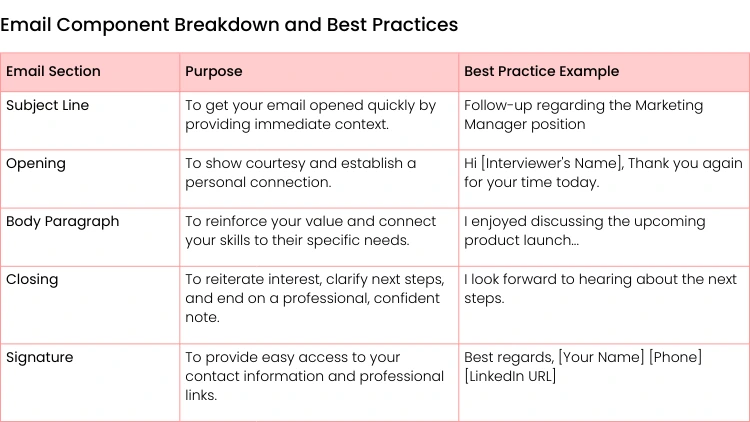
To help you put it all together, here’s a quick reference table breaking down each component.
Think of this structure as your blueprint. Stick to it, and you'll craft a follow-up that's not just polite, but also a strategic final touchpoint in your job search.
Real-World Examples for Any Interview Scenario
Let's be honest, generic templates often fall flat. The best thank-you note is one that’s actually tailored to the conversation you just had. A quick phone screen calls for a different approach than a formal panel interview with the whole team.
The secret is adapting your message. Think about the tone of the discussion, who you spoke with, and what specific topics stood out. We’ll walk through a couple of common scenarios and show you exactly how to adjust your email to make the right impression.
After a Casual Phone or Video Screen
The goal here is pretty straightforward: be quick, professional, and memorable enough to land that next interview. Since the conversation was likely a high-level overview, your email can be shorter and more to the point.
You just need to reaffirm your interest and briefly connect your main qualifications to the role. Keep it friendly and concise.
Practical Example
Subject: Great chatting about the Graphic Designer role
Hi Alex,
Thanks so much for taking the time to chat with me this afternoon. I really enjoyed learning more about the creative team’s goals for the upcoming rebrand.
Our conversation confirmed my excitement about this opportunity, especially the focus on creating a new visual identity from the ground up. My experience leading a similar project at my last company aligns directly with the challenges you described.
I'm very interested in the next steps and look forward to hearing from you soon.
Best regards,
Sarah Jenkins
This works because it’s short, sweet, and specific. It mentions the "rebrand" and confidently links Sarah's past work to what the company needs right now.
Following a Formal or Second-Round Interview
After a deeper, more technical interview, your thank-you email has to do more of the heavy lifting. This is your chance to build on a key point you discussed, add a little extra value, and really solidify the great impression you made. It's okay to be a bit more detailed here.
Don't just say "thanks". Use this space to prove you were paying close attention and are already thinking like a member of the team.
Actionable Insight: A powerful move is to reference a specific challenge the interviewer mentioned and offer a brief, helpful thought. It instantly positions you as a proactive problem-solver. Even a single sentence suggesting a tool or a strategy can leave a lasting impact.
Practical Example
Subject: Thank you - Following up on our Project Manager discussion
Dear Ms. Chen,
Thank you again for the engaging conversation yesterday. I truly appreciate you sharing insights into the team's project management workflow and the challenges with cross-departmental communication.
I was thinking more about our discussion on improving project visibility. At my previous role, we found that implementing a shared dashboard in Trello significantly cut down on status update meetings. It might be a simple solution to explore for your team as well.
My experience in streamlining complex projects has prepared me well to tackle these exact challenges. I am more confident than ever that my skills are a great match for this role and your team.
I look forward to hearing about the next steps.
Sincerely,
David Miller
Nailing Your Timing and Follow-Up Plan
The words you choose for your thank-you email are obviously important, but when you send it can make just as big of an impact. Get the timing right, and you capitalize on what psychologists call the "recency effect"—basically, you ensure your name is the last one the hiring manager thinks about.
Actionable Insight: Aim to send your email within a few hours of the interview to stay fresh in their mind. The ideal window is within 24 hours. A fast follow-up doesn't just show you're on the ball; it reinforces the positive impression you just worked so hard to make.
What About a Friday Interview?
So, you had a great interview, but it was at 4:30 PM on a Friday. Now what? Don't sweat it. You've got a couple of solid options here. You can either send it before you sign off for the day or, my personal preference, have it ready to go first thing Monday morning.
Sending it Monday morning guarantees it’s at the top of their inbox for the fresh week, which means it won't get buried under a pile of weekend emails. This kind of strategic scheduling is a small but powerful part of learning how to manage your email accounts and phone calls for better productivity.
Practical Tip: Schedule your email to send at 8:00 AM on Monday morning. Tools like Gmail's "Schedule Send" feature make this easy. This ensures your message arrives at a peak time for visibility without you having to work on the weekend.
The Gentle Art of the Follow-Up
Alright, you sent the perfect thank-you note. But the deadline they gave you for a decision has come and gone. Silence.
It's completely okay to send a polite check-in email. Just give it a little breathing room—wait at least one or two business days after the promised deadline before you nudge them.
Keep your follow-up short, sweet, and professional. You're not demanding an answer; you're just showing you're still interested and looking for a quick update on their timeline.
Here’s a simple script you can tweak:
Practical Example: Follow-Up Template
Subject: Following up on the [Job Title] position
Body: Hi [Interviewer's Name],
Hope you're having a good week.
I wanted to briefly follow up on my interview for the [Job Title] role. I’m still incredibly enthusiastic about this opportunity and am confident I could help the team achieve [mention a specific goal you discussed].
Would you be able to share a quick update on the hiring timeline?
Thanks so much, [Your Name]
If you want to dive deeper into crafting the perfect follow-up email after an interview to reiterate your interest, that's a fantastic resource with more tips. This simple step is all about keeping yourself on their radar in a respectful, professional way.
Common Mistakes That Can Cost You the Job
Sending a thank-you email is a fantastic move, but a poorly written one can absolutely sink your chances. Think of it this way: a sloppy, rushed note can undo all the great rapport you built during the interview. It screams "poor attention to detail"—a red flag for any hiring manager.
The most glaring errors are simple typos and grammar mistakes. These suggest you're careless and might bring that same lack of diligence to your work. Always, always proofread your email at least twice before you even think about hitting send.
Sending a Generic, Copy-Paste Message
Hiring managers have seen it all, and they can spot a generic template from a mile away. An email that feels like it could be for any company just shows a lack of real interest. It's the professional equivalent of a limp handshake—forgettable and unimpressive.
Actionable Insight: Before writing, jot down 2-3 unique things you discussed or learned. It could be a company value, a team project, or even a personal connection you made. Weaving just one of these details into your email makes it instantly authentic.
Your goal here is to stand out, not just check a box. Mentioning a specific project you discussed or a unique point they made is how you forge a real connection.
Rambling or Being Overly Informal
While personalization is your secret weapon, going overboard can backfire. Your thank-you note should be professional and concise. Steer clear of overly casual language, emojis, or long, winding paragraphs that make the reader's eyes glaze over.
Here are a few common pitfalls to sidestep:
- Too Long: A five-paragraph essay is a one-way ticket to the "skimmed and deleted" folder.
- Too Casual: Kicking off with "Hey" or signing off with "Talk soon" can come across as unprofessional.
- Too Eager: There's a fine line between enthusiastic and desperate. Sounding pushy is a major turn-off.
Keeping your message sharp and to the point is a skill in itself. For more tips on getting your point across effectively, check out this guide on the power of brevity in communication. A polished, focused email reflects a polished, focused candidate.
Your Questions About Thank You Emails Answered
Even with the best game plan, some interviews throw curveballs that can leave you second-guessing your next move. Let's walk through a few of the most common questions job seekers have when it's time to send that post-interview thank you.
What If I Interviewed With Multiple People?
If you met with several people back-to-back in individual meetings, you absolutely should send a separate, personalized email to each person. It's a bit more work, but it pays off.
Actionable Insight: To make this efficient, create a core template with your main points. Then, for each person, swap in one unique sentence referencing something specific you discussed with them. This saves time while ensuring each email feels personal.
Now, if it was a panel interview where everyone was in the room together, a single group email is perfectly fine. Just make sure you address each person by name in the opening.
Practical Example: Group Salutation
Dear Ms. Davis, Mr. Smith, and Ms. Chen,
Thank you all for taking the time to speak with me today about the [Job Title] position. I particularly enjoyed learning about [mention a topic discussed by the group] and seeing how your roles intersect.
Should I Correct a Mistake I Made?
This is a judgment call, but we've all been there—you walk out of an interview and immediately think of a better answer to a crucial question. The thank you email can be your chance for a soft reset.
The key is to not dwell on the fumble. Instead, frame your follow-up with confidence.
Practical Example: Correcting an Answer
"After thinking more about your question regarding [the topic], I wanted to briefly add that my experience with [a specific skill or project] is also relevant. For instance, I led a project using that exact software to increase efficiency by 20%. I hope this extra detail is helpful."
This approach shows you're reflective and proactive, turning a potential negative into a positive follow-up.
What If I Don’t Have Their Email Address?
First rule: never guess an email address. You don't want your thoughtful note bouncing back or, worse, ending up in the wrong inbox.
Actionable Insight: Your best bet is to send your note to the recruiter or HR contact who set up the interviews. Keep it simple and polite—just ask them to forward your message to the interviewer(s). They do this all the time.
Practical Example: Email to the Recruiter
Subject: Thank You for the [Job Title] Interview
Hi [Recruiter's Name],
Thank you again for arranging my interview today with [Interviewer's Name]. I really enjoyed our conversation.
Would you be able to forward the brief thank-you note below to them for me? I don't believe I have their direct contact information.
[Your thank you message here]
Thanks for your help!
Best, [Your Name]
This keeps everything professional and ensures your note actually gets to the right person. Nailing these small but significant details is a huge part of developing strong interview skills that will get you hired. A quick, thoughtful response shows respect and keeps you top-of-mind for all the right reasons.
At Uplyrn, we believe that mastering every step of the job search process is key to career success. Build the confidence and skills you need with our expert-led courses. Explore Uplyrn today!


Leave your thoughts here...
All Comments
Reply