









What is Career Coaching: A Guide to Advancing Your Career

Ever felt like you’re spinning your wheels at work? You know you want more, but you're not sure what "more" looks like or how to get there. That's where career coaching comes in.
Think of it less like getting advice and more like entering a strategic partnership. A career coach is like a personal trainer for your professional life—they give you the framework, the tools, and the accountability to turn vague ambitions into a concrete reality.
Jump To Section

Earn As You Learn
Earn 25% commission when your network purchase Uplyrn courses or subscribe to our annual membership. It’s the best thing ever. Next to learning,
of course.
Understanding What a Career Coach Really Does
It’s a common misconception that a career coach just tells you what job to apply for. The reality is far more powerful. A good coach won’t hand you the answers; instead, they use probing questions and proven exercises to help you uncover them yourself. They help transform that nagging "stuck" feeling into a clear, actionable roadmap.
This isn't some niche service, either. The business coaching industry in the U.S., a huge part of career coaching, was projected to hit $20.0 billion by 2025, with over 72,013 businesses in the space. Those numbers, highlighted in the full industry report show just how many professionals are turning to coaches to get a real competitive edge.
The Core Functions of a Coach
At its heart, coaching is all about empowerment. Instead of just dishing out solutions, a great coach becomes a strategic partner who equips you with the skills and mindset to build lasting success on your own terms.
This partnership really boils down to a few key roles:
- Goal Clarification: They help you get brutally honest about what you really want, turning fuzzy daydreams into specific, measurable goals.
- For example, instead of "I want a better job", a coach helps you define it as: "I want a senior product manager role in a mid-sized tech company with a hybrid work model and a salary of at least $150,000."
- Strategy Development: You'll work together to build a practical, step-by-step plan that bridges the gap from where you are now to where you want to be. A solid personal development plan is often a core part of this process.
- Accountability and Motivation: A coach is your objective sounding board. They keep you on track, cheer for your wins, and help you learn from the inevitable setbacks.
- An actionable insight here is scheduling bi-weekly check-ins to review progress against your goals, forcing you to stay committed even when motivation dips.
- Skill Identification: They're experts at spotting your hidden talents and identifying the gaps you need to fill, making sure you show up as the strongest possible candidate.
A career coach's primary role is not to have all the answers, but to ask the right questions that unlock the client's own potential. They are facilitators of self-discovery and architects of professional strategy.
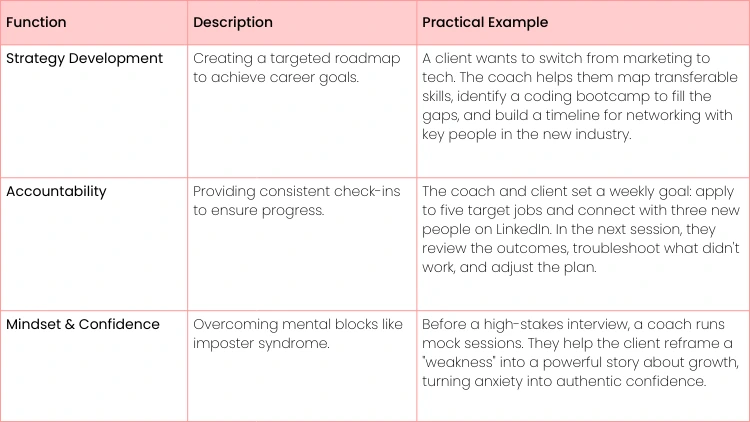
To make this crystal clear, let's look at what these functions actually look like when you're working with a coach.
Key Functions of a Career Coach at a Glance
This table breaks down how a coach's core responsibilities translate into real-world action and tangible results for you.
As you can see, a coach does more than just polish your resume—they help build the strategy, mindset, and momentum needed to create a career you genuinely love.
The Real-World Benefits of Working with a Coach
It’s one thing to understand what a career coach does, but it’s another to see the real, tangible results they can deliver. Think of it less as an expense and more as an investment in yourself—one that translates into measurable wins. It’s about moving from feeling stuck to finally taking the wheel of your own career.
And it seems the secret is out. The coaching profession is exploding, with global revenue projected to hit a massive $5.34 billion by 2025. That's a 62% jump from 2019. This isn't just a fad; it's a clear signal that professionals are hungry for a strategic edge. You can read the full research about the coaching industry's growth to see the data for yourself.
Gaining Unshakeable Clarity and Direction
One of the first things you'll notice is a profound sense of clarity. A great coach helps you cut through the noise—the expectations from family, bosses, and even your own nagging self-doubt—to figure out what you truly want. They use focused exercises to help you nail down your core values and identify your non-negotiables.
- Practical example: A coach might give you a "Values Card Sort" exercise where you must narrow down 50 common values (like autonomy, creativity, stability) to your top five. This forces you to prioritize what truly matters, revealing why your current micro-managed job feels so draining.
Suddenly, you have a compass. Instead of blindly firing off applications into the void, you have a shortlist of roles and companies that actually excite you. It saves an incredible amount of time and emotional energy.
A great coach doesn't give you a map—they help you build your own compass. The goal is to equip you with the self-awareness to navigate your career with intention long after your sessions are over.
Sharpening Your Job Search and Interview Skills
A focused job search is a powerful job search. Your coach becomes your personal strategist, helping you craft a story that shines across your resume, cover letter, and LinkedIn profile. They know how to optimize your materials to get past the automated gatekeepers (ATS software) and land on a real person's desk.
Then comes the interview, and this is where a coach is invaluable. They'll run you through mock interviews and give you the kind of direct, honest feedback you’d never get from a friend. You'll learn how to articulate your value with confidence.
- Weakness Question: They’ll help you reframe the dreaded "What's your biggest weakness?" question. Instead of a stumbling block, it becomes a chance to show self-awareness and a drive to improve.
- For example, you might talk about how you’ve been actively working on your public speaking by volunteering for smaller presentations.
- STAR Method: You’ll finally master the STAR method (Situation, Task, Action, Result) to tell compelling stories. No more just saying you’re a "team player". You'll have a specific story ready about a project where your collaboration directly led to a 20% boost in team efficiency.
Of course, mastering these interview techniques relies heavily on strong communication and people skills. If you're looking to build your confidence in that area, this guide on how to develop soft skills is a great place to start.
This kind of targeted preparation makes all the difference. It dramatically increases your odds of not just getting an offer, but getting the right one.

Coach vs Mentor vs Counselor: Choosing Your Guide
When you feel stuck in your career, it’s tough to know who to turn to for help. The first, most critical step is figuring out what kind of support you actually need. Are you looking for a strategic roadmap? Insider wisdom from someone who's been there? Or do you need to work through the deeper emotional blockers holding you back?
The answer to that question will point you toward a career coach, a mentor, or a counselor.
Think of it like building the career of your dreams. Your career coach is the architect. They help you draw up the blueprint, focusing on action, strategy, and the how. They provide the structure and accountability to build your future, one concrete step at a time.
A mentor is more like the seasoned builder who has already constructed a similar career path. They share their own story—the what I did—offering priceless shortcuts, warning you about potential hazards, and giving advice grounded in their personal journey. For a deeper look, this guide on coaching vs mentoring breaks it down even further.
Unpacking The Roles
Then there’s the counselor or therapist, who acts as the foundation specialist. They help you dig into the why behind your professional struggles. If deep-seated issues like anxiety, burnout, or a crippling lack of confidence are causing cracks in your foundation, a therapist offers a safe, healing-oriented space to address those root causes before you can build anything lasting.
Choosing the right guide isn’t about which one is "best". It's about aligning with your most immediate need. A coach helps you build a strategy, a mentor shares their lived experience, and a counselor helps heal your foundation so you can build on solid ground.
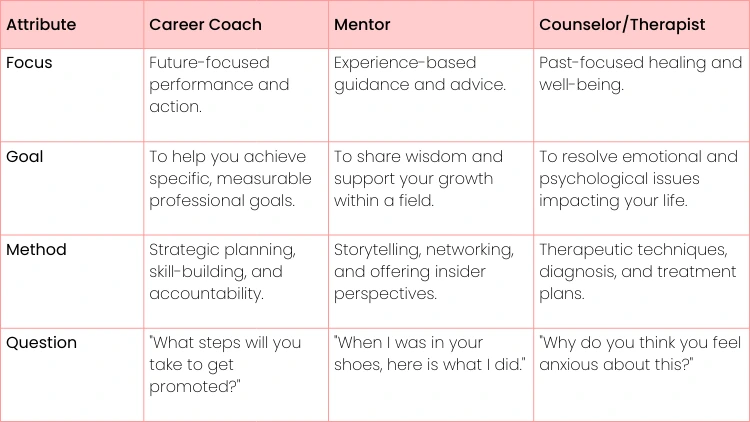
To make the choice crystal clear, let's lay out their primary functions side-by-side.
Career Coach vs Mentor vs Counselor Key Differences
Here’s a clear comparison to help you understand which professional support is right for your specific needs.
Understanding these distinctions helps you pinpoint the exact support you need to move forward. For example, if you decide a mentor is the right fit, knowing what to ask is everything. Exploring some top career questions to ask your mentor can help you maximize the value of that relationship from day one.
By getting clear on these roles, you can confidently find the right professional to support your journey toward a career that truly fits.
Your Career Coaching Journey Step by Step
So you’re thinking about career coaching. What does it actually look like? It’s not just a series of random chats about your feelings. Far from it. A good coaching relationship is a structured, results-focused process.
Think of it like building a house. You wouldn't just start nailing boards together, right? You need a blueprint, a solid plan, and regular check-ins to make sure everything is going up straight. That structured approach is exactly why the demand for career coaching is exploding. The market for job training and career counseling in the U.S. alone rocketed to an incredible $16.9 billion in 2024. Professionals are realizing that winging it just doesn’t cut it anymore.
Most coaching journeys follow a proven, four-phase path that takes you from feeling stuck to taking confident action.
Phase 1: The Discovery Session
This is where it all begins. The first, and arguably most important, step is getting crystal clear on what you actually want. This isn’t just about surface-level goals; it’s a deep dive into who you are.
You and your coach will unpack your skills, your core values, your biggest strengths, and your absolute non-negotiables. The goal is to move from a vague feeling of "I need a change" to a sharp, compelling vision of what professional success looks like for you.
One great exercise a coach might use is creating a "Career Vision Board". They could ask you to pinpoint three companies you truly admire, two specific roles that genuinely excite you, and one skill you’re itching to master in the next year. This isn't just wishful thinking; it's a strategic way to anchor your ambitions in something real.
Phase 2: The Action Planning Phase
With a clear vision locked in, it’s time to build the roadmap. Your coach’s job here is to help you break down that big, intimidating goal into small, manageable chunks. This is where strategy meets execution.
Let's say your goal is to land a senior marketing role. Your action plan might look something like this:
- Week 1: Build a target list of 15 companies and identify key decision-makers on LinkedIn.
- Week 2: Overhaul your resume with keywords pulled directly from two of your target job descriptions. This is how you get past the automated applicant tracking systems (ATS).
- Week 3: Draft and send three personalized outreach messages to contacts at your target companies.
Suddenly, that massive ambition doesn't feel so overwhelming. It’s just a checklist of things to do.
Phase 3: The Implementation Phase
Now it's time to get your hands dirty. You start working through your action plan, and your coach shifts into the role of your accountability partner and strategist.
They're there to provide support, help you troubleshoot when you hit a wall, and keep you motivated when the initial excitement wears off. That consistent accountability is often the secret sauce—it's the one thing most people lack when they try to make a big career move on their own.
A goal without a plan is just a wish, but a plan without accountability is just a document. The implementation phase is where your strategy comes to life through consistent, supported action.
Phase 4: The Refinement Stage
No battle plan survives contact with the enemy, and no career plan is perfect from the start. This final phase is all about learning and adapting.
As you start executing your plan, you’ll get real-world feedback. Maybe your resume isn't getting the bites you expected. Perhaps your networking messages are falling flat. This is all valuable data.
During this stage, your coach helps you analyze what’s working and what isn’t.
- For example, if you sent 20 outreach messages on LinkedIn and got zero replies, your coach might help you A/B test two new message templates to see which one performs better. Together, you’ll pivot your strategy, tweak your interview answers, or explore different networking avenues. This cycle of action, feedback, and adjustment is what ultimately guarantees you make steady, meaningful progress toward your goal.
And if you're navigating a total career pivot, this guide on how to change careers has more strategies to help you through this exact process.
How To Find The Right Career Coach For You
Choosing a career coach is a big deal. You’re not just buying a service; you’re bringing on a strategic partner for a huge part of your life. Get it right, and you can fast-track your goals. Get it wrong, and you’re out time, money, and motivation.
So, how do you make sure you find the right one? It comes down to a simple, structured process. This isn’t about just picking someone from a Google search; it’s about finding a qualified pro whose expertise and coaching style actually click with you.
First, Know What You Want
Before you even think about looking for a coach, you need to get crystal clear on what you’re trying to accomplish. Are you staring down a complete career change? Gunning for that next promotion? Or maybe you just need to sharpen your leadership skills.
Your end goal dictates the kind of coach you need.
Think about it: if you're a software engineer aiming for a team lead position, you need someone who understands tech leadership—not a generalist who mostly works with recent grads. Be specific.
- Actionable insight: Before you start your search, write down your "Coaching North Star"—a single sentence that defines what success looks like. For example: "I want to find a coach who can help me land a Director-level role in the SaaS industry within the next six months."
Do Your Homework: Credentials and Niche Expertise
With your goals in hand, it's time to start the search. Look past the flashy websites and dig into what really matters: qualifications and actual, real-world experience.
- Certifications matter. Look for credentials from respected organizations like the International Coaching Federation (ICF). Letters like ACC, PCC, or MCC after a coach’s name mean they’ve met serious training and ethical standards.
- Find their niche. Does the coach specialize in your field? A coach who gets the ins and outs of the creative industry will be a game-changer for a graphic designer, way more so than someone who primarily works with finance executives.
- Look for a proven track record. Hunt for testimonials, case studies, and recommendations on LinkedIn. You want to see proof that they’ve helped people with challenges just like yours get real, tangible results.
A good way to gauge a coach's professionalism is to see how they run their business, which often includes things like professional email marketing strategies for coaches.
Set Up Some "Chemistry Calls"
This is probably the most important step of all. You can’t get a feel for someone’s personality from a bio page. Most good coaches offer a free introductory chat, often called a "chemistry call" or "discovery session". Make it a goal to talk to at least two or three different coaches.
This call isn't just a sales pitch. It’s a two-way interview. You're feeling them out, and they're figuring out if they can actually help you. Pay close attention to how they listen. Do they ask sharp, insightful questions that make you think? Or do they spend the whole time talking about themselves?
The goal of the chemistry call isn't to walk away with free advice. It's to determine if this is a person you can trust, feel comfortable being vulnerable with, and respect enough to take their guidance.
Ask Smart Questions
Come to your calls prepared. Having a list of targeted questions ready will tell you everything you need to know about their philosophy, their process, and how they define a win.
Here’s a quick checklist of questions to get you started:
- What’s your coaching philosophy and methodology? This reveals their style. Are they structured and direct, or more exploratory and intuitive?
- How do you measure success with your clients? You’re listening for answers that go beyond "my clients are happy". A great coach will talk about tracking progress toward the goals you set together.
- What’s your experience working with people in my industry or with my specific challenges?
- What does a typical coaching engagement look like? This will clarify session frequency, length, and what you’ll be expected to do between calls.
- What are your rates and package options?
Finding the right fit is the first step toward achieving your career ambitions.
Frequently Asked Questions About Career Coaching
Even after getting the lay of the land, it's normal to have a few practical questions pop up when you're thinking about investing in your own professional growth. Let’s get straight to the point and tackle some of the most common things people wonder about career coaching.
How Much Does Career Coaching Typically Cost?
You'll find that coaching costs can be all over the map, depending on who you're working with. It can range from around $100 per session to over $500 for top-tier coaches with a long track record of success. Many will offer packages—say, 3 months for $1,500—which usually give you more bang for your buck if you're in it for the long haul.
The best way to think about it is as an investment, one with a real, measurable return.
- For example, if that $1,500 coaching package gives you the tools and confidence to negotiate a $10,000 salary bump, you've made your money back instantly. And that’s not even counting the long-term wins like better skills and actually enjoying your work.
How Long Does a Typical Coaching Engagement Last?
Most of the time, a standard coaching relationship lasts somewhere between three to six months, usually with sessions every other week. This rhythm gives you enough time to really dig deep, build a solid strategy, put it into action, and tweak things as you go without feeling like you're sprinting a marathon.
That said, sometimes all you need is a quick tune-up for a very specific challenge.
- A practical example: someone might book two sessions specifically to practice for a high-stakes presentation to the executive board, focusing only on delivery and handling tough questions.
Can a Coach Help If I Am Happy in My Current Role?
Absolutely. A common misconception is that career coaching is only for people who are unhappy or looking for a new job. In reality, it’s an incredibly powerful tool for ambitious pros who want to hit the accelerator and make the most of their current position.
A great coach can help you navigate tricky office politics, map out a strategic plan to get that next promotion, develop your leadership presence, or even just figure out how to achieve a better work-life balance. The goal is always to make sure you're thriving, not just surviving.
- Actionable insight: If you're happy but want to grow, ask a coach to help you build a "Promotion Roadmap". This would involve identifying key projects to volunteer for, skills to develop, and stakeholders to build relationships with over the next 6-12 months to position yourself as the obvious choice for the next level.
What's the Difference Between Coaching and Getting Advice from Friends?
Friends are fantastic for support and a glass of wine after a tough week, but a certified coach brings something entirely different to the table: an unbiased, structured, and professional framework for your growth. Their role isn't to share their opinion; it's to use proven methods to help you find your own best answers.
Think of it like this: a friend might say, "You should totally go for that management job!" A coach, on the other hand, will ask, "How does that management opportunity align with the core values we identified last week?" That professional distance is key—it keeps the focus squarely on your strategic goals, not on someone else's well-meaning but subjective advice.
Ready to invest in your professional future? At Uplyrn, we provide the upskilling courses you need to turn your career ambitions into reality. Explore our offerings and take the next step in your journey.


Leave your thoughts here...
All Comments
Reply