









Personal Growth Plan Template: An Actionable Path to Results
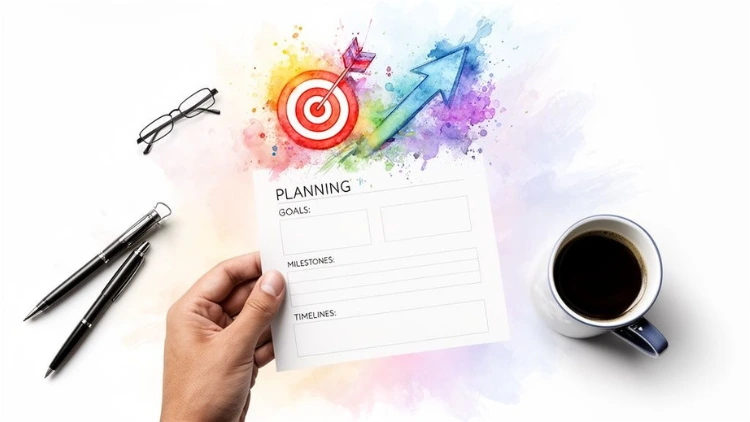
A personal growth plan template is more than just a document—it's your roadmap. Think of it as the tool that takes your biggest ambitions for your career, skills, and life and turns them into a concrete, step-by-step game plan.
Jump To Section

Earn As You Learn
Earn 25% commission when your network purchase Uplyrn courses or subscribe to our annual membership. It’s the best thing ever. Next to learning,
of course.
Move Beyond Ambition with a Structured Plan
We all have dreams. A promotion, a new skill, maybe even a total career change. Ambition is a powerful starting point, but on its own, it’s often just wishful thinking. So many of us get stuck with big goals that always seem just out of reach, simply because we don't have a clear path forward. This is where a personal growth plan really shines.
It forces you to get brutally honest and specific. You have to move past vague ideas like "I want a better career" and start building an actual strategy. It’s a crucial shift in mindset because, as we often say, hope is not a strategy when you’re chasing real results.
From Vague Goals to Tangible Actions
Let's get real for a minute. How many times have you said something like this?
- Vague Goal: "I need to get better at my job."
- Actionable Step: "I will complete an Advanced Project Management course by the end of Q2 to get a handle on my organizational skills."
Or maybe this one?
- Vague Goal: "I want to be seen as more of a leader."
- Actionable Step: "I'm going to volunteer to lead one cross-functional project by Q3 to get some real, hands-on leadership experience."
See the difference? This simple tweak breaks down overwhelming goals into small, manageable tasks you can actually do. To see how all these pieces come together in a full layout, check out a great personal development plan template.
The Power of a Documented Path
There's a huge psychological win that comes from writing your plan down. It calms the anxiety that comes from uncertainty and gives you a clear direction, which is a massive motivator. A good plan isn't just a fancy to-do list; it’s a living document that guides your personal and professional growth.
A personal growth plan acts as your personal accountability partner. It keeps your goals top-of-mind and provides a framework for measuring progress, which is a powerful motivator in itself.
This isn't just talk; the trend toward intentional self-improvement is huge. The global personal development market was recently valued at USD 50.42 billion and is expected to hit USD 86.54 billion by 2034.
Why? Because it works. Studies show that people who use structured templates see 42% higher goal completion rates. The simple act of writing it down turns fuzzy aspirations into real milestones. This simple document is your first real step from just dreaming to actually achieving.
How to Build Your Personal Growth Plan
A personal growth plan isn't about wishful thinking. It's a real, actionable blueprint for your life, built on an honest look at where you are today and a clear vision for where you want to go. Think of it as the bridge that turns your biggest ambitions into a practical, day-to-day guide.
Let’s walk through how to build your own plan, starting with a good, hard look in the mirror.
Start with an Honest Self-Assessment
Before you can chart a course, you have to know your starting point. A simple SWOT analysis is one of the most effective tools for this. It stands for Strengths, Weaknesses, Opportunities, and Threats, and it forces you to look both inward at yourself and outward at your environment.
This first step is all about building genuine self-awareness. If you want to go deeper, this guide on how to increase self-awareness has some great techniques for introspection.
Imagine a manager who wants to become a director. Their SWOT might look something like this:
- Strengths: I’m a pro at project management and know my industry inside and out.
- Weaknesses: Public speaking terrifies me, and I have a hard time delegating the really important tasks.
- Opportunities: The company is growing, and I know new leadership positions are opening up.
- Threats: There’s another manager who is just as skilled and is definitely in the running for the same promotion.
Suddenly, the goal isn't just "I want a promotion". It becomes, "To be the top candidate for that new director role, I need to get comfortable with public speaking and learn to delegate effectively." See the difference? That's a target you can actually hit.
Define Your Long-Term Vision
Once you have that clear-eyed self-assessment, it’s time to look ahead. Where do you really want to be in one, three, or even five years? Get specific. "Be more successful" is a wish, not a vision.
Instead, paint a vivid picture of your future. What does success look like? What does it feel like? What does your average day involve?
Your vision is the 'why' that fuels your entire plan. It's what will keep you going when you hit a snag or start to lose steam. It’s the answer to the question, "Why does this matter so much to me?"
For a recent graduate, a three-year vision could be: "I'll be working as a junior data analyst at a great tech company, contributing to projects that matter, and earning a salary that gives me financial freedom." Now that’s a destination worth working toward.
Translate Your Vision into SMART Goals
If your vision is the destination, SMART goals are your turn-by-turn directions. This framework is popular for a reason—it works. It forces you to make your goals clear, measurable, and realistic.
SMART stands for:
- Specific: No wiggle room. What exactly do you want to accomplish?
- Measurable: How will you track your progress and know when you’ve succeeded?
- Achievable: Is this goal realistic given your time, resources, and current situation?
- Relevant: Does this goal directly support your long-term vision?
- Time-bound: When will you achieve this by? Give yourself a deadline.
Let’s take a freelance writer whose vision is to double their income in the next year.
A powerful SMART goal would sound like this: "I will increase my monthly income from $4,000 to $8,000 within the next 12 months by landing two new retainer clients and increasing my project rates by 25%."
That goal is specific (income target, client count), measurable (dollar amounts), achievable (it outlines how), relevant (it directly serves the vision), and time-bound (12 months). To keep these goals front and center, using a solid goal setting template can be a game-changer for staying organized.
When you follow these steps, your personal growth plan becomes more than just a piece of paper. It transforms into a living, breathing guide that shapes your decisions and helps you build the future you actually want, one concrete step at a time.
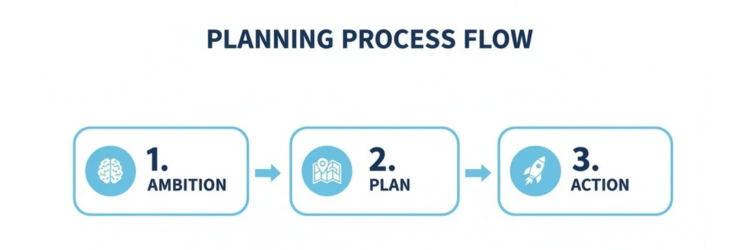
As you can see, the whole process really boils down to three core stages. It all starts with a big idea (Ambition), which you then shape into a structured roadmap (Plan). That plan is what empowers you to take consistent, focused steps (Action).
Translate Big Goals into Actionable Milestones
Staring up at a massive goal like "become a recognized expert in my field" is a double-edged sword. It's exciting, sure. But it can also be completely paralyzing. Where do you even start?
The secret is to stop looking at the towering peak and focus on the very next step in front of you. This is how you turn a vague, overwhelming dream into a series of small, manageable wins. By breaking your destination down, you create a clear path forward, with each milestone acting as a checkpoint that proves you're making real progress. It's less about organization and more about building unstoppable momentum.
Deconstructing Your Goals
Let's get practical. Imagine a marketing professional who wants to become the go-to person for using AI tools. That's a great goal, but "become the go-to person" isn't a task you can add to your to-do list.
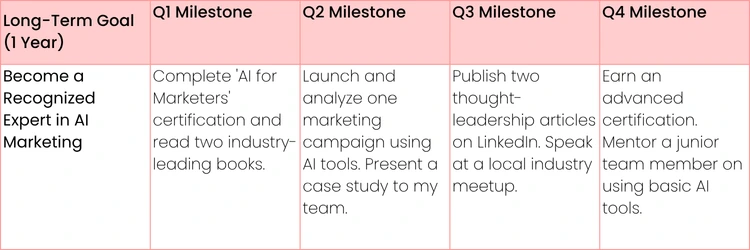
So, let's map it out on a quarterly basis:
- Q1 Milestone: Build a Strong Foundation. The first three months are all about learning. This could mean finishing a specific course on AI for marketers or digging into three of the most important books on the subject.
- Q2 Milestone: Apply and Experiment. Time to move from theory to action. The goal here might be to use AI tools on a live campaign, analyze the results, and present the findings to the team.
- Q3 Milestone: Share Your Knowledge. Now you start building your reputation. This could look like publishing two articles on LinkedIn about your AI marketing experiments or co-hosting a small webinar for your peers.
- Q4 Milestone: Formalize Your Skills. Lock in your expertise with something tangible, like earning a specialized AI marketing certification that validates your new skills.
Suddenly, a huge ambition becomes a logical, year-long project with clear things to do. If you want to dive deeper into framing these objectives, this guide on how to set SMART goals is a great resource.
Creating a Realistic Timeline
One of the most common ways to fail is by cramming too much into your plan too soon. That’s a fast track to burnout. Your timeline has to be ambitious enough to be exciting but realistic enough to fit into your actual life.
A powerful method for this is time-blocking. Don't just add "work on growth plan" to your endless to-do list. Instead, schedule it directly into your calendar. You could, for instance, block out 90 minutes every Tuesday and Thursday morning to focus on that Q1 milestone of completing your course.
When you schedule your growth activities like you would an important meeting, you give them the priority they deserve. This simple habit keeps the urgent-but-unimportant tasks from constantly derailing your long-term vision.
From Plan to Daily Practice
Your personal growth plan shouldn't just be a high-level document you look at once a quarter. It needs to connect directly to your daily and weekly actions. The table below is a great way to see how a large, one-year goal breaks down into those quarterly milestones, creating a visual roadmap.
This structure helps you focus on the immediate task at hand while always knowing it's connected to the bigger picture. You'll always know what to work on right now to get where you want to be in the future.
Example Goal-To-Milestone Breakdown
Seeing it laid out like this makes the path clear and the goal feel much more achievable. Each quarter builds on the last, creating a steady climb toward your ultimate objective.
Find the Right Resources to Execute Your Plan
Having a plan on paper is a great start, but it's just that—a start. The real magic happens when you turn those ambitions into action. To do that, you need the right tools and support to bridge the gap between where you are now and where you want to be.
This is the part where you stop just planning and start doing.
It all begins with an honest look in the mirror, what we call a skill-gap analysis. Go back to the goals and milestones you laid out in your personal growth plan template. For every single one, ask yourself a tough question: "What specific skill, piece of knowledge, or experience am I missing to actually pull this off?" Don't be vague. Be brutally honest and specific.
Bridge Your Skill Gaps with Targeted Learning
Once you've pinpointed a gap, your mission is to find the perfect resource to fill it. Think of your plan less as a to-do list and more as a curriculum for your own personal development. That learning can come from all sorts of places.
Let's say one of your milestones is to "confidently present project updates to leadership". Your skill-gap analysis makes it painfully obvious that public speaking is your weak spot.
Here’s how you could attack that problem from multiple angles:
- Formal Courses: Your first stop might be a focused course. On a platform like Uplyrn, for example, you could easily find a "Presentation Skills" or "Public Speaking for Professionals" course to build that solid foundation you're missing.
- Expert Mentorship: Knowing the theory is one thing; putting it into practice under pressure is another entirely. You could find a mentor on Uplyrn with a leadership or communications background. They can give you direct, real-world feedback on practice runs before you step into the real boardroom.
- Books and Articles: To round out your learning, books on storytelling or body language are fantastic, low-cost ways to pick up extra insights you can use to support what you're learning in a course or from a mentor.
This isn't about just passively watching videos; it's about actively building a new, durable skill. If you're trying to figure out what skills are even worth building, checking out different online courses for career growth can give you a great sense of what’s in demand right now.
An Ecosystem for Growth
The best support systems adapt to your specific needs. A student might use Uplyrn to build a technical portfolio with very specific courses to nail their first job interview. A professional shifting careers, on the other hand, might lean more on expert coaching to get through a tricky industry transition.
- The most effective personal growth is a blend of different learning styles. The classic 70-20-10 model is a great guide: it suggests 70% of learning comes from hands-on experience, 20% from mentors and coaches, and only 10% from formal courses.
This blended approach gets results. Studies have shown that structured plans that align personal and business goals can make an employee 35% more efficient. It gets even better when you use a complete ecosystem. One study found that 57% of learners who complete a structured plan land a promotion within a year. You can read more about how goal setting drives these outcomes.
When you intentionally match the gaps you've identified with the right kinds of resources, your plan stops being a document and becomes a real, achievable roadmap.

Track Your Progress and Stay Accountable
A personal growth plan is a fantastic tool, but it's completely useless if you don't actually use it. Too many of us treat these plans like a New Year's resolution—we're full of excitement when we create them, only to let them gather dust in a forgotten folder.
To make sure that doesn't happen, you need to build a rock-solid habit of tracking and accountability. Think of your plan as a living, breathing document, not a static file.
This means putting regular reviews on your calendar. Whether you do them monthly or quarterly, these check-ins are non-negotiable appointments with yourself. The point isn't to beat yourself up; it's to get real, honest feedback on your journey so you can adjust your course as you go.
Conduct Effective Reviews
When you sit down for a review, your mindset is everything. Ditch the judgment and get curious. Instead of dwelling on what you didn't accomplish, start asking smarter, forward-looking questions. This simple shift turns a painful critique into a powerful strategy session.
Here are a few questions to guide your own reviews:
- What progress did I actually make? It doesn't matter how small. Acknowledge every win. If you finished two chapters of that book or finally made one networking call, that's progress worth celebrating.
- What got in my way? Was it a time crunch? A missing skill? A sudden shift in priorities? Pinpointing the "why" behind a missed goal is the only way you'll crush it next time.
- Do these goals still feel right? Your ambitions aren't set in stone; they're supposed to evolve. This question makes sure you're still climbing the right mountain and not just going through the motions.
A missed goal isn't a failure—it’s data. It’s your plan telling you that a timeline was too aggressive, a resource was missing, or your priorities have simply changed. Listen to that feedback and adjust your strategy.
Accountability Strategies That Work
Discipline is great, but accountability is what really moves the needle. When you share your goals with the right person or group, you become exponentially more likely to see them through. The secret is finding a setup that gives you support, not just pressure.
A few strategies that we've seen work time and time again include:
- Mentorship Check-Ins: Book a recurring 30-minute call with a mentor. A good mentor provides that crucial outside perspective and can give you tailored advice when you inevitably hit a roadblock.
- Mastermind Groups: Pull together a small group of 3-4 peers who are just as ambitious as you are. Meet every couple of weeks to share your progress, talk through challenges, and hold each other's feet to the fire.
- Use a Task Management System: Getting your daily actions in order is half the battle. If you need a better way to stay on top of your milestones, you might find this guide for prioritizing for maximum productivity incredibly helpful.
Ultimately, it’s the combination of consistent review and real accountability that drives sustainable growth. These two things are what transform your personal growth plan template from a simple document into a dynamic system for hitting your most important goals.
Frequently Asked Questions
Putting a plan on paper is one thing, but sticking with it is where the real questions pop up. It's totally normal to hit a few snags along the way.
Let's tackle some of the most common hurdles people face, so you can keep your momentum going strong.
How Often Should I Update My Personal Growth Plan?
Think of your plan in two speeds. A quick weekly check-in is perfect for tracking your immediate to-do list and staying on top of smaller tasks.
But for the real, meaningful review, aim for a monthly or quarterly rhythm. A quarterly review is the sweet spot. It gives you enough time to make real progress, but it’s frequent enough to catch issues before they derail you. This is your chance to celebrate wins, see what’s working, and pivot if your priorities have shifted.
For example, maybe your Q1 goal was to "master a new software". At your quarterly review, you'll ask, "Okay, did I actually master it? What's the next logical step?" Or, maybe you’ll realize a different tool has become way more important for your job. Your plan has to evolve with you to be useful.
What Is the Difference Between a Personal and a Career Growth Plan?
This is a great question. The easiest way to think about it is that a career plan is one specific chapter, while your personal growth plan is the entire book.
- A career growth plan zooms in exclusively on your professional life. It's all about promotions, job-specific skills, and climbing your industry's ladder. For instance, it might map out the exact steps you need to take to become a senior developer.
- A personal growth plan, on the other hand, is holistic. It definitely includes your career ambitions, but it also carves out space for all the other parts of you. This could mean setting goals for your health, learning about personal finance, picking up a creative hobby, or investing more time in your relationships. A thriving career is often just one piece of a much bigger, more fulfilling picture.
Remember, the goal here is progress, not perfection. Think of your template as a compass to guide you, not a rigid report card to judge you.
What If I Fail to Meet a Goal on My Plan?
First off, take a breath. Missing a goal isn't a failure—it’s feedback. It's a valuable piece of data telling you that something in the original equation was off.
Use your next review session to dig into the "why" without judgment.
Ask yourself some honest questions. Was the timeline truly realistic? Did I have the support or resources I needed? Did my priorities genuinely change? Look at it objectively. Maybe the goal was too big and needs to be broken down, or perhaps it just wasn't the right goal for you at this moment. Adjust the plan and move forward.
Ready to turn your ambitions into actual achievements? With Uplyrn, you can find the expert-led courses and dedicated mentors you need to execute every single step of your personal growth plan. Start your growth journey today.


Leave your thoughts here...
All Comments
Reply